07 July 2008
UNDP strongly condemns the targeted killing of Osman Ali Ahmed, the acting head of UNDP’s office in Mogadishu.
A fourteen year veteran of UNDP, Mr. Ahmed dedicated his life to the betterment of his country while working under very difficult circumstances during some of Somalia’s most turbulent times. Mr. Ahmed was a highly professional and dedicated man and will be sorely missed by all his colleagues at UNDP.
We extend our deepest and most sincere condolences to his wife and family and wish his son, who was wounded in the attack, a full and speedy recovery.
Tuesday, July 8, 2008


Monday, July 7, 2008
IN RESPONSE TO BRAHIMI REPORT, COMMITTEE ON STAFF SECURITY

Press Release
3 July 2008
Hopes Brahimi Panel recommendations will be implemented more effectively
than those issued after Baghdad bombing
The Independent Panel on Safety and Security of UN Personnel and Premises World-wide, headed by Mr. Lakhdar Brahimi, has released a sobering report which while it indicts the Organization for failing “to develop a culture of accountability in security management,” appears to insulate “the higher echelons of the hierarchy, including the Secretary-General from the System’s passivity observed by the Panel.
The report shows that the UN and particular individuals failed to do their duty, and in ways somewhat similar to the circumstances leading up to the 19 August 2003 attack against the United Nations in Baghdad. While the Under-Secretary-General for Safety and Security took the honorable course of action by resigning, the Staff Union’s Committee on the Security and Independence of the International Civil Service does not believe that fault solely lies with one person.
In the name of accountability, the Committee calls on the Secretary-General to take fully responsibility for the insufficient implementation of the security management system approved by the General Assembly. It further calls upon him to immediately take action to prevent future tragedies from occurring and staff from being endangered; to immediately remove any individuals that failed in their duties; and to swiftly implement the reforms and recommendations of the Brahimi Panel. The Committee urges – for the safety of all staff – that more effective reforms be instituted that will prevent loss of life on the scale experienced in Baghdad or Algiers.
The Committee is not enthused by the appointment of Mr. Ralph Zacklin—an insider who has served as a legal counsel of the United Nations peacekeeping operations—to head an “independent” accountability group that will review the responsibilities of the key individuals and offices connected with the attack on the UN premises in Algiers. The apparent conflict of interest of some members of the group, and their track record at the UN, does not portend a restoration of confidence and morale among the staff. Reliance on senior UN officials to conduct a peer review on accountability issues has proven to be a failure in the past, a situation which the long overdue reform of the internal justice is expected to rectify.
The Committee welcomes the bulk of the recommendations of Mr. Brahimi’s panel, especially with regard to ensuring adequate and sustainable funding for security and safety; establishing the principle of “no programme without security; the urgency of reorganizing the constituent security management structures into a single unified system; the importance of having a reliable, appropriate, and robust information technology (IT) support system to develop information and knowledge, critical to security analysis and threat assessment; and the Panel’s reiteration that safety is half the mandate of DSS and that a dedicated Safety Unit should be established within DSS with competent staff and resources to enhance the safety of UN personnel and to develop a system-wide guidance on air safety.
Friday, July 4, 2008
GAP Commends UN Ethics Director and Secretary-General for Defending UNDP Whistleblower
FOR IMMEDIATE RELEASE
Contact: Bea Edwards, International Program Director
Phone: 202.408.0034 ext 155, 202.841.1391
Email: beae@whistleblower.org
Contact: Shelley Walden, International Program Officer
Phone: 202.408.0034 ext 156
Email: shelleyw@whistleblower.org
GAP Commends UN Ethics Director and Secretary-General for Defending UNDP Whistleblower
(Washington, D.C.) – The Government Accountability Project (GAP) applauds United Nations Ethics Office Director Robert Benson and Secretary-General Ban Ki-moon for defending a whistleblower who was denied due process by the United Nations Development Programme (UNDP).
On June 27, the United Nations Ethics Office found that UNDP whistleblower Artjon Shkurtaj was not permitted to respond to allegations made against him by the External Independent Investigative Review Panel (EIIRP). The decision stated that the ad hoc EIIRP panel – which investigated Shkurtaj’s much-publicized disclosures regarding UNDP wrongdoing in its North Korean office, and the retaliation he faced for exposing this – violated the Investigative Guidelines of the Independent Inquiry Committee into the United Nations Oil-for-Food-Programme. The Ethics Office Director recommended that Shkurtaj be compensated as a result.
This past Tuesday, the spokeswoman for the Secretary-General announced that the UN Secretariat stood behind the decision of the Ethics Office. In taking this position, the Secretary-General has challenged UNDP’s treatment of a whistleblower. UNDP exempted itself from the jurisdiction of the UN Ethics Office and the whistleblower protection policy last August after Benson ruled that there was prima facie evidence of retaliation against Shkurtaj by UNDP.
“Ban Ki-moon’s support for this decision is a reversal of a year-long backslide in whistleblower protections at the UN,” stated Shelley Walden, GAP International Program Officer. “We applaud the Secretary General’s defense of this whistleblower and hope that the Secretariat will strengthen the due process and free speech rights of other whistleblowers by restoring the system-wide jurisdiction of the Ethics Office and whistleblower protection policy.”
UNDP responded to the Benson decision by claiming that the due process errors cited are the fault of the now-disbanded EIIRP and not of UNDP itself. However, the specific error for which Benson faulted the panel was its unilateral attack on Shkurtaj, which it included in its final report and released to UNDP without allowing Shkurtaj to defend himself. UNDP is also at fault for the same reason: UNDP posted the report on its Web site without allowing Shkurtaj to correct serious errors of fact in the report that were defamatory.
“The EIIRP report demonstrates investigative incompetence, ignorance of the standard of proof in whistleblower cases, and the gratuitous defamation of a whistleblower who tried to protect UNDP from misconduct,” said Bea Edwards, International Program Director. “As an independent review, this exercise is such an embarrassment that even UNDP is now trying to disown it. Rather than connect the retaliation dots, the Panel tried to erase them.”
The erosion of whistleblower rights began last November, when the Secretary-General issued a bulletin that allowed UNDP to ignore the rulings of the Ethics Office. Instead of respecting Benson’s decision on the Shkurtaj matter, Kemal Dervis, Administrator of UNDP, established a separate Ethics Office for UNDP, as well as a weaker whistleblower protection policy. Other UN agencies followed suit, and the November bulletin resulted in a proliferation of whistleblower policies and ethics offices in the UN system that do not meet the independent and comprehensive standards set out in the original 2005 UN policy to comply with a mandate of the General Assembly.
GAP, which has advised Shkurtaj throughout his ordeal, believes that there were due process violations in the EIIRP investigation serious enough to invalidate its findings. Most importantly, the panel demonstrated its ignorance of the relevant standard of proof in a whistleblower case. UNDP failed to establish that its action rescinding Shkurtaj’s appointment as Operations Manager of its North Korea office, after he reported wrongdoing, was not retaliatory. Under the UNDP whistleblower protection policy, once Shkurtaj had been designated a whistleblower, UNDP had to prove with “clear and convincing evidence” that it did not retaliate. But UNDP presented no substantive evidence at all, other than the statement of the officer responsible for the withdrawal of Shkurtaj’s appointment that she did not retaliate. In short, at this point in the proceedings, Shkurtaj did not have to prove that the withdrawal of the appointment was retaliatory. UNDP had to prove that it was not.
The Panel itself was not appointed in an independent manner. Its members lacked the impartiality and expertise needed to investigate these disclosures properly, as demonstrated by the fact that members inappropriately devoted a significant portion of their report to attacking Shkurtaj rather than investigating the retaliation described above and easily verified. In fact, the panel’s report was, in itself, retaliatory.
Government Accountability Project
The Government Accountability Project is the nation’s leading whistleblower protection organization. Through litigating whistleblower cases, publicizing concerns and developing legal reforms, GAP’s mission is to protect the public interest by promoting government and corporate accountability. Founded in 1977, GAP is a non-profit, non-partisan advocacy organization based in Washington, D.C.
Thursday, July 3, 2008
ANALYSIS: Does the United Nations Accept the Rule of Law?

Thursday , July 03, 2008
By George Russell
That question has been hanging over the world organization for nearly a year, ever since the U.N.’s first ethics commissioner, Robert Benson, tried to take up the case of a whistleblower who drew attention to the rule-breaking practices of the United Nations Development Program.
Among other things, the whistleblower charged that UNDP had funneled millions in hard-currency to the regime of North Korean dictator Kim Jong Il and allowed North Korean government employees to run key aspects of its development program there. Then, he claimed, UNDP retaliated by firing him.
Now the same issue confronts the U.N. again. This time, the question is whether UNDP would pay restitution for the harm done to the same whistleblower who brought the organization’s misbehavior to light, and whose reputation was blackened by UNDP’s hand-picked investigators when they issued a weighty report earlier this month that confirmed most of the whistleblower accusations, and added a few more.
Judging from events of the past week, the answer to the question is still very far from clear. UNDP’s top managers have told FOX News through a spokesman that “no decision has been made” on the restitution issue.
Restitution for character-blackening is the initiative of chief U.N. ethics officer Benson, the man who is supposed to foster a “culture of ethics, transparency and accountability” across the entire U.N. system, and give the world—and thousands of U.N. employees worldwide—confidence that the organization is following its own rules. Benson had been mandated by UNDP itself to review the investigative report on North Korea for violations of whistleblower protection. Benson’s role was a compromise engineered in part by diplomatic pressure from the Bush Administration.
• Click here to read Benson's Review.
A refusal to follow the recommendation would be a direct slap at the U.N.’s top ethics official— and it would again expose the world organization to charges of double standards that were exposed –in part by FOX News— in the multi-billion-dollar Oil for Food scandal and a broad swath of procurement corruption cases.
Moreover, it would be a highly public blow to Benson’s boss, Secretary General Ban Ki-moon, who is standing behind his ethics chief. Ban’s spokesman told reporters yesterday that “the report of Mr. Benson stands as the position of the Secretariat.”
At the same time, the spokesman said the Secretary General was going to wait and see how UNDP reacted to the recommendation and would offer no other opinion on it.
The latest crisis point marks a second lease on life for Benson in the whistleblower case, which involves revelations brought forward by a former UNDP employee in North Korea, Artjon Shkurtaj. It is also a second chance for Ban, whose failure to back Benson strongly in the past sapped the unity of the U.N. system.
The case of the whistleblower, a former UNDP operations manager, was Benson’s initial major test in the ethics job last August—a job created in the wake of the Oil for Food and procurement scandals as a cornerstone of the U.N.’s ability to police itself and protect employees who brought wrong-doing to the attention of their superiors.
But Benson was slapped down by UNDP, which said the matter lay outside his jurisdiction and refused to let him investigate what Benson called a “prima facie case” of retaliation.
Suddenly, to the dismay of the Bush Administration and other governments,the sprawling U.N. system of some two dozen independent funds, programs and agencies around the world seemed to have the legal right to design on their own how they treated the disclosure of improper or illegal activity.
In UNDP’s case, a vivid insight into the potential for abuse was provided by the North Korean investigative report, which was made public in early June. UNDP immediately hailed the 353-page report as vindication—even though the document reiterated at great length that UNDP had systematically violated its own rules in hiring North Korean government employees to fill key UNDP jobs in the country, illegally handed over millions in hard currency to the government of Kim Jong Il, and ignored the laws of the U.S. and other countries in handing on sensitive “dual use” civilian-military technology to the Kim regime, even as North Korea was building and testing a nuclear weapon.
The report, however, took great care to avoid assigning any blame for the lapses to any specific individuals in UNDP, and blamed many of them on vague “lack of communication.”
So far as whistleblower Shkurtaj went, however, the report declared that there had been no retaliation against him, even as it offered evidence that the North Korean regime had pressured UNDP to get rid of him. (Initially offered a full-time position, Shkurtaj, a contract employee, had the offer rescinded a month later on procedural grounds, including a preference that a woman should get the job; another man was later hired instead.)
The panel report also lengthily attacked Shkurtaj’s character and credibility, without offering him the opportunity to respond.
In reviewing those results, Benson still insisted that Shkurtaj had whistleblower status—an important designation, since it offers protection for employees who bring U.N. wrongdoing to light.
But he offered UNDP a victory when he agreed that no retaliation had taken place. As the investigators did, Benson based his reasoning largely on the fact that the UNDP human resources officer who withdrew Shkurtaj’s job offer offered “unequivocal” testimony that she was unaware of any North Korean pressure to get rid of the nettlesome employee. (Neither Benson nor the investigating panel found contradictory the fact that the job was ostensibly earmarked for a woman, but later filled by a man.)
Then Benson threw a curve ball: the neglect of the panelists to let Shkurtaj respond to their concerns about his credibility was, in Benson’s nuanced phrase, a “due process failure,” which violated a U.N. employees right to respond to such findings in an investigation.
The right to such a response is deeply embedded in customary U.N. procedure for internal investigations. Benson, however, cited as the basis for his own conclusion about the lack of due process the example set by the U.N.’s $35 million investigation of the Oil for Food scandal, presumably because it was also carried out by outside investigators.
The “failure,” Benson noted, was on the part of the investigative panel, and not UNDP itself—a fact also underlined by UNDP spokesmen. But since the damage was done, Benson noted “there is no means by which to address this matter other than by means of restitution,” and recommended UNDP pay Shkurtaj 14 months’ salary to salve the damage.
Benson’s effort was clearly a compromise aimed at preserving unified standards of fairness across the U.N. system to employees who dare to testify to their organization’s lapses. And Ban’s current support for his ethics chief –though still equivocal—showed a desire to undo some of the damage done by his earlier flinching at UNDP intransigence. (Ban first signaled his new resolve to unify ethical standards at a confidential meeting of U.N. top managers in May, in Switzerland; copies of his talking points at the session were obtained by FOX News.)
But if UNDP does not accept the ethics officer’s ruling, what then? Neither Ban, nor anyone else, seemed inclined to answer—at least not yet.
George Russell is executive editor of FOX News.
Wednesday, July 2, 2008
Analyse / Elk jaar een beetje oorlog om budget ontwikkelingssamenwerking
Han Koch
De relatie tussen de werkgeversorganisatie VNO-NCW en de minister voor ontwikkelingssamenwerking is altijd gespannen geweest. Minister Koenders en werkgeversvoorzitter vechten een klassieker uit.
Je kunt er de klok op gelijk zetten. Zeker als een nieuwe minister voor ontwikkelingssamenwerking zijn budget voor het komende jaar gaat verdelen, is het even een beetje oorlog tussen de werkgeversorganisatie VNO-NCW en de minister. Dat was zo onder PvdA-minister Eveline Herfkens, en dat is zo onder haar collega Bert Koenders. CDA-minister Agnes van Ardenne vormde tijdelijk een uitzondering. Maar volgens critici kroop zij, al was het maar om het heel anders te doen dan haar voorgangster Herfkens, wel al te dicht tegen het bedrijfsleven aan.
De nieuwe vete gaat over een oud-onderwerp: het potje met geld dat Ontwikkelingssamenwerking reserveert voor projecten waarbij Nederlandse bedrijven samenwerken met partners in ontwikkelingslanden. Dat potje heette ooit Oret, nu is het Orio. De manier waarop Koenders die Orio-gelden beheert, zint werkgeversvoorman Bernard Wientjes allerminst. Het bedrijfsleven loopt voor miljoenen aan orders mis, liet hij recent in het Financieele Dagblad weten. Zeker twintig projecten met een totale investeringswaarde van 350 miljoen euro gaan niet door ondanks toezeggingen van Koenders. Aan de vooravond van een vandaag te voeren debat in de Tweede Kamer over dit onderwerp, laat Wientjes weten dat de minister dit niet kan maken. Hij is bestuurlijk onbetrouwbaar, klinkt het getergd. De nieuwe Orio-regeling voor de combinatie ontwikkelingssamenwerking/ bedrijfsleven is door Koenders van allerlei rimram ontdaan. De focus is meer gericht op de echte ontwikkelingslanden, de aandacht gaat meer uit naar zaken waarin Nederland goed is en de lange lijst van landen is ingekort. Te veel ingekort, vindt Wientjes. Voor 24 landen zijn volgens hem nu geen exportkredieten meer te krijgen en dus is handel drijven met die landen nauwelijks mogelijk en ontberen die landen de kans op een betere infrastructuur, op een functionerende watervoorziening of op een opgepepte gezondheidszorg.
Dat klagen over de minister voor ontwikkelingssamenwerking is volgens de aangeklaagde zelf niet echt nodig. Koenders vindt dat hij meer dan ooit geld uittrekt voor de samenwerking met het bedrijfsleven. Voor de private sector staat 485 miljoen euro klaar en dat is tien procent van zijn totale hulpbudget. Tel daarbij op het geld dat via kanalen als de Wereldbank, maar ook via ontwikkelingsorganisaties als Icco en Oxfam Novib, wordt weggezet bij het bedrijfsleven en Koenders ziet twintig procent van zijn budget naar de private sector gaan.
Het recht van Wientjes om te klagen dient verder ingeperkt te worden, zo vindt Koenders omdat hij met veel bedrijven zoals Ahold, Achmea, SNS, Aegon, Unilever en bouwbedrijven als BAM ook partnerschappen heeft afgesloten teneinde productieketens voor hout, cacao en koffie te verduurzamen en financiële dienstverlening in ontwikkelingslanden te brengen.
De argumenten die Koenders aanvoert ter verdediging van zijn aandacht voor het bedrijfsleven zijn daarmee nog niet uitgeput. De Pvda-minister noemt het van cruciaal belang dat de economie in ontwikkelingslanden op de golven van een florerend midden- en kleinbedrijf groeit. Met deze geloofsbrieven in de hand roept Koenders Wientjes op zich aan zijn zijde te scharen als het gaat om het bestrijden van de armoede.
Dat Koenders dor hout uit de regeling heeft gesneden, vindt hij zelf niet meer dan logisch. Er vallen 38 landen uit de regeling, uit 24 daarvan werd nooit een aanvraag voor een project ingediend. Voor China, dat inmiddels het stadium van arm ontwikkelingsland is gepasseerd is nu een regeling getroffen buiten Ontwikkelingssamenwerking.
De klassieke ruzie tussen de minister en de werkgeversvoorzitter heeft een achtergrond. Ministers voor ontwikkelingssamenwerking vinden dat hun geld niet mag worden misbruikt voor exportbevordering van het Nederlandse bedrijfsleven, maar benut moet worden voor de opbouw van ontwikkelingslanden. Het Nederlandse bedrijfsleven vindt dat mooi, maar wijst altijd op de Italiaanse of de Amerikaanse steun. Het mes snijdt bij de hulp van die landen altijd aan twee kanten, het ontwikkelingsland wordt geholpen en het eigne bedrijfsleven wordt gesteund. Die vorm van hulp, gebonden hulp geheten moet volgens internationale afspraken op termijn verdwijnen. De beste waar voor de beste prijs, moet de leidraad zijn. Van de Nederlandse steun voor de private sector geldt nu nog dat dertig procent gebonden hulp is. In 2011 moet die gebonden hulp afgebouwd zijn tot 10 procent. De kans is daardoor groot dat de minister en de werkgeversvoorman elkaar de komende jaren nog wel een paar keer in de haren zitten.
DAILY PRESS BRIEFING BY THE OFFICE OF THE SPOKESPERSON FOR THE SECRETARY-GENERAL
Department of Public Information • News and Media Division • New York
DAILY PRESS BRIEFING BY THE OFFICE OF THE SPOKESPERSON FOR THE SECRETARY-GENERAL
The following is a near-verbatim transcript of today’s noon briefing by Michèle Montas, Spokesperson for the Secretary-General.
Good afternoon, all.
**Questions and Answers
Question: Robert Benson came out with a report on the issue of Tony Shkurtaj. It seems to be at odds with the independent report, and he actually criticizes some of the findings of the independent report. Who do I believe?
Spokesperson: I think the question is, it is Mr. Benson’s report, and that is all I can say.
Question: One report says that Tony Shkurtaj is unreliable, and that there was no retaliation against him, while the other not only says that it seems there was, but it also wants UNDP to pay.
Spokesperson: It is Mr. Benson’s prerogative to have his report on that review.
Question: I am a reporter; I have to find out what is truth. One UN commission’s report says A; the other says not A. Which of these versions do I believe?
Spokesperson: Well, do your homework. It is Mr. Benson’s review.
Question: He recommends strongly that UNDP pays 14 months back pay to the whistleblower. Does the Secretary-General stand behind that recommendation? Should UNDP in fact pay that money, or are they free to rebuff that recommendation?
Spokesperson: We will see what is going to happen. The Secretary-General of course is behind Mr. Benson on his report. There is no doubt about it. What UNDP will do, we will be seeing this; how they will implement that report.
Question: UNDP at one point said Benson doesn’t have jurisdiction over them.
Spokesperson: As I announced yesterday, they have a new Director of the Ethics Office. And they will be working with Mr. Benson.
Question: So, does he have jurisdiction? I mean, does this ruling, as far as they are concerned…
Spokesperson: I cannot speak on behalf of UNDP.
Question: Institutionally, does this ruling apply?
Spokesperson: Well, we can get someone from UNDP to discuss this with you, of course.
Question: What does the Secretary-General think about the report? Does he have any comments about it?
Spokesperson: He does not at this point. He has not received it yet, as far as I know.
Question: One of the things that Secretary-General Ban has been trying to do was to have this cohesive approach to these things within all of the United Nations. Doesn’t this pose a predicament in terms of trying to overcome that problem? Is this not an issue that he will weigh on, and weigh on in a very noticeable way?
Spokesperson: Mr. Benson speaks on behalf of the Secretariat, so you know…
Question: I understand. But in terms of Organization-wide…
Spokesperson: As you know, he has been working on this for quite a while, and the fact that right now they are making changes in the structure of the different agencies on the ethics issue is part of that concerted effort to have one system and one standard.
Question: Another question related to UNDP. I understand that the Executive Board of UNDP has received a request, or at least a proposal, to again relaunch the programme in North Korea. Does this mean that some of the issues that were raised at the time, and the very reason why the UNDP pulled out, in terms of staff, hiring, payments and some of the other things in which UNDP was operating in contradiction to its own rules… have these issues been resolved? Have the North Koreans now agreed to UNDP’s conditions…?
Spokesperson: I cannot answer for UNDP. I suggest that we have someone from UNDP come and talk to you about the issue. I cannot answer for them. I do know that the issue of returning to the DPRK has to be approved by the Board, of course.
Question: And in terms of Ban weighing in on the issue of Tony Shkurtaj and its wider ramification for whistleblowers and system-wide coherence, when might we get some sort of…?
Spokesperson: At this point, in terms of Mr. Shkurtaj himself, the report, as I said, of Mr. Benson stands as the position of the Secretariat.
Compensation Urged for U.N. Whistleblower

By BENNY AVNI, Staff Reporter of the Sun
July 2, 2008
http://www.nysun.com/foreign/compensation-urged-for-un-whistle-blower/81082/
UNITED NATIONS — The top U.N. ethics officer is recommending that a former official who fought the organization's development body over alleged rules violations in North Korea receive compensation.
The recommendation by the head of the U.N. Ethics Office, Robert Benson, is a vindication of Artjon Shkurtaj's campaign to expose violations in the U.N. Development Program's North Korea operation, a lawyer for Mr. Shkurtaj, George Irving, said.
The agency closed its Pyongyang office after its board of directors, led by American officials relying on facts supplied by Mr. Shkurtaj, ordered a suspension of its activities there.
Mr. Benson's report on the case, in which he urges compensation for the former official, "vindicates his long struggle for the truth," Mr. Irving said.
Secretary-general Ban "is behind Mr. Benson on his report," his spokeswoman,
Michele Montas, said yesterday. It is not clear, however, whether the UNDP, which in the past has argued that Mr. Benson's office has no jurisdiction over its activities, will abide by the recommendation.
"We are studying the report," a UNDP spokesman, David Morrison, said.
Mr. Benson, he said, urged compensation not because the agency retaliated against Mr. Shkurtaj but because of failures by a now-defunct panel the United Nations appointed to investigate the case. The panel, led by a former Hungarian prime minister, Miklos Németh, said Mr. Shkurtaj lacked credibility.
"Both the Németh panel and Mr. Benson agreed that the UNDP did not retaliate against Tony Shkurtaj," Mr. Morrison said.
Beatrice Edwards, the international program director of a Washington-based advocacy group specializing in whistle blower cases, the Government Accountability Project, said Mr. Benson's report comes close to vindicating Mr. Shkurtaj.
"The burden of proof in cases like this is on the institution," she said. The bottom line, she added, is that Mr. Benson recommended that the UNDP pay Mr. Shkurtaj 14 months' net salary "as compensation."
Tuesday, July 1, 2008
North Korea Whistleblower vindicated for fourth time, while UNDP opts again out of UN System of Justice

In an unexpected turn of events, UN Ethics Officer turned down once again UNDP's "self-investigative-report" on North Korea, and awarded the Whistleblower a compensation for failure of due process from UNDP.
In contradiction to UNDP's "own investigation report", Benson said that:

This rogue organization cannot accept No for an answer, and cannot accept to be controlled, monitored or to abide within the Rules and Regulations of the United Nations.
Here is the report of United Nations Ethics Office.
UN's Concern About Investors Kept Algeria Threat Level Low Before the Bombing, Some Counter-Terrorism Reforms
Byline: Matthew Russell Lee of Inner City Press at the UN: News Analysis
UNITED NATIONS, June 30 -- Belated describing to the Press his report on the bombing of the UN in Algiers back in December, Lakhdar Brahimi on Monday acknowledged that the UN takes into consideration governments' desire to downplay security threats. "It's a sensitive issue," he said, because when the UN raises threat levels, "investors stop going there... The UN takes that into consideration." Video here, from Minute 9:39.
Since the UN, particularly through its UN Development Program, operates on the premise that the only road to development is by building the capacity and strengths of governments, this runs counter to prioritizing the safety of staff. In this case, there were other conflicts of interest. UK Ambassador to the UN John Sawers told the Press on Monday morning that he is "not sure if the choice of an Algerian" like Brahimi "to investigate a bombing in Algeria was the right way to go. Inner City Press asked Brahimi about the comment. Brahimi replied that he didn't think he was assigned the investigation because he is Algerian, and that Algeria didn't feel it controlled the investigation. Judge me on my work, Brahimi said.
But his report dodged the obvious question, of holding anyone accountable. That task has been assigned to yet another panel, this one headed by Ralph Zacklin, who the UN Staff Union on Monday called "an insider who has served as legal counsel... with repsonsible for some sensitive political issues including the Oil for Food program, where he assisted in some procurement decision criticized by [Paul] Volcker." They question if this is a person who will objectively mete out responsibility.
Lakhdar Brahimi at UN on June 30, concern about investors and accountability not shown
So far, only David Veness has resigned. Ambassador Sawers sung Veness' praises on Monday, saying he will be hard to replace. Inner City Press is told that Jack Straw sold Veness on the job by saying it could take him to retirement. Who now will wants this hot potato? While word on the street is Russian, it may be Poland's time, we'll see.
Counter-Terrorism Changes Still Fall Short: Following a string of court decisions criticizing the UN's Al Qaeda and Taliban sanctions as violating the due process rights of those put on the lists, the UN Security Council on Monday extended the sanctions with some changes, including committing to review all names on the lists within the next two years. Inner City Press asked UK Ambassador to the UN John Sawers if the reforms in Resolution 1822 are retroactive, and thus might be used to try for better outcomes in the court decisions questioning the sanction. They are not retroactive, Sawers answered, but they will help going forward. Video here, from Minute 2:10. Costa Rica later said that it is not strong enough in providing due process in the listing and delisting of those subject to sanctions. But Costa Rica voted for the resolution, and as Sawers has noted, few reporters cover the sanctions anyway. UN Counter-Terrorism czar Michael Smith has yet to brief the press. Ah, accountability....
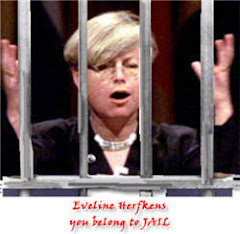
'Verjaring dreigt voor claim Eveline Herfkens'
BERGEN OP ZOOM - De Nederlandse staat loopt elke maand 6000 dollar mis omdat minister Maxime Verhagen van Buitenlandse Zaken de onterecht verkregen huursubidie van oud-minister Eveline Herfkens nog niet heeft teruggevorderd.
Een geldvordering kent namelijk een verjaringstermijn van vijf jaar. Dat zegt advocaat Roger van Dijk uit Bergen op Zoom, die zich in de affaire Herfkens heeft vastgebeten. Herfkens heeft als medewerker van de VN jarenlang 6000 tot 7000 dollar huursubsidie van de Nederlandse overheid gekregen voor haar woning in New York. Eerder dit jaar bleek dat die bijdrage van in totaal 280.000 dollar tegen de regels van de VN was. Minister Verhagen heeft inmiddels besloten het geld terug te vorderen, desnoods via de rechter. Herfkens weigert het bedrag terug te betalen.
Volgens Van Dijk dreigt de claim nu te verjaren. "De eerste betaling heeft eind 2002 plaatsgevonden. Na vijf jaar zijn dergelijke bedragen volgens de wet niet meer terug te vorderen. Behalve als het ministerie een zogenoemde stuitingsbrief naar Herfkens stuurt, waarin wordt aangegeven dat de verjaringstermijn wordt 'gestuit'. Maar volgens mij is dat nog niet gebeurd. Ik denk dat de hele affaire om politieke redenen onder tafel wordt geveegd."
Het ministerie van Buitenlandse Zaken heeft eerder gezegd ervan uit te gaan dat de affaire Herfkens onder het ambtenarenrecht valt, waarin een stuitingsbrief niet van toepassing is. Volgens Van Dijk is dat 'lariekoek'. "Herfkens was op dat moment helemaal geen ambtenaar van Buitenlandse Zaken." Het ministerie kon daar gisteren geen commentaar meer opgeven.
De Bergse advocaat bood eerder al aan Verhagen aan de claim op Herfkens voor 5000 euro over te nemen. De minister wees dat aanbod af.
Melkert-Herfkens Scandal Continue

Iedere maand dat de minister van Buitenlandse Zaken Maxime Verhagen geen geld terugvordert van Eveline Herfkens kost de Nederlander 3.500 euro. Volgens advocaat Roger van Dijk had dit voorkomen kunnen worden door een tweeregelig briefje, een zogenaamde stuitingsbrief.
Onterechte huursubsidie
De brief had verstuurd moeten worden zodra de affaire Herfkens bekend werd, in januari van dit jaar. Toen werd bekend dat oud-minister van Ontwikkelingssamenwerking Eveline Herfkens onterecht 280.000 dollar aan huursubsidie had ontvangen voor haar appartement in New York. Herfkens was in die periode werkzaam bij de Verenigde Naties.
Verjaringstermijn
De verjaringstermijn van 5 jaar is inmiddels gedeeltelijk verstreken wat betekent dat de subsidie, die Herfkens in 2002 en een gedeelte van 2003 heeft ontvangen, niet meer teruggevorderd kan worden. In totaal heeft dit de Nederlandse Staat al 48.000 dollar gekost. Elke volgende maand betekent een extra verliespost van 6.000 dollar, omgerekend 3.500 euro.
Terugvordering
De Tweede Kamer en de minister willen de onterechte huursubsidie wel gaan terugvorderen, maar Herfkens heeft al laten weten dat zij het geld niet terug wil betalen. Het ministerie van Buitenlandse Zaken doet officieel nog geen uitspraken over de zaak, maar heeft inmiddels er wel op gewezen dat de aangehaalde stuitingsbrief alleen van toepassing is op civiele procedures en Herfkens wordt benaderd vanuit het ambtenarenrecht.
Another Scandal in India
Open letter to the officials of the UN (UNICEF and UNIFEM)
Posted by LegalTechie on June 30, 2008
We members of “Save Indian Family Foundation” comprise of 15,000 Engineers, Software professionals, Executives, doctors and common people of India, who are fed up with UN’s Anti-Indian Agenda since quite some time. We firmly believe that UN is interested in breaking the Indian family system and the Indian society. If UN or its other organizations do not stop their anti-India activities and do not stop their malicious propaganda against India, we will start large scale protests against UN all over India. We are certain it will not help UN as Indian’s love their family system and they will not love any agency which promotes family breaking. India has 1/6th of World’s population.
Firstly, we do not understand why UN works like a dictator and why the people running it have such a terrible problem with “Integrity”.
We feel, it is important UN and its Secretary General wake up to face some constructive criticism and cleans up the “Integrity Issues”.
UN has a lot of explaining to do as it seems to have come out with an agenda against “Family System” in India due to lobbying by some western countries.
We will show how actions of UN, UNICEF and UNDP are actually contributing the “Female Foeticide” in India instead of reducing it.
1) In 2006, UN claimed in Indian Media that 70% of Indian Women Face domestic Violence (DV) UN, UNDP or UNFPA never conducted any study or survey which has established this fact or proved this statistics. In fact, one page in UNFPA website says, the domestic violence percentage in India (against women) is just 19%.
It clearly shows that UN and its officials lack Integrity and have lied in Indian Media.
How the hell are such horrendous lies propagated about India by UN officials?
Refer to this false story planted by the UN.
Here is the complete argument:
Certain Radical Western elements are controlling the policies in UN and they have a “racial bias” against Asians and especially Indians.
2) In 2006, UNICEF executive director Ann M. Veneman made false claims.
She claimed that 25,000 women are killed “every year” for dowry in India. Here is the proof.
There is no source of any kind which has established this fact that 25000 numbers of women are killed for dowry. In fact, the total “convictions” for “dowry deaths + DV deaths” in year 2006 is 1830 (refer: Indian National Crime Records Bureau at website ncrb.nic.in).
These deaths in India are almost half of similar deaths in US (if you normalize populations of both countries).Why did she lie and why did she quoted false statistics?
Why is the UNICEF executive director creating a panic by uttering lies?
I do not like to make any personal criticisms. However, people holding the high positions should have some elementary levels of Integrity.
If UN says that 25,000 women are killed for dowry every year in India, then no one will wish to have a girl in their house, as they think the girl will only be a victim, a burden and she will bring tears. The reality is, women are 2 times safer in Indian homes than in US homes. Thanks to UN and UNICEF, the panic is created in Indian society and Indian Family system is maligned all over the world. The Indians today are afraid of having a girl child.
We challenge UN officials to come and prove their assertions on dowry deaths in India.
3) The outrageous, false propaganda unleashed by UN (and the organisations it funds) about 70% women being beaten, kicked, hit, slapped and burnt for dowry, has created massive panic in India.
UN is a very credible source and hence everyone believes it. Media writes about it. So, Indians today believe that if they have a daughter (born into the family), then 70% chance that she will be burnt, beaten, raped, hit, slapped.
These lies by UN officials is creating huge problem for our society and people are rushing to clinics to abort the girl child.
4) A boy in India brings 3 times more misery to parents than the girls. A boy has 3 times more chance of getting kidnapped. A man has 3 times more chance to get murdered, commit suicide or die in an accident compared to a woman. However, UN never talks about the disadvantages that boys bring and only harps of why it is dangerous to be a woman or girl in India.
5) Increasing divorces, family breaking and single parenting has resulted in increase in crimes in US. However, UN conveniently ignores these social issues. Children from single parent families in US have 9 times more chance to commit crime.
Why are UN policies so reductionist while dealing with complex social systems?
Why is UN not even ready to discuss?
————————————————————
Social situations are complex. Societies across the world are complex. How can UN recommend some very “simple reductionist solutions” for the complex problems related to family system and sometimes force it on nations?
Common sense says, the more you focus on a problem/concern, the problem or concern increases. Is UN feeding energy to concerns or working on influences?
By focusing on women’s issues in a radical manner and by representing them as victims by using false statistics for years, is UN solving the problems or increasing the intensity of the problems?
If UN do not stop the anti-Indian, anti-social activities by planting false statistics in Media, we as an advocacy group of 15,000 members in India and world, will start street protests against UN’s ill designed insensitive policies. It is 15,000 angry Indian families, who see UN as an organisation that has propagated false stories and rumours about India, Indian society and Indian Family system.
If UN is so sincere about the plight of women in South Asian, then what the hell UN is doing about 1,20,645 women who are arrested in India in last 4 years without trial or investigation under section 498a of Indian penal code(IPC). In fact, UNIFEM supports Section 498a of IPC.
We support 50% reservation for women in Indian parliament. We are not a bunch of conservative regressive religious zealots.
We are not begging UN to change or stop propagating false stories about societies in member nations.
UN, UNICEF, UNDP, UNFPA and every official has the choice. The officials there can keep continuing with the lies, false statistics and claim that they are making a difference in the world.
We have no expectations what so ever from UN or UNDP or UNICEF. We will do our work to safe guard our nation and other Asian Nations. However, we will hold every person who works for UN accountable for the consequences of the misadventures.
Subscribe to:
Posts (Atom)