Thursday, December 3, 2009

La CEPAL aboga por un cambio del modelo industrial en América Latina


Por Agencia EFE (CLICK HERE)

Lisboa, 29 nov (EFE).- La secretaria general de la Comisión Económica para América Latina y el Caribe (CEPAL), Alicia Bárcena, pidió hoy un cambio del modelo de política industrial en América Latina que promueva la eficiencia del mercado.

Debemos "favorecer las redes de cadenas y distritos productivos incluyendo los de menor productividad", añadió Bárcena, que participó en el V Encuentro Empresarial Iberoamericano en Lisboa que precede a la XIX Cumbre de Jefes de Estado y de Gobierno, que empieza hoy en Estoril (Portugal).

La alta funcionaria apostó por una "jerarquización" de la política científica y tecnológica en América Latina y una "visión sistemática" de la innovación para lo que puso como ejemplo a Brasil.

"¿Cómo medimos innovación? La productividad es una vara de medir. No estamos teniendo éxito", expresó al tiempo que propuso reducir la brecha digital en la población de la región a través de la promoción de la banda ancha como bien público global -no gratuito, matizó- en el que el Estado tiene que garantizar el acceso a todos los habitantes.

Bárcena trazó el panorama macroeconómico actual latinoamericano, constató la recuperación de algunos indicadores, como el del comercio, y situó la caída del PIB regional en el 1,7 por ciento en 2009.

Por su parte la directora para América Latina y el Caribe del Programa de Naciones Unidas para el Desarrollo (PNUD), Rebeca Grynspan, que también intervino en el encuentro, comentó las diferencias en materia de recuperación económica entre las naciones de la región.

"La recuperación en América Latina es heterogénea, con matices en el norte y más comprometida que en el sur", manifestó al apuntar el progreso técnico y la expansión de las Tecnologías de la Información y la Comunicación (TIC) como elementos de "dinamización".

"Igualmente importante será el dinamismo de la económica verde, biocomercio y energías renovables", aseguró Grynspan, quien puso como ejemplo de desarrollo a Brasil, por "el pragmatismo y fortaleza del Estado y sector privado", al recordar que su nivel de pobreza ha descendido el 2% en periodo de plena crisis.

La directiva del PNUD demandó una estrategia a largo plazo para afrontar los problemas de la zona y recordó que el impacto de la crisis en América Latina fue "menor que en el resto del mundo a excepción de Asia".

Bárcena, la responsable de la CEPAL, también se refirió a las consecuencias de la recesión e ilustró un aumento de la pobreza en 2009 hasta los 189 millones de personas y una tasa de paro de 8,5%.

Latinoamérica es "la región mas desigual del mundo", alertó tras citar como uno de sus problemas graves una gran brecha fiscal por la que se tributa poco y mal y sin progresividad.

No obstante, constató medidas positivas en países como Brasil, Chile, México, Colombia y Perú, que tomaron medidas fiscales adecuadas y aumentaron la tasa de expansión del gasto público.

El énfasis en el salario mínimo y en el seguro de desempleo fueron otras dos medidas aplaudidas por la responsable de la CEPAL, que reconoció el esfuerzo de los países por practicar medidas de corte social.

Por último, Grynspan, del PNUD, avisó de que, a pesar de resultados relativamente esperanzadores, la desnutrición, la muerte infantil y materna y la situación de las personas en pobreza extrema son problemas que aún azotan a la región.

Luchar contra ellos, pronosticó, supondrá un esfuerzo de varios años en tanto algunos países se verán limitados para mantener el gasto social.

Pide PNUD redireccionar flujo de capitales hacia países emergentes

Rebeca Grynspan, directora regional para América Latina y El Caribe del PNUD. ESPECIAL

  • El motivo principal es la crisis global

El G-20 debe encabezar una solución financiera internacional,a severó

LISBOA, PORTUGAL.- Ante los efectos de la crisis global en los mercados emergentes es necesario redireccionar los flujos de capitales internacionales hacia ellos, demandó hoy la directora regional para América Latina y El Caribe del PNUD, Rebeca Grynspan.

Al participar en el V Encuentro Empresarial Iberoamericano que tiene lugar en el Centro de Congresos de la capital portuguesa, apuntó que para ello el tema central es la percepción del riesgo.

En el evento, previo a la inauguración de la XIX Cumbre Iberoamericana de Jefes de Estado y de Gobierno, subrayó que en el diseño de esas estrategias es muy importante lo que hagan organismos internacionales, ya que Estados Unidos y China, las grandes economías del mundo, no pueden resolverlo solos.

'También sabemos que el aumento de la seguridad social y del gasto en salud y educación en China va a ayudar a este desbalance pero no es suficiente', añadió.

Al hablar sobre la crisis económica, manifestó su optimismo respecto al papel que ha jugado el Grupo de los 20 países en desarrollo oG-20 en la resolución de algunos aspectos, 'pero me parece que no deberíamos tener un sistema internacional fragmentado'.

'El G-20 debe encabezar una solución financiera internacional que converja con las instituciones mundiales y debe potenciarse el papel de los bancos regionales de desarrollo', abundó.

Grynspan participó en la mesa 'Perspectivas económicas y financieras I', junto a la secretaria general de la CEPAL, Alicia Bárcena y el secretario general de la Organización para la Cooperación y el Desarrollo (OCDE), José Angel Gurría, ambos mexicanos.

Entre los asistentes al foro estuvieron los ex presidentes de México, Vicente Fox y de Perú, Alejandro

U.S. Proposes Climate Fund for Poor Nations

The United States has proposed a new global fund that would direct billions of dollars to help poor countries prepare for climate disasters and adjust to low-carbon economies.

The fund would likely operate under the World Bank, U.S. Treasury officials said, and would be the main vehicle to deliver emissions reduction and adaptation measures throughout the world.

William Pizer, deputy assistant secretary for environment and energy at the U.S. Treasury Department, explained that the fund would contribute to a spectrum of projects from "building a solar park or creating a financial vehicle to support investments in energy efficiency to creating an insurance mechanism for disasters or crops."

The world's poorest countries also are among the most vulnerable to climate change and will be disproportionately affected by harsher droughts, rising sea levels and fiercer storms, scientists say. The World Bank estimates it will cost $75 billion to $100 billion annually for developing nations to accommodate a world that is warmer by 2 degrees Celsius.

Part of the global climate deal that nations are negotiating in U.N.-sponsored talks in Copenhagen next week involves the promise of substantial funding to help defray those costs.

Just how much money nations will put into the pot remains unknown. That is one of the prickliest questions that negotiators face. Yet while dollar figures -- or absence of them -- grab headlines, analysts say the architecture of the fund is one of the nuts-and-bolts issues fundamental to the climate talks.

"It's certainly a critical part of what needs to be addressed and concluded in the negotiations," said David Waskow, climate change program director at Oxfam America. "At the end of the day ... it's never a just a question about money, but also how the money is governed and spent."

An expected target of $7B to $10B

Countries are expected in Copenhagen to offer between $7 billion and $10 billion for immediate needs in poor countries, with about $1.3 billion expected to come from the United States. The United States has not declared how much it will allocate in the long term. Pizer didn't offer any clues, but said agreeing on a structure for delivering and accounting for the money would be a major step forward.

"I don't think we would be going down this avenue if we didn't see the need for scaling up funding in the future," he said.

Under the proposal the U.S. submitted in October -- which mirrors ideas put forward by Mexico and Australia -- the fund would be governed by a board made up equally of net donors and recipients. All countries except the least-developed nations would be expected to contribute "in accordance with their national circumstances and respective capabilities."

Elliot Diringer, vice president for international strategies at the Pew Center on Global Climate Change, noted that the proposal reflects "a growing view that some of the faster-growing developing countries are in a position to help," as well as industrialized ones. A number of environmental groups oppose the notion and say only rich countries should be expected to foot the bill for climate change.

In a recent analysis, ActionAid USA, Friends of the Earth US and the Sustainable Energy and Economy Network faulted the proposal for failing to force countries to contribute to the fund. The groups also argue that any money for poor countries to address climate change must be in addition to regular foreign assistance, and call for a board governed by a majority of developing countries.

"This is important so as to mirror the composition of parties in the UNFCCC [U.N. Framework Convention on Climate Change] and to ensure that those most affected by climate change are in the majority on the governing bodies," the groups wrote.

Narrowly focused on easing burdens of climate change

Treasury officials said they envision a fund that can leverage private-sector investments as well as public funds. They described it as one of several financial arrangements available to help developing countries access funds for different needs.

Currently, the Global Environment Facility acts as the financing arm for the UNFCCC. Established within the World Bank, the coalition of 178 international government institutions manages several pots of money for climate change-related activities. Treasury officials said the new proposal still envisions a role for the GEF. But, they said, it would be more narrowly focused on helping developing nations set efficiency standards, regulate power sectors and take other steps to improve their institutions so clean energy projects can thrive.

"We think that if we're going to significantly scale up financing to deal with climate change, we need a different kind of vehicle," Pizer said. "In particular, we need a vehicle that is more focused on financing investments like the ones that are necessary [to address] climate change." A senior GEF official said the institution is not worried that it will be sidelined, but declined to say whether the agency supports the U.S. plan.

"We welcome all the proposals for this discussion," the official said.

The biggest fight, if there is one, will likely center around the involvement of the World Bank. Treasury officials said they believe the World Bank has the expertise, standards and "internal safeguards" to oversee the financing, though the fund would likely have a governing structure separate from the multilateral bank's normal channels.

Environmental activists have long fought the institution, arguing that it favors wealthy nations and funds too much fossil fuel development. But the U.S. proposal is also getting points from some nonprofit groups for taking a major step toward trying to solve one of the more complicated issues in the climate change negotiations.

"Hopefully, we can at least make some headway in developing the architecture," even if the dollar figure is unsettled, Diringer said.

Added Waskow, "It's really important that they've clearly said they support a new global fund for climate. It's the beginnings of building a bridge to developing countries."

Copyright 2009 E&E Publishing. All Rights Reserved.


UN official calls for funds for climate change

TO READ STORY ON MIAMIHERALD.COM CLICK HERE

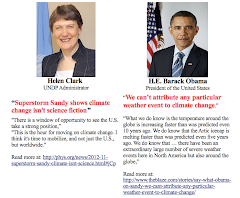
   In this photo taken on Tuesday, Dec. 1, 2009, U.N. Development Program Administrator Helen Clark speaks during an interview with The Associated Press in Nairobi, Kenya. The chief of the U.N.'s global development network says proposals to put up billions of dollars to help poor nations deal with the effects of climate change are only a start.
In this photo taken on Tuesday, Dec. 1, 2009, U.N. Development Program Administrator Helen Clark speaks during an interview with The Associated Press in Nairobi, Kenya. The chief of the U.N.'s global development network says proposals to put up billions of dollars to help poor nations deal with the effects of climate change are only a start.
KHALIL SENOSI / AP PHOTO

ASSOCIATED PRESS WRITER

Developing countries will need tens of billions of dollars each year to cope with the effects of climate change such as floods and drought, the global head of the U.N.'s development arm said.

About 100 world leaders will be in Copenhagen next week for a summit on global warming, and the U.N. climate chief, Yvo de Boer, has told reporters that rich countries "must put at least $10 billion a year on the table."

Helen Clark, the administrator of the U.N. Development Program, said though that scientists and others believe that between $75 billion and $100 billion a year is needed to help poor nations cope with climate change.

"Developing countries are bearing the brunt of climate change now. It's not something that might happen in 10, 20, 30 years time," Clark told The Associated Press late Tuesday.

More than two years ago, a panel of hundreds of scientists commissioned by the world's governments released a report that said the poorest parts of the world, especially Africa and Asia, would be hit hardest by climate change.

The Intergovernmental Panel on Climate Change says temperature rises will result in increased droughts and flooding in poor nations. Subsistence farmers in Africa and Asia are expected to be particularly hard hit.

In a report earlier this year, the International Food Policy Research Institute predicted 25 million more hungry children over the next four decades because of climate change's impact on crop production.

Negotiators in Copenhagen will seek a new agreement to curb emissions of climate-warming greenhouse gases. The key question is how to divide the responsibility for reducing emissions globally, with developing countries saying they should not be forced to commit to binding targets.

The conference had originally been intended to produce a final global warming treaty, but that now seems out of reach. Most leaders now hope the conference can produce a framework agreement, leaving only details, technical arrangements and legal language to be concluded over the next six to 12 months.

Clark, however, said that climate change also should be related to other issues, such as improving the living standards of billions of people in the world.

She said one way this can happen is by providing financial and technical support to poor nations, allowing them to meet their energy needs while producing little or no greenhouse gases.

With such support, "we will have the ability to bring energy to the huge numbers of people in our world, up to 2 billion people, who do not access have energy at the moment, who don't have electricity," Clark said.

Last month, the U.N. Development Program and World Health Organization released a report that described 2 billion people as lacking natural gas, propane or other modern fuels used for cooking or heating their homes. The report also said 1.2 billion more people live entirely without electricity.

Tuesday, December 1, 2009

When Helen Clark's talks .......UNDP staff......sleep !


Ohhhh she's very convincing !!!!!


Poor Bruce...he wanted to sleep too.....!!


U.S. Supports UN's Offer of Darfur Post to Gambari Despite NGOs' Questions

By Matthew Russell Lee

UNITED NATIONS, November 30 -- On making the new UN envoy to Darfur the Nigerian Ibrahim Gambari, previously UN envoy to Myanmar, it appears the fix is in. Even the U.S., said to have wanted a more strident human rights voice for the post, has reportedly given in. U.S. Ambassador Susan Rice, asked Monday about Gambari to Darfur, said "we support the Secretary General."

Following Inner City Press' exclusive report earlier on Monday that Gambari had been offered the post by the UNand African Union, Inner City Press received confirmation that Gambari has already been requesting commitments to come serve with him in Dar fur.

Secretary General Ban Ki-moon, as he greeted Inner City Press, was told that iot had already published the Gambari to Darfur story. His reaction was, "How did you know?"

A top UN peacekeeping official said that the offer had been made - and Gambari has already started hiring -- but it "remains to be signed."

The UN Security Council is required to sign off on the appointment. Because the U.S., France and UK had opposed Rodolphe Adada's "soft" line on Khartoum in a closed door lunch with Ban Ki-moon, many including U.S.-based NGOs had assumed the U.S. would use its leverage at the UN to get a a stronger voice, less "aligned with dictators" as one NGO put it, to head the Darfur mission.


Susan Rice and team at stakeout, Gambari to Darfur not shown

Inner City Press sought to ask questions of Susan Rice at her rare stakeout session on Monday, but was not given the microphone by her spokesman. Later, Inner City Press posed to the spokesman four questions in writing, including a request to comment on Gambari to Darfur. By 7 p.m. no comment had been received.

Inner City Press asked Susan Rice for her and the U.S. Mission's view of Gambari to Darfur. "We support the Secretary General," she said. Since his Office has confirmed the job offer to Gambari, this means that Ms. Rice and the U.S. support Gambari, despite reservations being expressed by the Darfur focused NGOs which supported Barrack Obama. Watch this space.

Friday, November 27, 2009

African Group threatens Ban Ki Moon over Nr#2 post of UNDP

It seems that since his arrival in January 2007, when he had to deal with UNDP's cover-up in North Korea, Ban isn't having a good 2009 either in public relations. Halfway through a five-year term as UN SG, he's been hit with a wave of negative assessments by the top world media Financial Times,The Economist, , Foreign Policy.

An African Official has recently declared that: - "The African Group will blame Ban for the #2 position of UNDP". He claimed that Ban Ki Moon had previously promised the post to African Group, but now he is being "misled by his senior advisor Kim Won-so".

Meanwhile the saga over the nomination of #2 of UNDP continues. Representatives of African Group and from G77 have brought to the attention of Team Ban that a failure to award the post to an agreed African would cost Ban the second term and most probably take away from Asia the turn and give it to an Eastern European.

Many now say that the prospect of an Eastern European to replace Ban are being discussed also at WEOG (Western Europe and Other Group + USA). As one WEOG participant put it, after Norwegian "Confidential Memo" - all of us are "very concerned with Ban's performance and keeping open mind - our governments have already initiated unofficial briefings on the matter".


Tuesday, November 24, 2009

Ban Ki moon contradicts Helen Clark on Ethics Office Findings on UNDP North Korea Operations.....Again !!


16 November 2009
Spokesperson's Noon Briefing

Department of Public Information • News and Media Division • New York

DAILY PRESS BRIEFING BY THE OFFICES OF THE SPOKESPERSON FOR THE SECRETARY-GENERAL


AND THE SPOKESPERSON FOR THE GENERAL ASSEMBLY PRESIDENT


The following is a near-verbatim transcript of today’s noon briefing by Farhan Haq, Associate Spokesperson for the Secretary-General, and Jean Victor Nkolo, Spokesperson for the President of the General Assembly.


Briefing by the Associate Spokesperson for the Secretary-General


Good afternoon.


Question: If you don’t mind, I also wanted to ask you a question about the United Nations Dispute Tribunal. In a recent argument down there, the case of the “North Korea UNDP whistleblower”, Mr. [Robert] Benson of the Ethics Office had recommended that he be paid back pay for due process violations. The Office for Legal Affairs (OLA)], presumably on behalf of the Secretary-General, opposed Mr. Benson testifying to the United Nations Dispute Tribunal, saying that it wasn’t necessary, that there was no jurisdiction, and essentially saying that his recommendation of back pay shouldn’t be done. Has something changed? Because I think in July 2008 from this podium, it was said that the Secretary-General stands behind Benson’s ruling in that case. What’s changed in the interim and what explains OLA’s position in the United Nations Dispute Tribunal?


Associate Spokesperson: I’d have to check that up with the Office for Legal Affairs. As you know, the Secretary-General does stand by the work of Mr. Benson.


ANALYSIS: Ethics and Accountability at the United Nations (UNDP)


By George Russell

FC1

Does the United Nations accept the rule of law?

That question has been hanging over the world organization for nearly a year, ever since the U.N.’s first ethics commissioner, Robert Benson, tried to take up the case of a whistleblower who drew attention to the rule-breaking practices of the United Nations Development Program.

Among other things, the whistleblower charged that UNDP had funneled millions in hard-currency to the regime of North Korean dictator Kim Jong Il and allowed North Korean government employees to run key aspects of its development program there. Then, he claimed, UNDP retaliated by firing him.

Now the same issue confronts the U.N. again. This time, the question is whether UNDP would pay restitution for the harm done to the same whistleblower who brought the organization’s misbehavior to light, and whose reputation was blackened by UNDP’s hand-picked investigators when they issued a weighty report earlier this month that confirmed most of the whistleblower accusations, and added a few more.

Judging from events of the past week, the answer to the question is still very far from clear. UNDP’s top managers have told FOX News through a spokesman that “no decision has been made” on the restitution issue.
Restitution for character-blackening is the initiative of chief U.N. ethics officer Benson, the man who is supposed to foster a “culture of ethics, transparency and accountability” across the entire U.N. system, and give the world — and thousands of U.N. employees worldwide — confidence that the organization is following its own rules. Benson had been mandated by UNDP itself to review the investigative report on North Korea for violations of whistleblower protection. Benson’s role was a compromise engineered in part by diplomatic pressure from the Bush Administration.

Click here to read Benson's Review.

A refusal to follow the recommendation would be a direct slap at the U.N.’s top ethics official — and it would again expose the world organization to charges of double standards that were exposed — in part by FOX News — in the multi-billion-dollar Oil for Food scandal and a broad swath of procurement corruption cases.

Moreover, it would be a highly public blow to Benson’s boss, Secretary General Ban Ki-moon, who is standing behind his ethics chief. Ban’s spokesman told reporters yesterday that “the report of Mr. Benson stands as the position of the Secretariat.”

At the same time, the spokesman said the Secretary General was going to wait and see how UNDP reacted to the recommendation and would offer no other opinion on it.

The latest crisis point marks a second lease on life for Benson in the whistleblower case, which involves revelations brought forward by a former UNDP employee in North Korea, Artjon Shkurtaj. It is also a second chance for Ban, whose failure to back Benson strongly in the past sapped the unity of the U.N. system.

The case of the whistleblower, a former UNDP operations manager, was Benson’s initial major test in the ethics job last August — a job created in the wake of the Oil for Food and procurement scandals as a cornerstone of the U.N.’s ability to police itself and protect employees who brought wrong-doing to the attention of their superiors.

But Benson was slapped down by UNDP, which said the matter lay outside his jurisdiction and refused to let him investigate what Benson called a “prima facie case” of retaliation.

Suddenly, to the dismay of the Bush Administration and other governments,the sprawling U.N. system of some two dozen independent funds, programs and agencies around the world seemed to have the legal right to design on their own how they treated the disclosure of improper or illegal activity.

In UNDP’s case, a vivid insight into the potential for abuse was provided by the North Korean investigative report, which was made public in early June. UNDP immediately hailed the 353-page report as vindication — even though the document reiterated at great length that UNDP had systematically violated its own rules in hiring North Korean government employees to fill key UNDP jobs in the country, illegally handed over millions in hard currency to the government of Kim Jong Il, and ignored the laws of the U.S. and other countries in handing on sensitive “dual use” civilian-military technology to the Kim regime, even as North Korea was building and testing a nuclear weapon.

The report, however, took great care to avoid assigning any blame for the lapses to any specific individuals in UNDP, and blamed many of them on vague “lack of communication.”

So far as whistleblower Shkurtaj went, however, the report declared that there had been no retaliation against him, even as it offered evidence that the North Korean regime had pressured UNDP to get rid of him. (Initially offered a full-time position, Shkurtaj, a contract employee, had the offer rescinded a month later on procedural grounds, including a preference that a woman should get the job; another man was later hired instead.)

The panel report also lengthily attacked Shkurtaj’s character and credibility, without offering him the opportunity to respond.

In reviewing those results, Benson still insisted that Shkurtaj had whistleblower status — an important designation, since it offers protection for employees who bring U.N. wrongdoing to light.

But he offered UNDP a victory when he agreed that no retaliation had taken place. As the investigators did, Benson based his reasoning largely on the fact that the UNDP human resources officer who withdrew Shkurtaj’s job offer offered “unequivocal” testimony that she was unaware of any North Korean pressure to get rid of the nettlesome employee. (Neither Benson nor the investigating panel found contradictory the fact that the job was ostensibly earmarked for a woman, but later filled by a man.)

Then Benson threw a curve ball: the neglect of the panelists to let Shkurtaj respond to their concerns about his credibility was, in Benson’s nuanced phrase, a “due process failure,” which violated a U.N. employees right to respond to such findings in an investigation.

The right to such a response is deeply embedded in customary U.N. procedure for internal investigations. Benson, however, cited as the basis for his own conclusion about the lack of due process the example set by the U.N.’s $35 million investigation of the Oil for Food scandal, presumably because it was also carried out by outside investigators.

The “failure,” Benson noted, was on the part of the investigative panel, and not UNDP itself — a fact also underlined by UNDP spokesmen. But since the damage was done, Benson noted “there is no means by which to address this matter other than by means of restitution,” and recommended UNDP pay Shkurtaj 14 months’ salary to salve the damage.

Benson’s effort was clearly a compromise aimed at preserving unified standards of fairness across the U.N. system to employees who dare to testify to their organization’s lapses. And Ban’s current support for his ethics chief — though still equivocal — showed a desire to undo some of the damage done by his earlier flinching at UNDP intransigence. (Ban first signaled his new resolve to unify ethical standards at a confidential meeting of U.N. top managers in May, in Switzerland; copies of his talking points at the session were obtained by FOX News.)

But if UNDP does not accept the ethics officer’s ruling, what then? Neither Ban, nor anyone else, seemed inclined to answer — at least not yet.

George Russell is executive editor of FOX News.

Wednesday, November 11, 2009

Rebecca Grynspan to replace Ad Melkert


Ban Ki Moon is about to nominate the current Director of Latin America Bureau Ms. Rebeca Grynspan as Under-Secretary Gerenal and Associate Administrator for UNDP.