Friday, October 14, 2011


Tuesday, March 9, 2010
UN agency punished Somalia whistleblower
LONDON - The United Nations Ethics Committee has upheld complaints by a former employee of the UN Development Program who said he suffered retaliation from the UNDP for alleging that its Somalia program was corrupt.
The man, Ismail Ahmed, was transferred to another office without proper visa support, and the UNDP Somalia office later told a potential employer not to hire him because of his "silly non-proven accusations", Ethics Committee Chairman Robert Benson found in a report seen by Reuters.
Ahmed has identified one of the main authors of the retaliation as Eric Overvest, a Dutch national who is now in charge of the UNDP office in earthquake-stricken Haiti.
Ahmed's case has been supported by the U.S.-based Government Accountability Project (GAP), a non-profit organization which backs whistleblowers in exposing corruption.
"A retaliator in Dr. Ahmed's case was promoted and transferred to Haiti, where he was the Country Director for UNDP at the time of the devastating earthquake there," GAP said in a statement issued to Reuters.
"The move is a cause for concern as the ability of UNDP to monitor the disbursement of aid in Haiti has been severely compromised by the chaotic aftermath of the disaster."
UNDP spokesman Stephane Dujarric said that following the Ethics Committee ruling, "the matter of individual accountability" for the retaliation against Ahmed had been referred to the UNDP's Office of Audit and Investigations.
"As that aspect is currently pending, UNDP is not in a position to comment further," he said.
He described Overvest as talented, dedicated and skilled in dealing with countries in crisis.
"We are extremely pleased with his critical work in Haiti, where he has been UNDP's Country Director since 2009. Our investigation found no involvement on his part in any of the alleged corrupt activities," Dujarric said.
Overvest did not respond to emailed questions from Reuters on Tuesday. Dujarric said he would not be available for comment.
"SILLY ACCUSATIONS"
Ahmed says it was Overvest, then a deputy country director in the UNDP Somalia program, who flew to Dubai in November 2007 and told the Somali Money Transmitters Association not to take him on as a consultant.
The UN Ethics Committee chairman's report did not mention Overvest by name, but upheld Ahmed's complaint of damage to his professional reputation.
"It is therefore concluded that the UNDP Somalia Country Office as a retaliatory act communicated quite openly in relation to the consultancy contract that 'UNDP cannot accept Ahmed, who is making all these silly non-proven accusations, to work on a project UNDP was funding'," it said.
Ahmed, a British national, worked for the UNDP from 2005-7 on a program to prevent Somalia's money transfer system from being abused for money laundering and terrorist finance.
The Ethics Committee report upheld three of his complaints of retaliation but rejected four others, including allegations relating to the withholding of payments and non-renewal of his contract. Ahmed was awarded undisclosed compensation last month.
In his whistleblowing dossiers, first reported in May 2008 by Reuters, he alleged the existence of fraudulent payments and bogus contracts in the UNDP Somalia program and said it had supported a company with suspected links to Islamist militants.
The company, Dalsan, collapsed in May 2006 and depositors lost more than $30 million, a blow to the Somali economy which depends heavily on remittances from nationals living abroad. The country faces an Islamist insurgency and has become a haven for pirates who extort huge ransoms by hijacking ships.
UNDP spokesman Dujarric said the agency had given "due consideration" to the corruption allegations and engaged an independent international forensic company to investigate them.
"The results of the investigation were that no corruption had occurred," Dujarric said, declining to name the investigating company or release the report.
Ahmed described the finding as "incredible", adding: "The fact they have refused to share any information clearly shows they have something to hide."
GAP International Program Officer Shelley Walden said it was unclear how widely or narrowly the UNDP was defining corruption.
"To a certain extent, this is a semantic trick bag as, strictly speaking, no UN agency finds that corruption has occurred. UN investigators are not agents of law enforcement . . . Legally, UNDP neither clears nor arraigns anyone," she said. GAP urged the UNDP to make its report public.
"In the absence of the investigative report, GAP cannot determine if there was a good faith effort to investigate Mr. Ahmed's disclosures," Walden told Reuters. "Indeed, a failure to disclose it suggests that UNDP is trying to hide something or inappropriately protect a malefactor."
Friday, January 23, 2009
PROFIT MAFIA IN UNDP

Friday, January 2, 2009
Under Ban, Ethics Fragmentation, Moves to Charge Press Rent, Favoritism and Photo Ops
Byline: Matthew Russell Lee of Inner City Press at the UN: News Analysis
UNITED NATIONS, January 3 -- When Ban Ki-moon took over as UN Secretary-General two years ago, he said that transparent management and UN reform would be top priorities. So far the record is decidedly mixed. While Ban's own Ethics Officer Robert Benson has said that it would be better for his office to have jurisdiction over all parts of the UN System, Ban allowed the UN Development Program to ignore Benson's recommendations about UNDP's violation of a whistleblower's due process rights.
Now the UN says that "45 people similarly complained of retaliation [to Benson's Ethics Office] over the 12 month period up to this July and that 18 of these cases warranted preliminary review." But what protection against retaliation has been offered?
In fact, as Ban prepares to give a "Town Hall" speech to his staff on January 5, the first question he will be asked, unless he dodges it, concerns his move in the just-concluded UN budget session to limit the protections against retaliation that staff have until now had.
Meanwhile Ban's head of Management Angela Kane, as Inner City Press exclusively reported in July
The UN's own Internet and information technology overhaul has been stalled. While it was said that the new Chief Information Technology Officer Mr. Choi would be part of Ban's office, a recent vacancy posting for his special assistance again located the CITO office in the Department of Management, run by Angela Kane.
Questions about hiring fairness now extend right up to Ms. Kane's office, from where sources tell Inner City Press that Kane's previous team from the Department of General Assembly and Conference Management including Renu Bhatia have been brought in and put in line for fast-track promotions. Next in line is Neeta Tolani, sources say, it is good to be a friend of Angela "Candy" Kane. Questions about similar hiring irregularities in the Office of Internal Oversight Services raised to Ban by whistleblowers and the General Assembly have gone unaddressed.

UN's Ban, Nambiar and staff: looking at how to charge rent to the Press? Candy Kane not shown
The whistleblower letter was ignored because it was, understandably, unsigned. And Ban's Deputy Spokesperson has still refused to comment on the General Assembly's December 24 resolution criticizing how OIOS is run, whichInner City Press formally asked about at that day's noon briefing.
Despite all of the above, Ban remains a man of the people in some ways. On January 2, after a photo op in the second sub basement of the UN, Ban dined in the UN's own cafeteria, with the skeleton staff who had come to work on the day after New Years. His instincts, it seems, are right. But his team, openness to press and execution leave much to be improved on.
Click here from Inner City Press' December 12 debate on UN double standards
Click here for Inner City Press Nov. 7 debate on the war in Congo
Watch this site, and this Oct. 2 debate, on UN, bailout, MDGs
and this October 17 debate, on Security Council and Obama and the UN.
Thursday, November 27, 2008
Amnesia, Followed By Near-Total Recall
11.27.08, 12:00 AM ET

It's now more than six years since I first labeled a file "Oil-for-Food" and began reporting on the former relief program for Iraq that has since become shorthand for United Nations corruption.
In all that time, one of the greatest frustrations has been the shroud of secrecy, evasions and lies with which the UN to this day has veiled not only its handling of Oil-for-Food, but the long series of scandals that have continued to brew in its diplomatically immune depths.
For outsiders, one of the biggest obstacles to uncovering the truth about the UN is the sheer tedium of its procedures and lingo. Waste, fraud and abuse--when disclosed at all--tend to come wrapped in generic labels, referring in many cases to unnamed officials, with the shockers often embedded deep in lengthy, bloodless reports. Investigations too often devolve into drawn-out coverups, while UN officials look for ways to contain not the harm to the public, but the damage to the UN's reputation.
Even in the reports of the supposedly tell-all 2004-2005 UN-authorized inquiry into Oil-for-Food, led by Paul Volcker, it is hard in many places to draw a line between exposé and coverup. One of my favorite examples is Volcker's first interim report, released in February 2005, in which his committee described disturbing behavior by the person who was then deputy secretary general, Louise Frechette, referring to her 12 times without once mentioning her name.
When Volcker finished his inquiry, instead of heeding congressional urgings to release the underlying evidence, he turned the archive over to the black hole of the UN's own legal department. This not only ensured that many lingering questions would remain unanswered; it obscured the matter of whether they had ever been asked in the first place.
So, it was with great interest that this week I picked up a new book on the UN, Backstabbing for Beginners: My Crash Course in International Diplomacy by Michael Soussan. Framed as a coming-of-age story, this is an insider memoir by a former UN staffer turned whistle-blower.
Born in Denmark and schooled in France and the U.S., Soussan went to work for Oil-for-Food in 1997, arriving as a wide-eyed young man with a desire to "make a difference." In 2000, about halfway through the 1996-2003 program, he resigned in disgust. Four years later, when scandal erupted over the program, he began to speak up.
Soussan spent much of his time at Oil-for-Food at the right hand of the program's executive director Benon Sevan, an Armenian Cypriot whose Byzantine management style earned him the in-house nickname of "Pasha." This was a prime perch from which to observe the UN's inner workings.
Soussan writes with a crisp sense of the absurd, lampooning a long list of characters and UN practices. For those who would see no evil in the UN, there is plenty here to illuminate its internal contradictions, endless infighting and the self-serving ethos of its ever-expanding operations. There are anecdotes here that ought to warn off any U.S. administration from placing any serious trust in this institution.
But it was with a certain disquiet that I reached the end of this 332-page book. To get to the real news, you have to turn to page 295. That's where Soussan discloses, 10 years after the fact, that he was present at the moment when the alleged deal went down between the Iraqis and Sevan for the Oil-for-Food director to start receiving payoffs from the government of Baghdad. (Sevan, who has been living for more than three years beyond reach of U.S. extradition on Cyprus, says he is innocent of all wrong-doing.)
In considerable detail, Soussan now recounts the scene (1998, at a lavish lunch hosted by an Iraqi official at the Baghdad Hunting Club) complete with quotes, the fish and salad on the menu, and the bistro attire of the waiters. Hit with indigestion, Soussan was making trips to and from the men's room and did not hear the full conversation between the official and Sevan. But he heard enough, both at the table and on the way back out to the car, to reconstruct a fair chunk of the exchange, including Sevan's inquiry about how to procure Iraqi oil contracts for a friend.
He quotes the Iraqi official inquiring "What is your ... friend's name?" He describes Sevan's mumbled response, and the Iraqi's reply: "Tell your friend to contact us again." He describes the doubts voiced immediately afterward by a UN colleague who was also present and remarked in an aside to Soussan, "This is not the proper way to conduct official business."
But despite his self-appointed role as whistle-blower during the investigations in 2004 and 2005 into Oil-for-Food, during interviews with the UN-authorized Volcker inquiry and with federal prosecutors, that conversation apparently slipped Soussan's mind so thoroughly that he says he never mentioned any of this dialogue. By his account, it was not until Volcker in August 2005 produced a report alleging corrupt behavior by Sevan that a light bulb went on, and he realized what he had heard. By that time, Sevan, after almost a year of lingering in New York to "assist" in the investigations, had quietly skipped town.
In his book, Soussan muses: "Had I connected the dots earlier and talked to the authorities about Pasha's efforts to introduce his 'friend' the oil trader to the Iraqi government during our lunch at the Baghdad Hunting Club back in 1998, it is possible that the District Attorney's office might have moved against him much faster and arrested him while he was still in New York."
Soussan rationalizes this missed opportunity by suggesting that had Sevan been found guilty early on the investigations might have stopped there. "Chances are we never would have found out about the true extent of the corruption that plagued our international system."
Come again? Actually, had Sevan been arrested and persuaded to turn government witness, he might have shed a great deal more light on figures inside the UN; in the end, not a single employee was fired and former Secretary-General Kofi Annan by 2006 was dismissing the biggest fraud ever exposed at the UN in terms such as "If there was a scandal... ."
Granted, the mind plays tricks, and Soussan deserves congratulations for deciding to speak up at all. But it's hard to believe that in the thick of the investigations, while testifying to Congress and writing articles about the program, he had no clue what he'd witnessed.
On March 11, 2004, just three days after Soussan published an article in The Wall Street Journal describing Oil-for-Food as corrupt, former Journal staffer Therese Raphael wrote a long and detailed article (to which Soussan makes no reference) describing documentation found in Baghdad pointing to alleged oil payoffs to Sevan. Over the following year, as investigations went on, there was enormous coverage available to anyone following the story--which Soussan certainly was--on how the graft worked, including further allegations about Sevan.
Nor does it seem that the questions put to Soussan by investigators were overly subtle. He recounts that "After one interview in which I refused to speculate about Pasha's guilt, an assistant DA asked me point-blank whether I was protecting Pasha out of a sense of loyalty."
In the end, to this welter of amnesia followed by near-total recall, Soussan adds that he was relieved not to have had to testify against Sevan, glad that this man "who had taken me under his wing when I was an absolute beginner in the world of international diplomacy would be spared the prospect of spending his retirement years in jail."
On a further upbeat note, Soussan concludes that the Oil-for-Food scandal kicked off a new era of radical reform at the UN--one in which he himself sounds ready to re-enlist if called upon (which is what he tried to do between resigning in 2000 and turning whistle-blower in 2004). He claims that "UN whistle-blowers were offered new protection. A steady progression toward greater transparency was in motion, and to the best of my ability I would contribute to this process in the future."
In truth, the Oil-for-Food scandal sparked a huge debate at the time and may have served some purpose in alerting American taxpayers to the corrupt nature of the UN, which their dollars so substantially support. But of genuine reform, there has been almost nothing.
Promises of transparency faded into policies of "financial disclosure" that require no public disclosure at all. The ever-expanding budget remains an opaque and largely unaccountable morass. UN internal audits are now at least made available to the public by the U.S. Mission, but even when they expose wrong-doing, few seem to notice. and almost nothing gets done.
An Ethics Office set up to protect whistle-blowers has proved toothless, as illustrated by the firing and subsequent mauling of whistle-blower Tony Shkurtaj, who called attention to the "Cash-for-Kim" abuses in the UN Development Program's North Korea office. The vaunted reform of the Geneva-based, depraved UN Human Rights Commission into the new Human Rights Council has offered no improvement--unless one counts the $23 million new ceiling recently installed, courtesy of Spanish taxpayers, in its meeting chamber.
Soussan's tale is a complex and interesting one, and I thank him for two kind references in the book to my own reporting. But to frame Oil-for-Food as a coming-of-age story, either for the author of this book or--more important--for the UN itself, is dangerously misleading.
Claudia Rosett, a journalist-in-residence with the Foundation for Defense of Democracies, writes a weekly column on foreign affairs for Forbes.com.
Thursday, September 11, 2008
GAP: UNDP ignores again the Ethics Recommendations on North Korea Whistleblower opting out of UN system of justice

At his recent press conference, Ad Melkert, UNDP Associate Administrator, announced that Kemal Dervis, UNDP Administrator, would not follow the recommendation of the UN Ethics Committee Chairman in the case because Shkurtaj had initiated a complaint in the formal UN justice system. UNDP, he said, would only act (or not act) on the Ethics Committee recommendation after a decision is made in the formal process.
Ironically, this position represents yet another violation of the due process rights of Artjon Shkurtaj, the whistleblower who disclosed significant irregularities in the UNDP operations in Pyongyang, North Korea . The ‘whistleblower protection policy’ at UNDP states that:
“The procedures set out in this policy are without prejudice to the rights of an individual who has suffered retaliation to seek redress through the internal recourse mechanisms.”
In brief, actions taken by the whistleblower through an appeal to the Ethics Office for relief have no relevance to the actions taken in the formal judicial proceedings at the UN, and vice versa.
Melkert’s statement about Dervis’ decision is direct affront to the authority of the Ethics Office and the UN Secretary-General, who has endorsed the Ethics Committee Chairman’s recommendations in this case.
Monday, September 1, 2008
At UNDP, Herfkens' Dollar Dodge, Playing with UN Ethics, ACABQ Coup
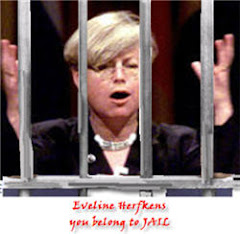
UNITED NATIONS, August 30 -- The year-long UN scandal of Eveline Herfkens taking $280,000 from the Dutch government to pay for a luxury apartment while ostensibly working for the UN Development Program, and then refusing to return in of it when exposed, is now subject to a specious solution veiled on August 29. Herfkens claims she will work for UNDP for a year for... one dollar. Of course, there are numerous concealed benefits of this supposed dollar-a-year status. And what exactly will this now discredited "anti-poverty warrior" accomplish? Even for a dollar, several UNDP insiders say, Herfkens is not worth it.
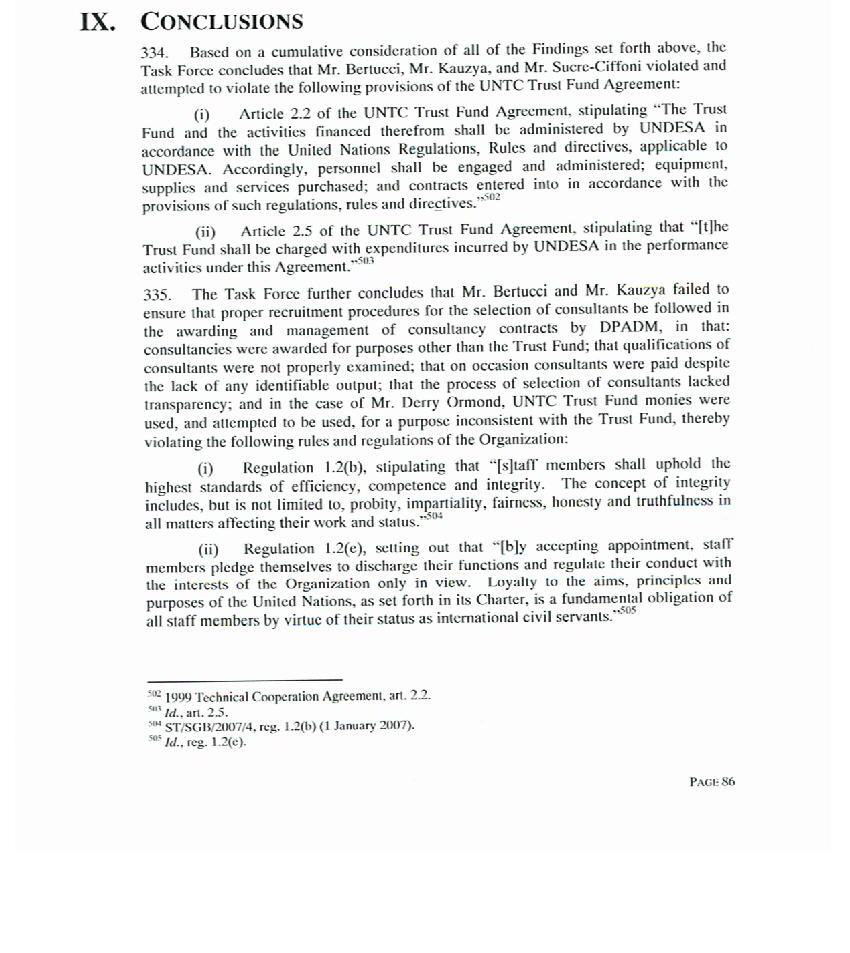
With the UN Development Program confronted by these ethics problems, where did UNDP turn to hire its new in-house Ethics Officer? To another scandal-plagued part of the UN system, Guido Bertucci's Department of Economic and Social Affairs. Bertucci retired on July 31 amid calls for discipline; the conclusion of the UN's confidential investigation of Bertucci, which Inner City Press has obtained and placed online here, is that Bertucci and at least two others, Mr. Kauzya and Mr. Sucre-Ciffoni, violated the terms of the UNTC Trust Fund Agreement and the integrity provisions of the UN Staff Regulations.
This is where UNDP turned for its in-house Ethics Officer, Elia Yi Armstrong. Sources point at that she was previously a pianist and teacher in Vancouver, certainly admirable but of only arguable relevance to fixing the ethical problems at UNDP. Even now that she has tried to beef up her online resume, it is noteworthy that according to the Terms of Reference, "The Ethics Adviser will be appointed for a period of one year, renewable up to a total term of office not to exceed four years." However, according to the Accountability Framework and oversight policy for the Executive Board of UNDP, "The Head of the UNDP Ethics Office serves a term of four-years, and is subsequently ineligible to hold any other post in UNDP after his/her term expires." This is a significant discrepancy that could impact her independence.

But who will audit these outrages? At the UN's Advisory Committee on Administrative and Advisory Questions, long-time director Mark Gilpin was first moved out of the job, and now will retire. He never returned calls, but still and all, such intrigue at a key committee raises questions.
People are moved around for the sake of it: Communications Director David Morrison, for example, is reportedly resurfacing in charge of the Capital Development Fund, despite a dearth of experience with micro-finance. For the record, UNDP will still not answering long-standing questions about countries in which it accepts currency exchange losses, has stated that Morrison's position at UNCDF
"was posted on the UNDP website, both internally and externally, as well as in the Economist. We received 155 applications and four candidates were interviewed. As for the Ethics Advisor, the post was also advertised internally and externally, with a special emphasis on reaching out ethics centers such as the ones at Natal University, Cornell, the ILO and Fordham. We received 73 applications and interviewed 5 candidates."
Then again, UNDP has refused to answer questions about how much it insures its top two executives for, an issue which has come up in terms of how families of the victims of the bombing of UNDP's Algiers premises in December are being treated. While the promised "Accountability Report" is now substantially late and has not been released, a conference call was held last week about the Brahimi Report. The call was chaired by UNFPA's Thoraya Obaid and included Department of Field Suppport chief Malcorra and outgoing head of security David Veness, who said if anything the UN is in more danger now that it was last December. And where's the Accountability?
Friday, June 13, 2008
PART 2: UNDP lied while under-oath at US Congressional Hearings...
 LEVIN:
Mr. Morrison?
MORRISON:
Thank you. As Fred just said, the -- to respond to the question why is UNDP hesitant, traditionally the hesitancy has come from the understanding at UNDP -- and, I think, in other parts of the funds and programs as well -- that the internal audits are management tools that then feed into an external audit process which is available to member states.
And my understanding is that's how the member states set up the system, so it's actually two-tiered, with the internal audits being just for UNDP management, and the external audits being widely available to member states. And the external auditors have full access to the internal audits.
In terms of why they're considered management tools -- and I think the question that has been asked throughout the morning -- why does the Secretariat make their audits -- or other organizations, not just the Secretariat, make their audits fully available, and the funds and programs up to this point have had a more restrictive regime?
UNDP's view on this -- and again, it's listening to its member states -- is that we're a field-based organization. We run operations in 166 countries. Our primary partner in those countries is the national government.
We run programs, in some cases, which national governments consider very sensitive. I'm thinking of gender programs that we run in some countries, or democratic governance programs that we run in some countries.
The strong sense that we're getting from our executive board, and particularly the program countries in which we work, is that they are reluctant to have what is, in effect, very frank comment on their own programs made publicly available.
I think as you know, Kemal Dervis has a proposal in front of the executive board this week that they're debating today and tomorrow to try to square the circle of the very legitimate demands for increased oversight with those feelings from the program countries.
LEVIN:
Has there ever been a resolution at the U.N. to change the policy relative to audits that was voted on by the assembly, General Assembly?
MORRISON:
My understanding is that as part of or subsequent to the oil-for-food affair, the General Assembly did, in fact, require the Secretariat to make its audits public, but perhaps...
LEVIN:
Just the Secretariat, but not the programs.
MORRISON:
No, not the funds and programs. In such matters, we are governed by our executive board.
LEVIN:
Not by the General Assembly?
MORRISON:
That's my understanding.
LEVIN:
And has anyone on the executive board, including the United States, ever made a motion that those internal audits be made public?
MORRISON:
There is no question that the United States and several other countries, primarily on the donor side, have moved very strongly to increase access to internal audits.
There's been equally strong feelings on the other side, primarily but not exclusively the program countries, the recipient countries, that do not want to have such a broad access regime.
So the proposal before the executive board today and tomorrow, which I think both Senator Coleman and yourself, Mr. Chairman, have said is a -- have characterized as a step in the right direction -- although not going far enough, because I think Senator Coleman listed three or four additional steps that you'd like to see.
In any event, that is the proposal that our administrator has put before our governing council. And we very much hope that it carries. And I know that he spoke personally with both of you on that.
LEVIN:
In your opening statement, Mr. Tipson, you said that the UNDP did not transfer tens of millions of dollars to the North Korean government. How many dollars were transferred?
TIPSON:
In our written statement, we've tried to summarize the various accounts, the various summaries of funds that went.
With respect to the NCC for UNDP account, which has been the subject of such controversy, the total amount of money that we transferred to that account over the 10-year period covered in that chart is, I think, $375,000, $376,000.
It was not a -- and we can discuss how development projects are done in North Korea that indicate why that is not a larger channel of funding that goes through that account.
LEVIN:
Well, now, you heard Ambassador Wallace say that the UNDP sent perhaps much more than $7 million in cash to the UNDP-related account. Did you hear him?
TIPSON:
Yes.
LEVIN:
Do you have a reaction to that?
TIPSON:
Well, again, our records are pretty clear on what went into that account, and it's a matter of the reliability of our systems, which we take great pride in, frankly, in knowing how much money went into that account.
It's not possible that the money that's being discussed, either $2.7 million, or $7 million, or the higher amounts that have been discussed were money that came from the United Nations Development Program.
LEVIN:
Into that specific account.
TIPSON:
That's right.
LEVIN:
OK. Thank you.
Senator Coleman?
COLEMAN:
Thank you, Mr. Chairman.
And I appreciate, gentlemen, the opportunity for this briefing, and I look forward to this as a conversation, or we'd like a little help on figuring out where do we go to make sure that in other countries the imprimatur of the U.N. is not being used for shell organizations, money laundering, transferring cash.
I just want to get back to this issue about the amount of dollars, and part of the confusion is the internal auditors -- I was looking at -- on the subcommittee report -- it talks about the difference, by the way, between -- not that chart -- but NEX and DEX, OK?
There are some programs that you give the money directly to the North Koreans and others that you provide the -- you do it yourself, and so the testimony is that most of the programs in North Korea you were doing, so you weren't turning over cash to the North Koreans. Is that correct?
TIPSON:
Can I have my colleague David Lockwood, who's...
COLEMAN:
Mr. Lockwood?
LOCKWOOD:
That's absolutely correct, Senator. The norm across the world is that most programs are executed with governments who have full responsibility for their own...
COLEMAN:
And is that NEX or DEX? Which one is it?
LOCKWOOD:
And that's called NEX.
COLEMAN:
NEX.
LOCKWOOD:
National execution.
COLEMAN:
National execution.
LOCKWOOD:
In the case of North Korea, they also preferred that route, but at our insistence large amounts of the money were, in fact, directly executed by UNDP so that we could have direct controls in place.
COLEMAN:
But the problem we have is if you look at your internal auditing, you have it broken up as 48 percent -- 48 percent is going to NEX and, what, 40 percent DEX.
LOCKWOOD:
That's correct, Senator.
COLEMAN:
That's the chart.
LOCKWOOD:
The chart is correct.
COLEMAN:
So the auditors are not aware of the internal arrangements?
LOCKWOOD:
I think the auditors were aware of the internal arrangements, and the distinction, of course, is that within what is formally nationally executed, the government in turn has asked UNDP, at our insistence, to execute a large proportion -- the largest proportion of that ourselves, which we also call direct execution.
TIPSON:
Indeed, there's a sentence right here, Senator -- the office is providing 100 percent support services to NEX projects. In other words, we executed on their behalf, even though it was called national execution.
COLEMAN:
But when you say we executed, are you talking about executing by employees in North Korea, by the program in North Korea, is that correct?
TIPSON:
The overall employee base.
COLEMAN:
And one of our concerns here -- and again, you said simply way of operating -- is the North Koreans -- they were North Korean agents. They picked the employees. They ran the programs. Is that a fair statement?
TIPSON:
Senator, it's fundamental of the way we work in development that it is a matter of capacity building. It's the locals we're trying to create the capabilities to do development.
COLEMAN:
But there's a difference between the government supplying government agents -- I'm not talking about development. There are other programs in which we actually hire locals, and then you're hiring people.
TIPSON:
Right.
COLEMAN:
But there's a difference between those folks and the government saying, "This is who's going to sit in that position." They're agents of the government.
That's not development, the government simply saying, "Here's who you're going to hire, and here's who's going to run the program."
TIPSON:
But the test, Senator, would be whether the work gets done. I mean, the objective is to accomplish development projects, and David, of course, is the one with the experience in North Korea.
But the test is whether those employees are actually doing the work that they're paid for.
COLEMAN:
But again, the conversation...
TIPSON:
Sure.
COLEMAN:
... to say that that's capacity building, when a government tells you, "These are the people you're hiring," I don't think that -- I'm a former mayor. That's not capacity building. And this is a conversation, not a debate.
I'm wondering if we can go to the chart with the application payment order, JPMorgan Chase, Bank of New York. One of the things that the committee found -- North Koreans have admitted -- is that they created this International Finance and Trade Joint Company, which is a shell company, to then transfer -- used to transfer dollars from North Korea to embassies in New York -- excuse me, in New York, in other places around -- Paris, whatever.
And I understand in our conversations this -- you weren't aware of this arrangement, is that a fair statement?
LOCKWOOD:
We were not aware at all of this arrangement.
COLEMAN:
But in fact, it went -- were you aware of the International Finance and Trade Joint Company?
LOCKWOOD:
I think we can all say we were not aware of that company.
COLEMAN:
All right. So my question is how do we -- are there some procedural things that could be put in place that -- you know, I'm thinking, you know, co-signing checks or doing something that would put you in a better place, other U.N. agencies in a better place, for their seal -- you know, this is a Good Housekeeping seal.
Money's being transferred, financial institutions, it says B.I. -- it says B.I. -- National Coordinating Committee for UNDP, message, payment for purchase of building in Canada. It looks like a pretty basic transaction.
We know the buildings weren't purchased. We don't know where the money went. But is there a system that you've thought about that would help make sure that your good name, your Good Housekeeping seal, is not abused by countries like North Korea or other places in the world?
TIPSON:
One of the recommendations that your staff makes in this report is that it be accomplished by changing the structure of how these accounts are managed and giving development agencies like UNDP co-signing authority so that actually the money is jointly controlled by the development agency.
That's something we're going to have to consider as a structural change. I will say that that's a significant challenge for all development agencies, to get countries to agree that that's the right approach to take. But I think it's one that we're going to have to consider very carefully.
There are really two problems here. One is the money and the other is the name. And I think we're able to protect ourselves from the abuse of the money by making sure we know how much goes in and how much doesn't go in.
As far as the name goes, it's very difficult to prevent any government from using our name on any account they want to use. And that wouldn't even be solved by the structural approach proposed by the staff, although it would accomplish other objectives.
COLEMAN:
Just one other chart, perhaps. This is Sindok Trading. This apparently is a legitimate transaction of UNDP, so about $229,000, almost $230,000 -- and the name of the applicant on this one is the International Finance and Trade Joint Company.
So you have the shell company being used to transit a legitimate transaction. Is there in place any process or something that would kind of alert you to the fact that you may have a shell company?
Again, I'm trying to find out are there things that we can do to make sure that we don't give legitimacy to what we have found out to be shell companies that were used for the purpose of laundering cash.
TIPSON:
Can I ask David Morrison to...
COLEMAN:
Absolutely.
MORRISON:
Sure, Senator Coleman. I think that we've researched this particular transaction quite extensively. It was a legitimate transaction. We got what we paid for in the $229,000.
We, frankly, did not know that when we went to the bank and said would you please pay this company in Singapore that they were sending the money via an entity that has, for us, subsequently been identified as an entity involved in financial shenanigans, you know, about which we're, of course, not happy.
There is a recommendation in the staff report in regards to a separate issue which is our financial transactions with an entity called Zang Lok, which does recommend that the various entities and various organizations in the international community, U.N. and presumably non-U.N., make stronger efforts to share information about which entities may be up to no good.
And we fully support that recommendation.
Tuesday, April 1, 2008
United Nations: Management Reforms and Operational Issues
GAO-08-246T January 24, 2008
Highlights Page (PDF) Full Report (PDF, 18 Pages) Accessible Text (HTML)
-------------------------------------------------------
Longstanding problems in United Nations (UN) management underscore the pressing need to reform and modernize the United Nations in areas ranging from management, oversight, and accountability to operational activities in specific countries. The United States has strongly advocated the reform of UN management practices and has also been critical of the restrictions Burma's military regime has imposed on many international organizations in Burma over the past 3 years. This testimony, based on recent GAO reports, discusses (1) management reform efforts at the UN Secretariat since 2006; (2) oversight and accountability in selected UN organizations; and (3) UN and other international organizations' activities in Burma.GAO's report on UN management reform efforts notes that (1) progress has varied in the five areas GAO examined--ethics, oversight, procurement, management operations of the Secretariat, and review of programs and activities (mandates)--and (2) various factors, such as disagreements among member states, have slowed the pace of progress. The UN ethics office has taken steps to improve organizational ethics, including implementing a whistleblower protection policy, but GAO identified issues that may limit the impact of the policy. The UN has taken steps to improve oversight, including establishing an Independent Audit Advisory Committee. However, UN funding arrangements continue to constrain the independence of the Secretariat's internal audit office and its ability to audit high-risk areas. The UN has taken steps to improve certain procurement practices, but has not implemented an independent bid protest system or approved a lead agency concept, which could improve procurement services. The UN has taken steps to improve certain management operations of the Secretariat, but has made little or no progress in others. Despite some limited initial actions, the UN's review of mandates has not advanced, due in part to a lack of support by many member states. Finally, the pace of UN management reforms has been slowed by member states' disagreements on reform efforts, lack of comprehensive implementation plans, administrative issues that complicate certain internal processes, and competing UN priorities. GAO's report on oversight and accountability of selected UN organizations notes that, although the six UN internal audit offices GAO reviewed have made progress in implementing international auditing standards, they have not fully implemented key components of the standards. None of these six organizations require their internal oversight staff to disclose their financial interests. However, GAO found that five of the six organizations have made efforts to increase accountability by establishing whistleblower protection policies and one was developing such a policy. GAO also reported that while the six UN evaluation offices GAO reviewed are working toward implementation of UN evaluation standards, they have not fully implemented them. Finally, GAO reported that the governing bodies responsible for oversight of the six organizations lack full access to internal audit reports. GAO's report on Burma notes that Burma's military regime has blocked or significantly impeded UN and other international organizations' efforts to address human rights concerns and to help people living in areas affected by ethnic conflict. The regime frustrated international organizations' efforts to monitor forced labor for years before signing an agreement in early 2007; restricted their efforts to assist populations living in conflict areas; and blocked their efforts to monitor prison conditions and conflict situations. The regime has, to a lesser degree, impeded UN food, development, and health programs. However, several UN and other international organization officials told GAO they are still able to achieve meaningful results in their efforts to mitigate some of Burma's humanitarian, health, and development problems.
Subject Terms
Program management
Program evaluation
Procurement practices
Policy evaluation
International relations
International organizations
International food programs
International cooperation
International agreements
Internal audits
Burma
Foreign aid programs
Auditing standards
Accountability
United Nations Oil for Food Program
Senators concerned with U.N. Secretary-General undermining U.N. ethics reform
Letters:
Senators concerned with U.N. undermining ethics (349.4 KBs)
Dec 14, 2007