Sunday, August 4, 2013
Climate innovation debate: What’s the future for carbon trading systems, around the world?
Wednesday, July 3, 2013
U.N. agencies and UNDP in North Korea carrying in cash to keep operations afloat
Read this in full at UNDP: http://www.foxnews.com/world/2013/06/27/un-agencies-in-north-korea-carrying-in-cash-to-keep-operations-afloat/#ixzz2Y1NsIwvc
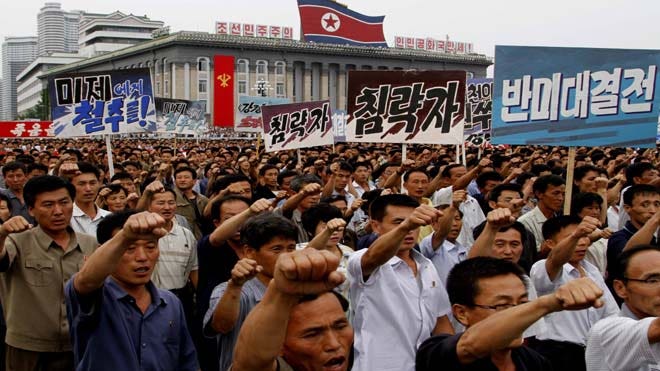
North Koreans march on Kim Il Sung Square in Pyongyang, North Korea as they hold an anti-U.S. demonstration on Tuesday, the 63rd anniversary of the outbreak of the three-year Korean War, from 1950 to 1953. (AP Photo/KIm Kwang Hyon)
Read more: http://www.foxnews.com/world/2013/06/27/un-agencies-in-north-korea-carrying-in-cash-to-keep-operations-afloat/#ixzz2Y1NsIwvc
Wednesday, May 15, 2013
Fox News: UNDP chases CA$$ rather than results
The $5.7 billion United Nations Development Program, the U.N.’s flagship anti-poverty agency, is poor at producing lasting results, sets unrealistic or unfocused priorities and often seems more interested in getting funding than in setting up programs that make the best sense, according to an internal assessment that will be discussed at a top-level meeting next month.
Moreover, in a sweeping examination of some $19.7 billion worth of UNDP programs between 2008 and 2012, the report says that only in “just about half” of the country-by-country efforts was the agency “likely to have made, or make, a significant contribution to the intended outcome.”
Nor is the agency very good at judging where it is going wrong, the report adds, meaning that “strengthening the efficiency of projects and programs is a major challenge.”
The sobering evaluation of UNDP’s usefulness was carried out by UNDP’s own Evaluation Office, whose director is appointed by UNDP’s top official, Helen Clark. So far, only an executive summary of the evaluation is available to members of UNDP’s 36-nation supervisory Executive Board, which holds its semi-annual meeting in New York City starting on June 3. According to a UNDP spokesman, a full version of the report will be made public next week.
George Russell is editor-at-large of Fox News and can be found on Twitter @GeorgeRussell
Wednesday, November 28, 2012
At Doha - it's all about the $$CASH for United Nations (here is a collage of what to get from the far left dummies)
Telegraph.co.uk
The United Nations is meeting for its latest round of talks on climate change in the oil and gas-rich nation Qatar. About 17,000 people from 194 countries will attend the meeting at the Qatar National Convention Centre, making it Doha's largest ever ...
United Nations Climate Change Conference In Qatar: Urgent Talks Over Global ...
Huffington Post UK
In the run-up to this year's annual international climate meeting, warnings over the path the world is on have been coming thick and fast from the likes of the United Nations Environment Programme (UNEP), insurers, the World Bank and the CIA. climate ...
Qatar set to host major climate talks
Laramie Boomerang
When the tiny desert nation of Qatar was chosen to host the latest round of United Nations climate change negotiations, environmentalists were stunned. Talks were already in trouble, and now the high-level discussions were moving to a member of OPEC ...
Dr Greg Picker, Associate Director of Sustainability and Climate Change at ...
ABC Online (blog)
Today the UN climate change negotiations begin another round of discussion in Doha, Qatar, as warnings mount over the dangers of failing to tackle global warming. In the run-up to this year's annual meeting, warnings over the path the world is on have ...
Giving up on an international climate treaty
ABC Local
The UN climate change negotiations are slow, frustrating and easily blocked. But that doesn't mean that we should give up on them altogether. PROGRESS TOWARDS AN international agreement on tackling climate change has been painfully slow, dogged ...
Doha Climate Summit
Zee News
The summit is officially referred to as the 18th session of the Conference of the Parties to the United Nations Framework Convention on Climate Change (UNFCCC) and the 8th session of the Conference of the Parties serving as the Meeting of the Parties ...
Qatar hosts climate summit amid criticism
Aljazeera.com
As Qatar welcomes world leaders to the 18th United Nations climate change conference, its own environmental record has come under criticism as a major contributor to greenhouse gases. The climate talks, which begin on Monday in Doha, have placed a ...
Qatar ready to greet the world
eTurboNews
DOHA, Qatar – With the United Nations Climate Change Conference starting in Doha tomorrow, Qatar National Convention Centre (QNCC) is ready to greet more than 10,000 visitors each day. The various teams at QNCC have finalised preparations for the ...
Climate financing fund will be empty unless Doha talks find solution
GlobalNews.ca
When environment ministers, including Canada's Peter Kent, meet in Doha for United Nations climate negotiations next week, they will need to figure out how to come up with the rest of the money, said Christiana Figueres, the top UN climate change official.
Doha Summit: What to expect
Business Green
It might be slated as the United Nations Climate Change Summit least likely to deliver a major breakthrough, but the talks starting in Qatar this week could put in place crucial building blocks towards a promised new global agreement in 2015. Cast your ...
Wednesday, November 14, 2012
If you are in United States and affected by Sandy Storm - chances are you wont qualify for insurance coverage from flooding ! - You wish you were in Pakistan - where UNDP/SMEDA gives checks $$$ for flood victims !
UNDP/SMEDA distributes cheques among flood affectees
Timergara—The Small and Medium Enterprises Development Authority (SMEDA) on Sunday distributed cheques worth of Rs 1.5 million among the short listed candidates hailing from the Timergara Union council who were affected by flash floods in 2010. A function in this regard was held here at a local hotel. District Coordinator of the SMEDA’s Early Recovery Project (ERP) Ms Noor Zeba distributed cheques among 93 ladies and 25 male residents whose businesses had suffered due to floods.
Briefing local journalists ERP coordinator for Dir Lower Adnan Afridi said that SMEDA had launched its early recovery project in the area with the financial support of the United Nations Development Programme (UNDP) since September 2011 in order to reinvigorate and stimulate the flood affected businesses and livelihood activities. He said the authority had been engaged in the area since then during which multiple activities had been completed.
He said that Rs 1.5 million were distributed among the flood affected people of Timergara on Sunday during a ceremony which was attended by notables of the area and community members.
Click here for this in full @ Pakistan Observer: http://pakobserver.net/detailnews.asp?id=182012
Thursday, November 27, 2008
Amnesia, Followed By Near-Total Recall
Claudia Rosett 11.27.08, 12:00 AM ET
It's now more than six years since I first labeled a file "Oil-for-Food" and began reporting on the former relief program for Iraq that has since become shorthand for United Nations corruption.
In all that time, one of the greatest frustrations has been the shroud of secrecy, evasions and lies with which the UN to this day has veiled not only its handling of Oil-for-Food, but the long series of scandals that have continued to brew in its diplomatically immune depths.
For outsiders, one of the biggest obstacles to uncovering the truth about the UN is the sheer tedium of its procedures and lingo. Waste, fraud and abuse--when disclosed at all--tend to come wrapped in generic labels, referring in many cases to unnamed officials, with the shockers often embedded deep in lengthy, bloodless reports. Investigations too often devolve into drawn-out coverups, while UN officials look for ways to contain not the harm to the public, but the damage to the UN's reputation.
Even in the reports of the supposedly tell-all 2004-2005 UN-authorized inquiry into Oil-for-Food, led by Paul Volcker, it is hard in many places to draw a line between exposé and coverup. One of my favorite examples is Volcker's first interim report, released in February 2005, in which his committee described disturbing behavior by the person who was then deputy secretary general, Louise Frechette, referring to her 12 times without once mentioning her name.
When Volcker finished his inquiry, instead of heeding congressional urgings to release the underlying evidence, he turned the archive over to the black hole of the UN's own legal department. This not only ensured that many lingering questions would remain unanswered; it obscured the matter of whether they had ever been asked in the first place.
So, it was with great interest that this week I picked up a new book on the UN, Backstabbing for Beginners: My Crash Course in International Diplomacy by Michael Soussan. Framed as a coming-of-age story, this is an insider memoir by a former UN staffer turned whistle-blower.
Born in Denmark and schooled in France and the U.S., Soussan went to work for Oil-for-Food in 1997, arriving as a wide-eyed young man with a desire to "make a difference." In 2000, about halfway through the 1996-2003 program, he resigned in disgust. Four years later, when scandal erupted over the program, he began to speak up.
Soussan spent much of his time at Oil-for-Food at the right hand of the program's executive director Benon Sevan, an Armenian Cypriot whose Byzantine management style earned him the in-house nickname of "Pasha." This was a prime perch from which to observe the UN's inner workings.
Soussan writes with a crisp sense of the absurd, lampooning a long list of characters and UN practices. For those who would see no evil in the UN, there is plenty here to illuminate its internal contradictions, endless infighting and the self-serving ethos of its ever-expanding operations. There are anecdotes here that ought to warn off any U.S. administration from placing any serious trust in this institution.
But it was with a certain disquiet that I reached the end of this 332-page book. To get to the real news, you have to turn to page 295. That's where Soussan discloses, 10 years after the fact, that he was present at the moment when the alleged deal went down between the Iraqis and Sevan for the Oil-for-Food director to start receiving payoffs from the government of Baghdad. (Sevan, who has been living for more than three years beyond reach of U.S. extradition on Cyprus, says he is innocent of all wrong-doing.)
In considerable detail, Soussan now recounts the scene (1998, at a lavish lunch hosted by an Iraqi official at the Baghdad Hunting Club) complete with quotes, the fish and salad on the menu, and the bistro attire of the waiters. Hit with indigestion, Soussan was making trips to and from the men's room and did not hear the full conversation between the official and Sevan. But he heard enough, both at the table and on the way back out to the car, to reconstruct a fair chunk of the exchange, including Sevan's inquiry about how to procure Iraqi oil contracts for a friend.
He quotes the Iraqi official inquiring "What is your ... friend's name?" He describes Sevan's mumbled response, and the Iraqi's reply: "Tell your friend to contact us again." He describes the doubts voiced immediately afterward by a UN colleague who was also present and remarked in an aside to Soussan, "This is not the proper way to conduct official business."
But despite his self-appointed role as whistle-blower during the investigations in 2004 and 2005 into Oil-for-Food, during interviews with the UN-authorized Volcker inquiry and with federal prosecutors, that conversation apparently slipped Soussan's mind so thoroughly that he says he never mentioned any of this dialogue. By his account, it was not until Volcker in August 2005 produced a report alleging corrupt behavior by Sevan that a light bulb went on, and he realized what he had heard. By that time, Sevan, after almost a year of lingering in New York to "assist" in the investigations, had quietly skipped town.
In his book, Soussan muses: "Had I connected the dots earlier and talked to the authorities about Pasha's efforts to introduce his 'friend' the oil trader to the Iraqi government during our lunch at the Baghdad Hunting Club back in 1998, it is possible that the District Attorney's office might have moved against him much faster and arrested him while he was still in New York."
Soussan rationalizes this missed opportunity by suggesting that had Sevan been found guilty early on the investigations might have stopped there. "Chances are we never would have found out about the true extent of the corruption that plagued our international system."
Come again? Actually, had Sevan been arrested and persuaded to turn government witness, he might have shed a great deal more light on figures inside the UN; in the end, not a single employee was fired and former Secretary-General Kofi Annan by 2006 was dismissing the biggest fraud ever exposed at the UN in terms such as "If there was a scandal... ."
Granted, the mind plays tricks, and Soussan deserves congratulations for deciding to speak up at all. But it's hard to believe that in the thick of the investigations, while testifying to Congress and writing articles about the program, he had no clue what he'd witnessed.
On March 11, 2004, just three days after Soussan published an article in The Wall Street Journal describing Oil-for-Food as corrupt, former Journal staffer Therese Raphael wrote a long and detailed article (to which Soussan makes no reference) describing documentation found in Baghdad pointing to alleged oil payoffs to Sevan. Over the following year, as investigations went on, there was enormous coverage available to anyone following the story--which Soussan certainly was--on how the graft worked, including further allegations about Sevan.
Nor does it seem that the questions put to Soussan by investigators were overly subtle. He recounts that "After one interview in which I refused to speculate about Pasha's guilt, an assistant DA asked me point-blank whether I was protecting Pasha out of a sense of loyalty."
In the end, to this welter of amnesia followed by near-total recall, Soussan adds that he was relieved not to have had to testify against Sevan, glad that this man "who had taken me under his wing when I was an absolute beginner in the world of international diplomacy would be spared the prospect of spending his retirement years in jail."
On a further upbeat note, Soussan concludes that the Oil-for-Food scandal kicked off a new era of radical reform at the UN--one in which he himself sounds ready to re-enlist if called upon (which is what he tried to do between resigning in 2000 and turning whistle-blower in 2004). He claims that "UN whistle-blowers were offered new protection. A steady progression toward greater transparency was in motion, and to the best of my ability I would contribute to this process in the future."
In truth, the Oil-for-Food scandal sparked a huge debate at the time and may have served some purpose in alerting American taxpayers to the corrupt nature of the UN, which their dollars so substantially support. But of genuine reform, there has been almost nothing.
Promises of transparency faded into policies of "financial disclosure" that require no public disclosure at all. The ever-expanding budget remains an opaque and largely unaccountable morass. UN internal audits are now at least made available to the public by the U.S. Mission, but even when they expose wrong-doing, few seem to notice. and almost nothing gets done.
An Ethics Office set up to protect whistle-blowers has proved toothless, as illustrated by the firing and subsequent mauling of whistle-blower Tony Shkurtaj, who called attention to the "Cash-for-Kim" abuses in the UN Development Program's North Korea office. The vaunted reform of the Geneva-based, depraved UN Human Rights Commission into the new Human Rights Council has offered no improvement--unless one counts the $23 million new ceiling recently installed, courtesy of Spanish taxpayers, in its meeting chamber.
Soussan's tale is a complex and interesting one, and I thank him for two kind references in the book to my own reporting. But to frame Oil-for-Food as a coming-of-age story, either for the author of this book or--more important--for the UN itself, is dangerously misleading.
Claudia Rosett, a journalist-in-residence with the Foundation for Defense of Democracies, writes a weekly column on foreign affairs for Forbes.com.
Monday, July 28, 2008
REUTERS: U.N. admits "significant" Myanmar exchange rate loss
REUTERS
UNITED NATIONS (Reuters) - The United Nations top humanitarian affairs official said on Monday that the world body had incurred "significant" losses in Myanmar due to a distorted official exchange rate while delivering cyclone aid.
Earlier this month the United Nations issued an appeal for over $300 million in additional aid for Myanmar to cope with the effects of a cyclone in May that left around 140,000 people dead or missing.
U.N. Under-Secretary-General for Humanitarian Affairs John Holmes told reporters that the world body has so far lost around $10 million on aid delivered so far, adding up to an average loss of some 15 percent.
"We were arguably a bit slow to recognize ... how serious a problem this has become for us," Holmes told reporters, adding that the loss was "significant." He said the spread between the market and official rate widened suddenly in June.
"It's not acceptable," he added.
Holmes said the reason the United Nations did not include the issue of the exchange rate losses in the appeal documents was that U.N. officials did not realize the severity of the problem.

"Certainly at the time the appeal was made, we were not aware of the extent of the loss," he said.
The issue was first raised by the news blog Inner City Press (www.innercitypress.com), which follows the United Nations.
It reported last week that the military junta had changed the official exchange rate since the cyclone so that the estimated loss had increased from 15 percent to 25 percent.
Inner City Press reported on Monday that an internal U.N. memorandum showed the United Nations was aware of the problem as early as June.
The loss comes from a complicated system whereby the United Nations uses so-called foreign exchange certificates, which have a nominal value of $1 per certificate and are then exchanged for local currency, kyats, at a rate set by the government.
The market rate for kyats is around 1,100 per dollar but the U.N. rate is now around 880, according to Inner City Press. Holmes confirmed the losses had expanded to as much as 25 percent.
The International Monetary Fund raised the issue of what it described as Myanmar's distorted official exchange rate in a report it published in November 2007.
"The use of the highly overvalued official exchange rate for conversion purposes results in understatement of external trade and the foreign component of consumption, government expenditures, and investment," the IMF said in the report.
Holmes said it was unclear where the exchange rate losses were going and who specifically was benefiting.
"It's not clear that it goes straight into the government's pockets, because they don't do the actual exchange," he said. "That's done by currency vendors. I'm not saying that there isn't some benefit to the government in the spread somewhere -- the likelihood is that there is."
Holmes added that in any financial transaction there is an exchange loss. "The question is -- is this a reasonable kind of fee to accept or is it not, and clearly 20 percent is a real problem for us."