Showing posts with label david lockwood. Show all posts
Showing posts with label david lockwood. Show all posts
Saturday, January 3, 2009


Wednesday, July 23, 2008
VICTORY #81: David Morrison rush to take off-line the Turkey ADD after UNDP-WATCH reporting
 Today after 103 days in UNDP's main website, David Morrison the Director of Communications of UNDP called his office early, and started demanding that the Turkey ADD be immediately removed from the main web-page of UNDP Website.
This is yet another victory of UNDP Watchers who are going to continue to Watch and expose the wrong doings inside the UNDP and its cuppola.
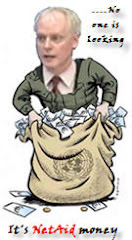
Good job David Morrison, just don't forget about NetAid Money, we still want to know what you did with them .
Tuesday, July 15, 2008
North Korea’s Stacked Deck

By ART BROWN
Published: July 15, 2008
CHINA’S announcement on Saturday that negotiators have agreed on a blueprint for verifying North Korea’s nuclear disarmament is being seen as the latest in a string of hopeful signs. For a while, the drumbeat in Washington has been that the so-called six-party talks are going well and the North Korean nuclear program is well on its way to being contained. If only that were true.
In fact, the Kim Jong-il regime is getting exactly what it wants and using American hunger for diplomatic success to split us from our most important regional allies in the process. If this were high-stakes poker, the North Koreans would be biting their lips to hide their smiles at the cards in their hands.
As it stands now, we have agreed to ship North Korea a million new tons of fuel oil, released Mr. Kim from the handcuffs of our Trading With the Enemy Act, and — within the legally mandated 45 days — will throw in other goodies that come with removing North Korea from the State Department’s state-sponsor-of-terrorism list. This comes on top of the American decision last year to allow the North Koreans to transfer their tainted money out of a bank in Macao.
But the topper is that Kim Jong-il knows he still gets to keep his stockpile of plutonium and even hang on to his existing rack of nuclear weapons (minus the one he tested in October 2006 to set the tone of the game).
Nor are the North Koreans going to be required to fess up to the uranium-enrichment program they picked up from Pakistan earlier in the decade. Nor must they explain their role at the suspected nuclear reactor in the Syrian desert that Israeli jets were reported to have destroyed in 2007.
And while the North Koreans insist they have changed their ways, The Washington Post reported last month that traces of uranium were found on the very 18,000 pages of documents that North Korea submitted to the Washington in an effort to “come clean” on its programs.
Basically, all the North Koreans had to do for these latest concessions was to blow up the cooling tower at the Yongbyon nuclear plant, a publicity stunt for which they billed the United States $2.5 million. Kim Jong-il’s plus-minus sheet looks decidedly better than ours.
The ugly truth is that North Korea no longer needed the creaking plutonium apparatus at Yongbyon — it was a liability to them, being visible to American bombers. Knocking down the cooling tower for the news cameras simply took away Washington’s ability to do the same in the dark of night. Far better to have a clandestine uranium enrichment program tucked away, safely underground.
Not only will our taking North Korea off the state-sponsored terrorist list strengthen the regime and reward those minimal responses, it is a direct blow to our strongest ally in the region, Japan, which believes it had at least 13 (and possibly dozens more) citizens kidnapped by North Korea in the 1970s and ’80s.
Resolving this abductee issue goes to the fundamental integrity of the Japanese government. If the situation were reversed, and Americans were grabbed off a dark Florida beach by a Cuban patrol boat, we would go to war to bring them home.
But America has pledged to protect Japan in return for the Japanese forgoing offensive arms. Taking the Japanese abductees off the negotiating table while leaving North Korea with its existing weapons may cause Tokyo to question the utility of that pledge. North Korea’s missiles can’t hit us, but Japan is well within the kill zone.
No one should imply that North Korea is an easy nut to crack. Smart folks on both sides of the domestic political aisle have struggled with this challenge. North Korea has shown no intention of giving up its nuclear weapons, and we are unfortunately not in a position to either force or entice it to do so. Despite all the spin out of the talks among the six concerned parties — China, Japan, North Korea, Russia, South Korea and the United States — there is no reason to honestly assume North Korea will ever give up its nuclear capability.
But things are not made any better by pretending that we are making progress, as Washington seems to have decided to do, or by ignoring the real concerns of our allies. Our approach to North Korea calls for a lot more honesty and, in the eyes of those with more at risk, a greater dose of sincerity. There is more at stake here than just North Korean bombs.
Art Brown, a 25-year veteran of the C.I.A., was the head of the Asia division of the agency’s clandestine service from 2003 to 2005.
Published: July 15, 2008
CHINA’S announcement on Saturday that negotiators have agreed on a blueprint for verifying North Korea’s nuclear disarmament is being seen as the latest in a string of hopeful signs. For a while, the drumbeat in Washington has been that the so-called six-party talks are going well and the North Korean nuclear program is well on its way to being contained. If only that were true.
In fact, the Kim Jong-il regime is getting exactly what it wants and using American hunger for diplomatic success to split us from our most important regional allies in the process. If this were high-stakes poker, the North Koreans would be biting their lips to hide their smiles at the cards in their hands.
As it stands now, we have agreed to ship North Korea a million new tons of fuel oil, released Mr. Kim from the handcuffs of our Trading With the Enemy Act, and — within the legally mandated 45 days — will throw in other goodies that come with removing North Korea from the State Department’s state-sponsor-of-terrorism list. This comes on top of the American decision last year to allow the North Koreans to transfer their tainted money out of a bank in Macao.
But the topper is that Kim Jong-il knows he still gets to keep his stockpile of plutonium and even hang on to his existing rack of nuclear weapons (minus the one he tested in October 2006 to set the tone of the game).
Nor are the North Koreans going to be required to fess up to the uranium-enrichment program they picked up from Pakistan earlier in the decade. Nor must they explain their role at the suspected nuclear reactor in the Syrian desert that Israeli jets were reported to have destroyed in 2007.
And while the North Koreans insist they have changed their ways, The Washington Post reported last month that traces of uranium were found on the very 18,000 pages of documents that North Korea submitted to the Washington in an effort to “come clean” on its programs.
Basically, all the North Koreans had to do for these latest concessions was to blow up the cooling tower at the Yongbyon nuclear plant, a publicity stunt for which they billed the United States $2.5 million. Kim Jong-il’s plus-minus sheet looks decidedly better than ours.
The ugly truth is that North Korea no longer needed the creaking plutonium apparatus at Yongbyon — it was a liability to them, being visible to American bombers. Knocking down the cooling tower for the news cameras simply took away Washington’s ability to do the same in the dark of night. Far better to have a clandestine uranium enrichment program tucked away, safely underground.
Not only will our taking North Korea off the state-sponsored terrorist list strengthen the regime and reward those minimal responses, it is a direct blow to our strongest ally in the region, Japan, which believes it had at least 13 (and possibly dozens more) citizens kidnapped by North Korea in the 1970s and ’80s.
Resolving this abductee issue goes to the fundamental integrity of the Japanese government. If the situation were reversed, and Americans were grabbed off a dark Florida beach by a Cuban patrol boat, we would go to war to bring them home.
But America has pledged to protect Japan in return for the Japanese forgoing offensive arms. Taking the Japanese abductees off the negotiating table while leaving North Korea with its existing weapons may cause Tokyo to question the utility of that pledge. North Korea’s missiles can’t hit us, but Japan is well within the kill zone.
No one should imply that North Korea is an easy nut to crack. Smart folks on both sides of the domestic political aisle have struggled with this challenge. North Korea has shown no intention of giving up its nuclear weapons, and we are unfortunately not in a position to either force or entice it to do so. Despite all the spin out of the talks among the six concerned parties — China, Japan, North Korea, Russia, South Korea and the United States — there is no reason to honestly assume North Korea will ever give up its nuclear capability.
But things are not made any better by pretending that we are making progress, as Washington seems to have decided to do, or by ignoring the real concerns of our allies. Our approach to North Korea calls for a lot more honesty and, in the eyes of those with more at risk, a greater dose of sincerity. There is more at stake here than just North Korean bombs.
Art Brown, a 25-year veteran of the C.I.A., was the head of the Asia division of the agency’s clandestine service from 2003 to 2005.
Friday, June 13, 2008
US Government Statement on Review of UNDP's Operations in North Korea

USUN PRESS RELEASE # 143(08)
June 12, 2008
FOR IMMEDIATE RELEASE
Office of Press and Public Diplomacy
United States Mission to the United Nations
140 East 45th Street
New York, N.Y. 10017
U.S. Statement on the Report of the External Independent Investigative Review Panel: UN Development Program Activities in North Korea 1999-2007, June 12, 2008
http://www.usunnewyork.usmission.gov/press_releases/20080612_143.html
--------------------------------------------------------------------------------
The United States welcomes the Panel's Report and remains concerned by a number of its findings and the on-going need for corrective action. The United States has been working with UNDP management for over a year now to address systemic weaknesses through our UN Transparency and Accountability Initiative (UNTAI). In the coming months, we will follow up with UNDP management to address the Panel's findings and recommendations. We expect our collective effort to result in an appropriate transparency and accountability system for the organization that can help turn the page on this episode.
During the 1999-2007 period covered by the Panel's review, the United States provided over $1.5 billion to support UNDP and its activities worldwide. As one of the largest donors to UNDP and a member of its Executive Board, the United States has a responsibility to ensure the organization meets the standards of accountability and trust expected of public institutions. We must ensure that funding provided to UNDP is used in the most effective way possible and for its intended purpose -- to help the world's poor. In this spirit we offer the following observations.
The Report, which is voluminous, confirms many previous concerns raised by Member States and the findings of both the UN Board of Auditors (BOA) and the U.S. Senate Permanent Subcommittee on Investigations (PSI) that there were broad management deficiencies across the entire UNDP/DPRK Country Program regarding payment modalities, staffing practices and project monitoring.
Specifically, we note that the Report confirms that payments were made in bearer instruments, such as cash or 'cash-checks.' As a result of this practice, this Report, like the previous BOA Report, was unable to determine whether check payments made by UNDP to persons and entities were received by the intended beneficiaries. In fact, the Report confirms that "core functions," such as Finance Officer, were performed by local North Korean personnel seconded from the DPRK government. The Report also confirms that UNDP project visits were circumscribed by the DPRK government through required advance "clearance or authorization." Further, the Report confirmed that there were broader management deficiencies relating to project monitoring and implementation across the entire UNDP DPRK Country Program.
As the U.S. Senate PSI Report indicated, these problems might have been addressed earlier had internal audits done by UNDP been made available to Members of the UNDP Executive Board. We therefore welcome the Panel's recommendation that UNDP make its internal audits available to Member States. We are working with UNDP and other Funds and Programs to ensure this becomes a normal practice across the UN system.
We note that the figures provided in the Report are inexact regarding the transfer of funds to the DPRK or DPRK-controlled entities by UNDP and by other UN agencies acting on UNDP's behalf. The figures cover a wide range of possible amounts. Nonetheless, the report does appear to confirm much larger figures than reported earlier by UNDP.
In reviewing available UNDP project budget documents, the Panel was unable to determine in 74% cases "whether the ultimate beneficiary is consistent with the payee name indicated in the financial system," reflecting lax fiduciary practices. Moreover, the Panel was unable to conclusively determine if diversion occurred.
The Panel noted that there is no evidence that UNDP officials knew that the DPRK government misused accounts that had been set up to receive UNDP funds to transfer North Korean monies abroad to avoid possible sanctions or to entities associated with secret weapons programs - nevertheless, we are deeply troubled by this misuse. The Report observes that UNDP did not sufficiently align its management controls to the "challenging environment" in which it found itself operating. Accordingly, the Report recommends "that an evaluation of UNDP-DPRK controls be performed" to strengthen these controls.
The Panel Report revealed an absence of understanding and required sensitivity to U.S. export control laws with respect to "dual use" items. As a result, a large number of sensitive items controlled by the U.S. for "national security and anti-terrorism reasons" were exported and/or retransferred by UNDP to North Korea without licenses.
The Panel noted that UNDP staff had long been aware of the use of counterfeit notes in North Korea. Previous UNDP staff in Pyongyang recognized that "counterfeiting was a significant issue at that time," and took measures to limit UNDP's vulnerability. However, "from the fall of 1999 to 2007, there was no apparent discussion among the Country Office staff about taking proactive measures." UNDP headquarters also ignored warning signs regarding counterfeit U.S. currency, which the U.S. Government brought to the attention of UNDP in the summer of 2006. The Panel noted that the head of UNDP Pyongyang office learned about the counterfeit U.S. currency stored in his office safe in October 2006, but waited until February 2007 to inform UNDP headquarters. The Panel also noted inconsistent accounts of this issue from the UNDP Comptroller.
Finally, the Report found that the whistleblower was justified in raising issues about UNDP's practices in the DPRK and that "he reported conduct and facts about UNDP operations in the DPRK that required resolution and may well have been in violation of UNDP policies as well as applicable agreements with the DPRK." It appears that the whistleblower did not have an opportunity to comment on the Panel's report before it was released.
PART 2: UNDP lied while under-oath at US Congressional Hearings...
 LEVIN:
Mr. Morrison?
MORRISON:
Thank you. As Fred just said, the -- to respond to the question why is UNDP hesitant, traditionally the hesitancy has come from the understanding at UNDP -- and, I think, in other parts of the funds and programs as well -- that the internal audits are management tools that then feed into an external audit process which is available to member states.
And my understanding is that's how the member states set up the system, so it's actually two-tiered, with the internal audits being just for UNDP management, and the external audits being widely available to member states. And the external auditors have full access to the internal audits.
In terms of why they're considered management tools -- and I think the question that has been asked throughout the morning -- why does the Secretariat make their audits -- or other organizations, not just the Secretariat, make their audits fully available, and the funds and programs up to this point have had a more restrictive regime?
UNDP's view on this -- and again, it's listening to its member states -- is that we're a field-based organization. We run operations in 166 countries. Our primary partner in those countries is the national government.
We run programs, in some cases, which national governments consider very sensitive. I'm thinking of gender programs that we run in some countries, or democratic governance programs that we run in some countries.
The strong sense that we're getting from our executive board, and particularly the program countries in which we work, is that they are reluctant to have what is, in effect, very frank comment on their own programs made publicly available.
I think as you know, Kemal Dervis has a proposal in front of the executive board this week that they're debating today and tomorrow to try to square the circle of the very legitimate demands for increased oversight with those feelings from the program countries.
LEVIN:
Has there ever been a resolution at the U.N. to change the policy relative to audits that was voted on by the assembly, General Assembly?
MORRISON:
My understanding is that as part of or subsequent to the oil-for-food affair, the General Assembly did, in fact, require the Secretariat to make its audits public, but perhaps...
LEVIN:
Just the Secretariat, but not the programs.
MORRISON:
No, not the funds and programs. In such matters, we are governed by our executive board.
LEVIN:
Not by the General Assembly?
MORRISON:
That's my understanding.
LEVIN:
And has anyone on the executive board, including the United States, ever made a motion that those internal audits be made public?
MORRISON:
There is no question that the United States and several other countries, primarily on the donor side, have moved very strongly to increase access to internal audits.
There's been equally strong feelings on the other side, primarily but not exclusively the program countries, the recipient countries, that do not want to have such a broad access regime.
So the proposal before the executive board today and tomorrow, which I think both Senator Coleman and yourself, Mr. Chairman, have said is a -- have characterized as a step in the right direction -- although not going far enough, because I think Senator Coleman listed three or four additional steps that you'd like to see.
In any event, that is the proposal that our administrator has put before our governing council. And we very much hope that it carries. And I know that he spoke personally with both of you on that.
LEVIN:
In your opening statement, Mr. Tipson, you said that the UNDP did not transfer tens of millions of dollars to the North Korean government. How many dollars were transferred?
TIPSON:
In our written statement, we've tried to summarize the various accounts, the various summaries of funds that went.
With respect to the NCC for UNDP account, which has been the subject of such controversy, the total amount of money that we transferred to that account over the 10-year period covered in that chart is, I think, $375,000, $376,000.
It was not a -- and we can discuss how development projects are done in North Korea that indicate why that is not a larger channel of funding that goes through that account.
LEVIN:
Well, now, you heard Ambassador Wallace say that the UNDP sent perhaps much more than $7 million in cash to the UNDP-related account. Did you hear him?
TIPSON:
Yes.
LEVIN:
Do you have a reaction to that?
TIPSON:
Well, again, our records are pretty clear on what went into that account, and it's a matter of the reliability of our systems, which we take great pride in, frankly, in knowing how much money went into that account.
It's not possible that the money that's being discussed, either $2.7 million, or $7 million, or the higher amounts that have been discussed were money that came from the United Nations Development Program.
LEVIN:
Into that specific account.
TIPSON:
That's right.
LEVIN:
OK. Thank you.
Senator Coleman?
COLEMAN:
Thank you, Mr. Chairman.
And I appreciate, gentlemen, the opportunity for this briefing, and I look forward to this as a conversation, or we'd like a little help on figuring out where do we go to make sure that in other countries the imprimatur of the U.N. is not being used for shell organizations, money laundering, transferring cash.
I just want to get back to this issue about the amount of dollars, and part of the confusion is the internal auditors -- I was looking at -- on the subcommittee report -- it talks about the difference, by the way, between -- not that chart -- but NEX and DEX, OK?
There are some programs that you give the money directly to the North Koreans and others that you provide the -- you do it yourself, and so the testimony is that most of the programs in North Korea you were doing, so you weren't turning over cash to the North Koreans. Is that correct?
TIPSON:
Can I have my colleague David Lockwood, who's...
COLEMAN:
Mr. Lockwood?
LOCKWOOD:
That's absolutely correct, Senator. The norm across the world is that most programs are executed with governments who have full responsibility for their own...
COLEMAN:
And is that NEX or DEX? Which one is it?
LOCKWOOD:
And that's called NEX.
COLEMAN:
NEX.
LOCKWOOD:
National execution.
COLEMAN:
National execution.
LOCKWOOD:
In the case of North Korea, they also preferred that route, but at our insistence large amounts of the money were, in fact, directly executed by UNDP so that we could have direct controls in place.
COLEMAN:
But the problem we have is if you look at your internal auditing, you have it broken up as 48 percent -- 48 percent is going to NEX and, what, 40 percent DEX.
LOCKWOOD:
That's correct, Senator.
COLEMAN:
That's the chart.
LOCKWOOD:
The chart is correct.
COLEMAN:
So the auditors are not aware of the internal arrangements?
LOCKWOOD:
I think the auditors were aware of the internal arrangements, and the distinction, of course, is that within what is formally nationally executed, the government in turn has asked UNDP, at our insistence, to execute a large proportion -- the largest proportion of that ourselves, which we also call direct execution.
TIPSON:
Indeed, there's a sentence right here, Senator -- the office is providing 100 percent support services to NEX projects. In other words, we executed on their behalf, even though it was called national execution.
COLEMAN:
But when you say we executed, are you talking about executing by employees in North Korea, by the program in North Korea, is that correct?
TIPSON:
The overall employee base.
COLEMAN:
And one of our concerns here -- and again, you said simply way of operating -- is the North Koreans -- they were North Korean agents. They picked the employees. They ran the programs. Is that a fair statement?
TIPSON:
Senator, it's fundamental of the way we work in development that it is a matter of capacity building. It's the locals we're trying to create the capabilities to do development.
COLEMAN:
But there's a difference between the government supplying government agents -- I'm not talking about development. There are other programs in which we actually hire locals, and then you're hiring people.
TIPSON:
Right.
COLEMAN:
But there's a difference between those folks and the government saying, "This is who's going to sit in that position." They're agents of the government.
That's not development, the government simply saying, "Here's who you're going to hire, and here's who's going to run the program."
TIPSON:
But the test, Senator, would be whether the work gets done. I mean, the objective is to accomplish development projects, and David, of course, is the one with the experience in North Korea.
But the test is whether those employees are actually doing the work that they're paid for.
COLEMAN:
But again, the conversation...
TIPSON:
Sure.
COLEMAN:
... to say that that's capacity building, when a government tells you, "These are the people you're hiring," I don't think that -- I'm a former mayor. That's not capacity building. And this is a conversation, not a debate.
I'm wondering if we can go to the chart with the application payment order, JPMorgan Chase, Bank of New York. One of the things that the committee found -- North Koreans have admitted -- is that they created this International Finance and Trade Joint Company, which is a shell company, to then transfer -- used to transfer dollars from North Korea to embassies in New York -- excuse me, in New York, in other places around -- Paris, whatever.
And I understand in our conversations this -- you weren't aware of this arrangement, is that a fair statement?
LOCKWOOD:
We were not aware at all of this arrangement.
COLEMAN:
But in fact, it went -- were you aware of the International Finance and Trade Joint Company?
LOCKWOOD:
I think we can all say we were not aware of that company.
COLEMAN:
All right. So my question is how do we -- are there some procedural things that could be put in place that -- you know, I'm thinking, you know, co-signing checks or doing something that would put you in a better place, other U.N. agencies in a better place, for their seal -- you know, this is a Good Housekeeping seal.
Money's being transferred, financial institutions, it says B.I. -- it says B.I. -- National Coordinating Committee for UNDP, message, payment for purchase of building in Canada. It looks like a pretty basic transaction.
We know the buildings weren't purchased. We don't know where the money went. But is there a system that you've thought about that would help make sure that your good name, your Good Housekeeping seal, is not abused by countries like North Korea or other places in the world?
TIPSON:
One of the recommendations that your staff makes in this report is that it be accomplished by changing the structure of how these accounts are managed and giving development agencies like UNDP co-signing authority so that actually the money is jointly controlled by the development agency.
That's something we're going to have to consider as a structural change. I will say that that's a significant challenge for all development agencies, to get countries to agree that that's the right approach to take. But I think it's one that we're going to have to consider very carefully.
There are really two problems here. One is the money and the other is the name. And I think we're able to protect ourselves from the abuse of the money by making sure we know how much goes in and how much doesn't go in.
As far as the name goes, it's very difficult to prevent any government from using our name on any account they want to use. And that wouldn't even be solved by the structural approach proposed by the staff, although it would accomplish other objectives.
COLEMAN:
Just one other chart, perhaps. This is Sindok Trading. This apparently is a legitimate transaction of UNDP, so about $229,000, almost $230,000 -- and the name of the applicant on this one is the International Finance and Trade Joint Company.
So you have the shell company being used to transit a legitimate transaction. Is there in place any process or something that would kind of alert you to the fact that you may have a shell company?
Again, I'm trying to find out are there things that we can do to make sure that we don't give legitimacy to what we have found out to be shell companies that were used for the purpose of laundering cash.
TIPSON:
Can I ask David Morrison to...
COLEMAN:
Absolutely.
MORRISON:
Sure, Senator Coleman. I think that we've researched this particular transaction quite extensively. It was a legitimate transaction. We got what we paid for in the $229,000.
We, frankly, did not know that when we went to the bank and said would you please pay this company in Singapore that they were sending the money via an entity that has, for us, subsequently been identified as an entity involved in financial shenanigans, you know, about which we're, of course, not happy.
There is a recommendation in the staff report in regards to a separate issue which is our financial transactions with an entity called Zang Lok, which does recommend that the various entities and various organizations in the international community, U.N. and presumably non-U.N., make stronger efforts to share information about which entities may be up to no good.
And we fully support that recommendation.
Subscribe to:
Posts (Atom)