Thursday, June 12, 2008

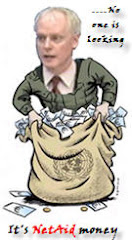
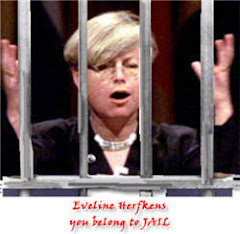
What does UN immunity and 250,000 Euros Dutch stolen money can buy in Washington DC ? - De villa van armoedebestrijder Herfkens

....maybe not much but UNDP's MDGD czar - Eveline Herfkens is certainly enjoying herself in her Volkswagen Beatle - while driving around in the suburbs of DC trying to hide from Dutch Government who wants her to give the money she stole from Dutch taxpayers back.


AMSTERDAM - Een witte cabrio Volkswagen Beatle rijdt de oprijlaan in van een riante villa in een natuurgebied in Washington. In de auto zit een rokende grijze dame. Wie goed kijkt ziet Eveline Herfkens, onze ex-minister van ontwikkelingshulp.

De PvdA-ster nam 280.000 dollar huursubsidie aan van het Nederlandse ministerie van Buitenlandse zaken zodat ze voor haar VN-baan in New York een comfortabel appartement kon uitzoeken dat, zoals ze zelf zei, 'niet op een blinde muur uitkijkt'.

Ze weigert de ten onrechte aan haar betaalde huursubsidie terug te betalen maar vindt zichzelf 'geen graaier', vertelde ze eerder in een interview met de Volkskrant. Volgens de oud-minister was ze niet goed op de hoogte van de regels bij de VN.

Minister Verhagen wil het geld terugeisen, desnoods via de rechter.

Report Shows U.N. Development Program Violated U.N. Law, Routinely Passed on Millions to North Korean Regime

Wednesday, June 11, 2008

By George Russell

After more than two years of accusations and probes into the operations of the United Nations Development Program in North Korea, a weighty report finally reveals how routinely, and systematically, the agency disregarded U.N. regulations on how it conducted itself in Kim Jong-Il’s brutal dictatorship, passing on millions of dollars to the regime in the process.

The 353-page report, by a three-member “External Independent Investigative Review Panel” appointed by UNDP to investigate itself, was published with much fanfare last week after nine months of political maneuvering and research.

• Click here to read the full report (pdf).

The report depicts an organization that for years apparently considered itself immune from its own rules of procedure as well as the laws and regulations of countries that were trying to keep weapons of mass destruction out of Kim’s hands.

It also shows that UNDP apparently considered itself above the decisions of the United Nations Security Council, itself, when that organization tried — as it is still trying — to bar Kim from gaining the means to create more weapons of mass destruction.

That is the same Security Council whose decisions, U.N. officials argue, have the weight of international law when applied to the United States and the rest of the world.

Yet despite those rules, and in the midst of a growing international storm of concern over Kim’s behavior, UNDP’s North Korea office, as well as other UNDP offices, continued to hand over millions in hard currency to the Kim regime and to transfer sensitive equipment with potential for terrorist use or for use in creating weapons of mass destruction.

“What this report shows is that UNDP has operated lawlessly for far too long,” said Mark Wallace, the former U.S. ambassador to the United Nations who brought many of the original accusations against the U.N. anti-poverty agency to light in January 2007 after examining confidential UNDP internal audits of its North Korean operation.

“U.N. Secretary-General Ban Ki-moon has indicated that integrity is a high U.N. priority," Wallace said. "It is now up to UNDP to follow that direction.”

The latest panel report initially was passed on to reporters on June 2 by UNDP boss Kemal Dervis at an unusual press conference where he hailed the report’s conclusions, saying that “we finally have some closure on the allegations made against UNDP.”

The actual authors of the report were not available for questioning or comment, Dervis said, until they presented the document to a meeting of UNDP’s supervisory executive board in Geneva. The meeting begins June 16.

But a close reading of the long and dense document, replete with mind-numbing footnotes, shows that Dervis is wrong.

Among other things, the report confirms that UNDP hired North Korean government employees to fill sensitive core staff posts, in violation of its own regulations, and that the Kim regime picked the staffers.

Previously this had been revealed by a report done by the United Nations Board of Auditors in May 2007 in the wake of Wallace’s concern. The 2007 report noted that the same violations had been reported in internal UNDP audits going back to 2001.

The UNDP office in North Korea paid the salaries of these staff directly to the government in hard currency — another forbidden practice. The report dryly notes, in a footnote on page 96, “It was not clear how much of these amounts were paid to the National Staff, if any.”

In an effort that may have been aimed at keeping at least some staffers from starving, UNDP gave them all hard-currency supplements in cash — another violation of its own rules.

The regime employees filled such critical jobs as UNDP finance officer; program officer slots that helped to design and oversee UNDP projects in the country; technology officer, who maintained all of UNDP’s internal and external communications and servers; and even the assistant to the head of the UNDP office, who presumably was in a position to see much, if not all, of the boss’ paperwork.

• Click here to see who was staffing UNDP's office in North Korea.

Those violations already were known, although only in the barest detail. But the latest report reveals a fact that makes matters much worse: The regime-appointed finance officer — the person who wrote UNDP’s checks for 10 years — also was responsible for reconciling UNDP’s bank statements with the checkbook.

These two functions are supposed to be separated as protection against fraud. The importance of that separation is strongly underlined in UNDP’s basic guidelines called the “Internal Control Framework for UNDP Offices.”

The potential for fraud by a North Korean government employee, however, is discussed in the report only in dry bureaucratic language.

Despite that the review panel brought documents showing millions of UNDP financial transactions out of North Korea, the report shows — in a footnote buried on page 53 — that the panelists never saw any of some roughly $16.6 million worth of cancelled checks that were signed by UNDP. The reason: Kim’s bankers won’t release the originals or copies.

Without the checks, it is impossible to see if the finance officer made them out to cash or if the names on them match UNDP payment records and bank statements.

The North Korean regime also refused to let the panelists interview the finance officer.

The potential fraud risks are huge. The report notes that in 78 percent of a transaction sample of UNDP payment records that they reviewed, the signature on payment receipts could not be verified. For all the rest there was no sign of a receipt at all.

The report declares, with great understatement, that “it is difficult to determine the ultimate beneficiaries of payments made by UNDP-DPRK on behalf of itself.”

The panel sharply hikes — by millions of dollars — the amount of hard currency that previous probes indicated UNDP had passed on to the nuclear-arming Kim regime from 1997 to 2007, as Kim was ramping up his nuclear weapons program and ultimately setting off a nuclear explosion.

Hard currency transfers to Kim of any kind supposedly were forbidden, but the 2007 investigation already had shown that the rule was violated not only by UNDP but other U.N. agencies in the country.

The latest report says that UNDP spent $23.8 million on behalf of itself and other U.N. entities in North Korea, almost all in hard currency that never was supposed to reach Kim. The panel estimates that 38 percent of this, or $9.12 million, went directly to the North Korean government.

But that is not all. The report also notes for the first time that other UNDP offices and agencies outside the country chipped in anywhere from $9.5 million to $27.4 million more in hard currency to the Kim regime over the same period, on behalf of the North Korean office.

Using the 38 percent yardstick that the panel applied to in-country spending, anywhere from $3.6 million to $10.4 million of those totals might have been directly passed on to the government.

In addition, the report makes passing mention of an even bigger flood of cash: $381 million that flowed into North Korea from non-U.N. donors through an arrangement called the Agriculture Recovery and Environmental Protection, or AREP, Cooperation Framework. UNDP projects in North Korea formed part of that framework and, more importantly, helped to support the entire arrangement. But the report goes no further in tracing those funds.

Unauthorized hard currency by no means was the only support UNDP was offering Kim. The report greatly raises the number of sensitive “dual use” items — good for civilian use and for terrorist purposes or helping to create weapons of mass destruction — that UNDP handed over to North Korea. These included computers, software, satellite-receiving equipment, spectrometers and other sensitive measuring devices: 95 items in all.

The policy of unquestioned transfer of dual use items continued even as the Kim regime in 2006 conducted ballistic missile tests and exploded a low-yield nuclear device to the outrage and dismay of the rest of the world; moreover, UNDP acquired at least some of the items in misleading fashion.

The report notes that when some items were purchased, “it was not explicitly stated … that the equipment would be utilized by DPRK nationals working under the auspices of UNDP projects in DPRK.”

In at least one instance, the report says, an employee with a UNDP sister agency even supplied false information to a Dutch manufacturer nervous about end-users in North Korea, telling him that the equipment would be used by the UNDP office in Pyongyang when it really was intended for a faraway rural location.

The report also shows that UNDP, itself, rarely asked its suppliers about any possible limits on the use of sensitive export goods and, even when it was explicitly informed, made little, if any, effort to keep records of dual use limitations on equipment.

(The report does not say so, but with North Korean government employees operating as program officers, the lack of conscientious record keeping might not come as much of a surprise.)

The report then dismisses any notion of holding anyone at UNDP accountable for these spectacular lapses by invoking a concept of blanket immunity.

UNDP and its officials, the report notes, are immune from the enforcement of U.S. and other national export control laws imposed for anti-terrorist or national security reasons, under an international U.N. Convention on Privileges and Immunities.

The document notes that despite that free pass, a U.N. legal opinion has held that the world organization can be bound by at least some export license limitations when it is retransferring those sensitive goods.

But the people really exposed to penalties for most of the transfers are UNDP vendors who supplied the goods, because they lack U.N. immunity. The panel notes that in many cases, lack of knowledge of the true use of the equipment is not considered a legal defense by many nations, including the U.S.

Having said that, the report tries to sweep under the rug the explosive topic of UNDP’s obligations to the U.N., itself, when the U.N.’s chief executive body, the Security Council, calls — as it did twice in 2006 — for bans of sensitive technologies to Kim. Those bans are known as U.N. Resolution 1695, passed on April 15, 2006, after Kim sent test ballistic missiles in the direction of Japan; and Resolution 1718, passed on Oct. 14, 2006, five days after Kim’s low-yield nuclear blast.

Resolution 1695 applied to equipment that might be used in Kim’s ballistic missile program. Resolution 1718, however, was much more sweeping and called for bans on any equipment that might be used in any kind of weapons of mass destruction, as well as travel bans for officials associated with the weapons program.

The panel report tries to take as little note of these sanctions as possible. Resolution 1718, for example, is mentioned in a footnote on page 195 of the report. The footnote calls its applicability to UNDP programs “relatively minimal,” and adds, “a significant majority of the equipment bought in connection with the UNDP-DPRK program was purchased before the passage of this resolution such that [it] was inapplicable.”

Since the report also notes that the records were badly kept or non-existent, this is a hard assertion to contradict. But it is a highly questionable assumption, at best. The report earlier notes that any UNDP-purchased equipment in North Korea belonged to UNDP until it was officially transferred to a host government. That happened to all the items of dual use equipment in North Korea at the same time — in March 2007.

At that time, UNDP shut down its programs after the hue and cry over UNDP practices in North Korea caused the agency to amend some of its practices — changes that the regime refused to accept.

UNDP officials have argued, and the report tacitly echoes their view, that the transfer of equipment when agency projects are closed down is normal practice.

Hardly normal are Security Council calls for the world, presumably including the council, itself, to stop transfers of exactly the kinds of equipment UNDP gave to Kim. There is no sign, for example, that the agency gave any thought to finding another method of asserting its property rights until the sanctions were lifted or of asking other U.N. agencies in North Korea to try to keep tabs on the gear.

UNDP “normal practice” apparently trumped world peace and security. The report passes over that complication, involving a rogue regime that had conducted illegal atomic blasts, and that the U.N., itself, had declared an outlaw, without comment.

With the same effect of sheltering UNDP from charges that it aided in endangering the peace and security of the world, the panel report declares that any charges that UNDP inadequately supervised the projects in North Korea under its care are untenable.

It based that conclusion on voluminous paperwork provided by UNDP that proved, the panelists said, that site visits to the project took place frequently and were unimpeded.

But the report fails to put those inspections in the context of the fact that four of UNDP’s program and liaison officers, who manage and help to create programs and perform liaison with institutions and vendors involved in the projects — also were North Korean government employees.

(The report is equally silent on the role of the Kim regime employee who served as UNDP technology officer, who was in charge of all of the UNDP offices' internal and external communications and its computer servers. UNDP communications and computers are supposed to be sacrosanct in terms of host country snooping. Instead, in North Korea, the potential snoops were in charge of the equipment. The potential implications of that fact are completely unexplored.)

Overall, one of the most striking aspects of the report is its lack of curiosity about whether individual members of the UNDP staff should be held accountable for egregious, longstanding and dangerous violations of UNDP rules and international law, not to mention common sense.

This applied notably to the presence in UNDP’s North Korean safe for more than a decade of $3,500 in defaced U.S. counterfeit $100 bills — “Super-Note” fakes that the Kim regime famously passed around the world. Possession of counterfeit U.S. bills is a crime. Even given U.N. legal immunities, it might seem an important matter to bring to the attention of one of the organization's biggest donors.

Yet no-one informed U.S. authorities and senior UNDP officials claimed no knowledge of the fake funds, even though the bogus money was listed on annual reports of the safe contents for years.

The report’s assessment: “There is no evidence that anyone acted in bad faith or in a fraudulent or deceptive manner. Instead, the Panel finds that there was a clear lack of attentiveness at the [office] and Headquarters levels and that communications between the Country Office and UNDP headquarters were inadequate.

“Inadequate communications” is the explanation often given in the report for failures that allowed rule-breaking to continue, even as Kim openly brandished his nuclear weapon. The report notes that in August 2006 — four months after the passage of U.N. sanctions Resolution 1695 — the UNDP office in North Korea asked headquarters for guidance on dual use equipment transmissions to North Korea. It never got any. The project, which was based in part on receiving satellite imagery, had equipment that the report says already had been purchased.

Then, on Oct. 11, 2006 — two days after the Korean nuclear blast — a UNDP regional supervisor in Thailand answered the guidance request. He ordered UNDP not to purchase any equipment and “to close down the project immediately.” In the same message, according to the panel, the supervisor, Romulo Garcia, said he had received clearance from his bosses to close down the project in late 2005.

As it happens, U.N. Resolution 1718, imposing more drastic sanctions on North Korea, went into effect three days after Garcia’s sudden desire to follow up on a two-month-old guidance request.

The panel report’s conclusion? The 2005 decision to shut down the project “does not seem to have been communicated to the UNDP-DPRK office, as equipment purchases continued throughout 2006, including some dual use items.”

That Garcia apparently did not double-check on whether this highly sensitive order was carried out until a nuclear device exploded and another U.N. sanctions resolution loomed is never discussed in the report.

But the lack of discussion speaks volumes, both about UNDP bureaucratic efficiency and about the apparent level of UNDP concern and internal discussion of Kim’s dangerous nuclear plans.

There is one prominent exception to the report’s attitude of sympathetic understanding toward UNDP lapses: the whistleblower who brought most of them to outside attention and inspired U.S. diplomats to call for multiple investigations, including the panel report.

The report concludes that the whistleblower, a former UNDP-DPRK operations manager named Artjon Shkurtaj did, in fact, perform a service when he brought the situation in the UNDP’s North Korea office to light. But the report emphatically denied there was any retaliation against Shkurtaj when a promotion he already had been given was withdrawn and other short-term contracts he held expired.

Such claims, the panel concluded, were “without merit,” as it also made attacks on Shkurtaj’s personal integrity.

At the same time, the report offers evidence that the North Korean regime may have been pressuring UNDP to keep Shkurtaj out of the job and reveals the alarming fact that the regime apparently had veto power over UNDP’s ability to fund the position.

For his part, Shkurtaj has declared that the authors of the report violated customary U.N. practice when they failed to show their conclusions to him prior to publication. He has appealed to the U.N. chief ethics officer, Robert Benson, to investigate.

So it may well be that the ultimate message of the report is that passing on potentially dangerous equipment to a ruthless dictator who threatened his neighbors and defied the U.N., itself apparently was regrettable but otherwise a lapse in communication. Talking about such things outside UNDP apparently was something else.

Rather than bringing “closure on the allegations against UNDP,” as the organization’s boss, Dervis, hopes, the North Korean investigative report ought to raise bigger and more urgent questions about UNDP operations around the world.

If Kim Jong Il’s despotic government was able to twist UNDP’s rules and its adherence to international law with such ease, what is going on in UNDP offices in dictatorships such as Zimbabwe and Syria?

Most urgently of all, as the U.N. wobbles toward further sanctions on the nuclear-ambitious Islamic regime in Iran, what is going on in UNDP offices in Tehran?

George Russell is executive editor of FOX News.

Monday, June 9, 2008

'Verhagen gaat te ver in Herfkens-zaak'

http://www.telegraaf.nl/binnenland/4185207/_Kritiek_Wijffels_op_Verhagen__.html?p=7,1

AMSTERDAM - Minister Maxime Verhagen (Buitenlandse Zaken) gaat wel erg ver met zijn voornemen om geld terug te eisen van oud-minister Eveline Herfkens. Dit zei de Nederlandse bewindvoerder bij de Wereldbank, Herman Wijffels, zondag in het tv-programma Buitenhof over het conflict met Herfkens over vergoedingen die het ministerie van Buitenlandse Zaken haar verstrekte voor huisvesting in de Verenigde Staten.

„Ik snap het wel, maar ik vind dat ver gaan”, stelde Wijffels over de houding van Verhagen. Volgens de CDA-prominent zijn er veel meer buitenlandse diplomaten in de VS die financiële voordelen genieten. Zo zouden diplomaten soms gratis huisvesting krijgen omdat zij wonen in huizen die eigendom van een land zijn. Wijffels, zelf in Washington werkzaam, verklaarde geen vergoedingen te ontvangen voor huisvesting.

Herfkens ontving als medewerkster van de VN-organisatie UNDP jarenlang van het ministerie van Buitenlandse Zaken een vergoeding voor de huur van haar woning in New York. Het ging omgerekend om ongeveer 190.000 euro. Volgens de regels van de Verenigde Naties mag dat niet. Minister Verhagen wil het geld nu terugeisen, desnoods via de rechter. Volgens Herfkens waren de vergoedingen niet onrechtmatig in de zin van het toen geldende Nederlandse beleid.

Wednesday, June 4, 2008

Wall Street Journal: Dervis and Melkert guilty of negligence...and willful indifference.

June 3, 2008; Page A20
You have to read to page 347 of yesterday's report on the United Nations Development Program's antics in North Korea before reaching the recommendation that is likely to cause a panic in Turtle Bay: Give member states access to the internal audits, now secret, of UNDP programs.

That simple principle – let the funders see how their money is spent – is anathema in the international aid community and was at the heart of the U.S. exposé last year of the UNDP's slipshod operations in North Korea. If the U.S. hadn't blown the whistle, it would be business as usual. This latest report – by three experts appointed by the UNDP – is a wake-up call for more accountability throughout the U.N.

The UNDP's transgressions in North Korea include personnel practices that gave Pyongyang officials access to sensitive information; limited oversight; poor tracking of funds, including money that was diverted to the North's purposes; and transfer of dual-use technology. It adds up to a picture of how Pyongyang manipulated the UNDP for its own financial ends – while the U.N. agency let it happen. In March 2007 the executive board took the unprecedented step of suspending operations in North Korea, and two investigations – by the U.N.'s own Board of Auditors and the U.S. Congress – have confirmed the U.S. allegations.

In yesterday's report, the auditors write that they "are unable to confirm the total size" of the UNDP program in North Korea between 1997 and 2007 – an amazing indictment of UNDP financial practices. They calculate total expenditures between $57.1 million and $72.3 million, which roughly accords with what the U.S. had estimated and far exceeds the UNDP's guess.

Where did all this money go? The auditors conclude that 38% of disbursements were to "government agencies." Its review of "selected" projects finds that the documentation for 77 projects – or 74% – was so poor that they could not determine "whether the ultimate beneficiary is consistent with the payee name indicated in the financial system." That is, nobody knows where the money went – except perhaps Kim Jong Il.

Also notable is the report's findings on dual-use technology. Of the 151 pieces of equipment reviewed by the auditors, 95 were on the U.S. Commerce Department's control list and required an export license. Many were "controlled by the U.S. for national security and anti-terrorism reasons . . . and were of heightened concern." The UNDP hadn't obtained the required licenses. The auditors add that when the UNDP pulled out of North Korea in March 2007, it left this equipment behind. The UNDP failed to obtain the required "retransfer authorization," the report dryly notes. Translation: Retrieval was impossible because the North already had the stuff.

Each time we use "fraud" or "corruption" to describe what happened in North Korea, the UNDP objects. So let us be precise. The corruption is on the part of North Korea, which abused U.N. rules and siphoned off U.N. money for its own nefarious purposes while UNDP looked the other way. There is no evidence of personal corruption on the part of UNDP officials.

Rather, as this and other investigations prove, UNDP head Kemal Dervis, Associate Administrator Ad Melkert and their colleagues are guilty of gross negligence, if not willful indifference. At best it is an extreme case of clientitis, with a nasty side-effect that causes the patient to spin and weasel his way out of every legitimate accusation.

The bomb that went off yesterday at the Danish Embassy in Islamabad killed a UNDP employee, whose office was located next door. It's a sad reminder that U.N. workers often take risks to do their jobs world-wide. The best way to honor their work is through better governance that leads to more effective help for the people the U.N. purports to serve.

Tuesday, June 3, 2008

Herfkens legt probleem Verhagen bloot

De kwestie rond Eveline Herkens is, om de woorden van PvdA-leider en vicepremier Wouter Bos te parafraseren, niet alleen schadelijk voor haar, maar ook voor collega Maxime Verhagen.

De hele discussie rond ten onrechte verstrekte huursubsidies aan de voormalige minister heeft vooral duidelijk gemaakt dat de minister van Buitenlandse Zaken een probleem heeft binnen zijn eigen departement.

Merkwaardig genoeg zijn nu alle pijlen gericht op oud-minister Herfkens van Ontwikkelingssamenwerking. Zij heeft in vier jaar tijd ten onrechte 280.000 dollar aan huursubsidie opgestreken. Maar tegelijkertijd treft ook de ambtenaren van Verhagen blaam.

Die hadden zelf de regeltjes moeten kennen en nooit zomaar de portemonnee mogen trekken voor Herfkens.

Deze week laaide de kwestie weer op door een rapport van de VN-organisatie UNDP, waar Herfkens in dienst is om de armoede in de wereld te bestrijden. De juridische dienst van deze ontwikkelingsorganisatie kwam na maandenlang onderzoek tot het salomonsoordeel dat de schuld voor de ten onrechte verstrekte huursubsidie niet alleen ligt bij Herfkens, maar ook bij het ministerie van Buitenlandse Zaken en de VN zelf.

De Tweede Kamer was er als de kippen bij om daarop het hele bedrag terug te eisen. Zelfs regeringspartijen CDA en PvdA willen nu dat de Nederlandse regering het geld terugvordert van Herfkens. De oud-politica had de regels weliswaar beter moeten bestuderen, zegt het rapport, maar er is geen reden te twijfelen dat ze te goeder trouw heeft gehandeld.

Voor de VVD was het rapport niet nodig. Woordvoerder Boekestijn riep, nog voor alle feiten te kennen, dat Herfkens het geld hoe dan ook moet terugbetalen. Omdat Boekestijn net als minister Verhagen zelf ook twijfelt of de zaak voor de rechter wel standhoudt, vindt de VVD'er een schikking ook goed. Zelf gaf Herfkens deze week toe dat ze slordig was geweest bij haar aanstelling bij VN-organisatie UNDP. Ze had de regels beter moeten lezen, dan had ze kunnen zien dat ze naast haar salaris van de VN geen geld van anderen had mogen aannemen. Van iemand die voor de Wereldbank heeft gewerkt en daarna minister van Ontwikkelingssamenwerking is geweest, mag je beter verwachten. Herfkens komt welsiwaar arrogant en ijdel over, maar van echt graaien kan men haar moeilijk beschuldigen

Minister Verhagen is bij zijn aantreden in 2007 niets verteld van mogelijk verkeerd verstrekte subsidies aan Nederlanders in vreemde dienst. Dat kan hij zichzelf niet verwijten, maar zijn ambtenaren die veel personeelsdossiers niet op orde hadden. Toch blijft Verhagen verantwoordelijk. Hoe het nu verder moet met die andere ambtenaren die geld hebben ontvangen van de Nederlandse regering terwijl ze in dienst waren van de Verenigde Naties, is onduidelijk. Verhagen moet snel zaken op orde stellen om problemen in de toekomst te voorkomen.

Report on UNDP in North Korea Raises More Questions Than It Answers


Byline: Matthew Russell Lee of Inner City Press at the UN: News Analysis

UNITED NATIONS, June 2 -- As the UN Development Program prepared put its gloss on a report by Hungarian prime minister Miklos Nemeth, in a hastily called press conference by UNDP Administrator Kemal Dervis, questions arose about the irregularities that the report confirms, in places begrudgingly. As so often happens at the UN, these confirmations are buried deep in the report. A wire service emphasized that the report "concluded that [Tony] Shkurtaj's claims of retaliation are without merit. As a contract employee he could not have been fired, it was just that his contract was not renewed, it said."

But UNDP formally selected and notified Shkurtaj of his selection and hiring for a full-time UNDP staff position as UNDP's North Korea operation manager, out of a total of 174 applications and a finalist list of 29 applicants. (Click here for Inner City Press' interview with Shkurtaj at the time.) Then UNDP subsequently retracted that offer from Shkurtaj. This fits any credible definition of retaliation. Significantly, despite UN Ethics Officer Robert Benson's plea to Dervis to allow his office, the UN specialist in whistleblower protection, to investigate the case, UNDP said no. Then UNDP said that this panel, which also included former World Bank official Chander Vasudev of India and former U.S. and U.N. official Mary Ann Wyrsch, would clear the air. But consider these questions about UNDP's operations:

The Panel conducted "[a] review of documentation related to the Selected Projects budgets" and concluded that "[f]or 77 transactions (74%) the available supporting documentation was insufficient to determine whether the ultimate beneficiary is consistent with the payee name indicated in the financial system (pg 158).

"38% of disbursements made by UNDP-DPRK" were to DPRK "government agencies" which constituted 11 of the top 20 of all payees and totaled $9.13 million (pg 100-101). This analysis does not even include "disbursements made on behalf of UNDP-North Korea by UNDP country offices and other UN agencies" which totaled in the range of $33.3 million -- $48.5 million (pg 118). If at the same percentage payment rate to the DPRK government, then an additional $1 2.65 million to $18.43 million was paid directly to the DPRK government as part of the UNDP DPRK program.

The Panel's review of the most sensitive items - those the Panel classifies as Level I and II -- exported by UNDP to North Korea focused on 151 pieces of equipment and found that 95 items were "classified as being on the Commerce Control List.... [and] would have required a licensee from the U.S. Commerce Department for export or re-export to the DPRK"? (pg. 210) The Panel found many such items were "controlled by the U.S. for national security and anti-terrorism reasons.... and were of heightened concern" (pg. 213).

"At the suspension of the UNDP program in the DPRK in March of 2007, the UNPD transferred a large amount of equipment in closed projects to agencies in the DPRK government.... [and] to the extent that this equipment included U.S.-origin items, the UNDP's retransfer to the DPRK government of U.S.-origin items subject to U.S. license requirements would likely be considered by the U.S. to contravene its export policies prevailing at the time" (pg. 215-216).

Assistant Secretary General for Legal Affairs Larry Johnson reportedly opined to UNDP that UNDP required a "retransfer authorization" from the U.S. to transfer the equipment to the DPRK or other third parties and that UNDP did not obtain any such "retransfer authorization" prior to transferring these items to the DPRK government (pg. 220). But what did the UN's Office of Legal Affairs, of which Larry Johnson is the Deputy, do about this?


UNDP's panel of three, with Mr. Ban, findings about North Korea not shown


The Panel concluded "that in the course of his duties and areas of oversight, Shkurtaj in fact reported conduct and facts about UNDP operations in the DPRK that required resolution and may well have been in violation of UNDP policies as well as applicable agreements with the DPRK" (pg. 312).

The Panel noted a "management lapse" in UNDP's handling of the counterfeit currency (pg. 269). The Panel "noted discrepancies" in the accounts that UNDP Comptroller Darshak Shah gave to the Panel regarding the counterfeit currency issue (pg. 267) What action will be taken against Mr. Shah for his inconsistent statements to the Panel?

While the UN system become ever-better known for lack of accountability, at UNDP this rises to the level of impunity.


Footnote: As Inner City Press has previously reported, well-placed sources said Friday that UNDP long-prepared whitewash of its retaliation against the exposure of irregularities in its North Korea programs was to be unfurled Monday and that, not surprisingly, the whistleblower is not protected. But as noted above, even the Kemal Dervis-selected panelists admitted systemic breakdown of safeguards within UNDP. On Sunday night, the UN te-mailed to the press that Dervis would brief, or brag, at 11 a.m. Monday (Inner City Press' UN bureau chief is in Africa, click here for the next of many articles.) The UN Ethics Office, which backed down or was called off this case once already, now has another chance, on this, the Koumoin / Cote d'Ivoire case, and the Somalia / KPMG cases, along others. Watch this site.

Footnote: back on May 22, Inner City Press asked UNDP these two questions, which have yet to be answered:


Q: What ever happened to the promised investigation by OAPR of UNDP's award of no-bid contracts to a firm called PRO-FIT? At the time, UNDP promised its own investigation. did it ever happen? will UNDP make it public? So far not answered.

Undp claimed a couple months ago that internal investigations and a Kimberly Process investigation had cleared undp from any wrongdoing in Zimbabwe, concerning undp's support of diamond mining operations. but undp refuses to make public the investigations. what is the basis for undp not sharing copies of these investigation reports: Will UNDP release the reports? So far not answered.


Q: Beyond UNDP, what about the question of UN requiring letter from a media's country's mission for accreditation?

Answered thusly: " I have been advised that for regular accreditation missions do not get involved. However, they do get involved when a visiting senior official travels with a press corps. In those instances, the mission would sent the UN Media Accreditation and Liaison Unit a list of journalists who need to get a one or two day pass."

We less sure of this last answer, as several journalists have been asked to get letters from their country's mission to the UN. Developing.

U.N. agency cleared of wrongdoing Dealings with Pyongyang


Betsy Pisik THE WASHINGTON TIMES
Tuesday, June 3, 2008

NEW YORK | Three public-finance authorities hired by the U.N. Development Program cleared the agency of sloppy accounting and giving cash to North Korean officials - charges that outraged some members of the U.S. Congress and forced the agency to withdraw from the Stalinist state in March 2007.

The 353-page report, released Monday, examined allegations raised by a former UNDP staff member who claimed the organization fired him after he blew the whistle on irregularities in the North Korea program.

The authors dismissed the whistleblower's claims as "without merit," even as it praised his work.

The panel did find, however, that the organization violated its own rules by allowing Pyongyang to assign its local staff members rather than recruiting them directly.

And it found that the UNDP could not have known that some of the hard currency it was compelled to spend in North Korea on salaries, rent and other expenses was funneled to companies that Washington suspects of helping the North buy arms and launder cash.

Few officials appeared to have digested the report by Monday afternoon, but none seemed eager to have the anti-poverty program restarted.

UNDP Administrator Kemal Dervis declined to say Monday whether he would recommend the UNDP board renew the North Korean program when it meets in Geneva on June 23.

"I will think about this and consult also with others in the U.N. system, because it's not just UNDP," he said, noting that specific agencies, such as UNICEF, are still operating in the country.

U.S. Ambassador Zalmay Khalilzad indicated Monday that it may be too soon for UNDP to resume its advisory and coordinating activities in North Korea.

"We don't see any reason, at this moment, to call for a renewal or a restart of the program," he told reporters.

Just last week, the United States announced it will resume relief contributions to North Korea, pledging 500,000 metric tons of food aid over the next year after the reclusive government agreed to "substantial improvement" in monitoring.

Monday's report, available at www.undp.org/dprk, was commissioned more than a year ago by the UNDP after the U.S. Mission at the United Nations questioned whether the international agency was inadvertently helping the North Korean regime divert food assistance and convertible currency to military purposes.

Under pressure from the U.S., the UNDP board suspended the program in March 2007.

Mr. Dervis on Monday welcomed what he described as a "very professional, high-quality" report, but said repeatedly that it was addressing "fantastical and irresponsible" allegations and reporting.

The three authors of the report were former Hungarian Prime Minister Miklos Nemeth, former U.S. and U.N. official Mary Anne Wyrsch and former World Bank executive Chander Vasudev.

They were hired by Mr. Dervis' office in September, with the approval of the board of directors and Mr. Khalilzad, said UNDP communications director David Morrison.

Former U.S. Ambassador John R. Bolton was critical of engagement with Pyongyang, and it was his management expert, Mark Wallace, who aired many of the complaints.

Monday's report, which cost $2 million, studied UNDP activities in North Korea from 1999 to 2007.

U.N. Report Renders Return to N. Korea Unlikely


By BENNY AVNI, Staff Reporter of the Sun
June 3, 2008
http://www.nysun.com/foreign/un-report-renders-return-to-n-korea-unlikely/79145/

UNITED NATIONS — A long-awaited report on the activities of the U.N. Development Program in North Korea provides enough vindication for the agency's leaders to declare that some American criticism of the program was "exaggerated." Critics say, however, that the report exposes troubling issues that make any return to Pyongyang for the agency highly unlikely.

Yesterday, eighteen months after allegations first surfaced about irregularities in UNDP's activities in North Korea, a committee headed by a former Hungarian prime minister, Miklós Németh, released its 353-page report. The document offered "a little bit for everybody," an official who has followed the issue closely said.

Questions surrounding the UNDP, which also served as "resident coordinator" for other U.N.-related funds and programs in Pyongyang — and allegations of rules violations, presented to the UNDP's board of directors — resulted in the North Korea program's suspension in March 2007.

"We don't see at this point any reason for the renewal or restart of the program," the American ambassador to the United Nations, Zalmay Khalilzad, said yesterday.

The UNDP administrator, Kemal Dervis, said that decision is up to the agency's board of directors. While he stopped short of claiming full vindication after the report's release, he told reporters that compared with the committee's conclusions, allegations in press reports and by American officials were "either vastly exaggerated or stemmed from misunderstandings, or some of them, maybe, from ill intent."

Still, a former American U.N. ambassador, John Bolton, said the report shows that agencies working in countries controlled by dictators have no way to ensure that their funds do not go to nefarious activities. "It is clear UNDP, like many others, cannot adequately control or monitor funds in North Korea," Mr. Bolton told The New York Sun. "Accordingly, no program there is warranted."

In one key finding, the Németh panel determined that the UNDP exported to North Korea American-made "dual use" items, such as GPS systems and computer programs, which are restricted by American law because they can be used in weapons systems. At least 95 items that Washington has classified "as being on the Commerce Control List" would have "required a licensee from the U.S. Commerce Department for export or re-export" to North Korea, the report says.

Even after the program was suspended last year, "the UNPD transferred a large amount of equipment in closed projects to agencies" of the North Korean government, the report says. Some of the equipment "would likely be considered by the U.S. to contravene its export policies." Nevertheless, the panel concludes that "international laws" governing such transactions are "exceedingly complex," leaving their applicability "unresolved."

"Our view is that our laws have to be observed in transactions" involving dual use items, Mr. Khalilzad said.

The panel says it was unable to calculate the exact amount the agency spent in North Korea between 1999 and March 2007 because it lacked "financial transaction information." It estimates that the full value of the disbursements was between $33.3 million and $48.5 million. The panel also found that 38% of the UNDP's monetary disbursements in North Korea were made directly to government agencies. Still, UNDP data are "reliable" and the numbers are consistent with the agency's reporting, the panel concludes.

The report's most damning findings are not about the agency but about a former employee in the UNDP's Pyongyang office, Artjon Shkurtaj. Last year, the U.N.'s ethics officer, Robert Benson, found "prima facie" evidence to investigate Mr. Shkurtaj's claim that the agency retaliated against him after he exposed problems within the program. But yesterday's report concludes that Mr. Shkurtaj "proved to be an evasive witness," that some of his assertions were "untenable," and that the UNDP "did not retaliate" against him.

Mr. Shkurtaj said yesterday that by not presenting him with the findings before publishing them, the panel "violated my rights to due process." He said he is still waiting for Mr. Benson's investigation and indicated that he could pursue the case in American court.

The report's findings on Mr. Shkurtaj do not nullify some of his initial allegations, which the report confirmed, his defenders said.

"We have allegations from multiple sources, not one whistleblower," Mr. Khalilzad said.

North Korea Didn’t Dupe U.N. Office, Report Says


By NEIL MacFARQUHAR
Published: June 3, 2008

UNITED NATIONS — American allegations that North Korea duped the United Nations Development Program by diverting aid money for its own needs are not supported by any evidence, according to a lengthy external review released Monday.

There was no sign that millions of dollars were mismanaged, diverted elsewhere or unaccounted for, the report said, countering accusations made in early 2007 by the United States Mission to the United Nations. Although the report acknowledged that some information the panel had sought was unavailable, the review’s conclusion was that the money had been “used for the purposes of the projects.”

The controversy surrounding the accusations led the development program to suspend its operations in North Korea in March 2007. They have remained suspended because of differences over whether the government should choose local employees who work for the agency.

The review was conducted by a three-member panel, led by Miklos Nemeth, a former Hungarian prime minister, and was presented Monday by Kemal Dervis, a former Turkish finance minister who leads the development program. Mr. Dervis said the panel members preferred not to comment publicly.

At the news conference, when asked whether he thought the accusations emerged out of the political dispute over the Bush administration’s negotiations with North Korea, Mr. Dervis said he would not comment on internal government ideological battles.

“All these allegations, clearly — when you compare it to what is in the report — are either vastly exaggerated or stem from misunderstandings or some of them may be from ill intent,” he said.

The accusations were raised by Mark D. Wallace, who leads the department at the United States Mission that evaluates United Nations management practices. In early 2007, he said millions of dollars in program money had been used to buy real estate abroad and to pay a North Korean financial agent responsible for sales of missiles and arms.

He compared the program to the multibillion-dollar oil-for-food scandal in Iraq before the invasion and suggested that the United Nations money might have helped finance North Korea’s nuclear program.

Zalmay Khalilzad, the American ambassador, said his staff was studying the report, but noted that it was the American Mission’s responsibility to pursue any allegations about the abuse of money, especially since United States taxpayers helped underwrite the United Nations budget. The United States supports all recommendations in the report that would increase transparency and accountability, he said.

The report, which surveyed the disbursement of more than $23 million between 1999 and 2007, recommended that the development program pay closer attention when it adapts its general guidelines to “a challenging environment” like North Korea. The dense 353-page report appeared to concur with what the program had maintained all along, that the American allegations were baseless. But it recognized some sloppy practices, like tossing $3,500 in defaced counterfeit $100 bills into the bottom of its safe in Pyongyang and forgetting about them for more than a decade.

Some confusion stemmed from the fact that the North Koreans used the development program’s name on international money transfers — hoping the funds would come under less scrutiny that way. Such tactics were beyond the program’s control, the study concluded.

Among other key findings, the report said that the former development program operations manager in North Korea who was a source for many of the allegations, Artjon Shkurtaj, lacked credibility and “proved to be an evasive witness.”

Mr. Shkurtaj issued a statement via e-mail objecting to not having been shown the report before it was released. He said he still hoped for a ruling from the United Nations Ethics Office on whether he had been fired in retaliation for being a whistle-blower. The report dismissed accusations that the development program had retaliated against him.

Statement by Artjon Shkurtaj on EIIRP Report on UNDP Operations in North Korea

The External Independent Investigative Review Panel (EIIRP) published its report today without presenting its conclusions to me beforehand and asking for my rejoinders. It thus violated my rights to due process under well-established UN Procedures. The Panelist did not appear before the press, and have apparently said they will speak to no journalists until they have briefed UNDP's Executive Board in Geneva in two weeks. They thereby presented journalists with a fait acomplie without the opportunity for cross examination. In presenting the report, UNDP Administrator Kemal Dervis, when asked susbstantive questions, declared that he had not read the report carefully but would do so soon.

The EIIRP report does not include the fact that one member, Mary Ann Wyrsch, has served since 2006 as Chairwoman of the UNDP's Audit Advisory Committee, which advises UNDP Administrator Dervis on UNDP progress and policy with regard to audits, investigations, and whistleblowers. This is a clear conflict of interest since in this report she is passing judgement on how well UNDP complied with previous audits on all issues under investigation. In other words, she is passing judgement on herself in her advisory capacity.

It is significant that at the revelation of a report, authorized by the Secretary-general, the authors have made themselves invisible, and the press conference is held by the people who were under investigation. Nor was any representative present of the UNDP's Executive Board who's President allegedly chose the Panelists along with UNDP management.

Let me ask you: how much credibility would you give to such an event if it happened anywhere else but at UNDP?

I am still awaiting word form the U.N. Ethics Commissioner, who previously declared that he found prima facie evidence that I was a whistleblower who had been subjected to UNDP retaliation.

Sunday, June 1, 2008

WEOG denounces UNDP's non-transparent and retaliatory practices after UNDP misled them on when report was to be delivered

The Western European and Others Group (WEOG) is one of several unofficial Regional Groups in the United Nations that act as voting blocs and negotiation forums.

On friday the Bureau of WEOG discussed the preliminary findings of the External Independent Investigative Review Panel (EIIRP) on UNDP's operations in North Korea.

As it can be read in this email, members raised deep concern over the potential spin from UNDP of the report, prior to allow "their capitals" to read and comment on it. Their demand to UNDP not to release and put an embargo on the report, was meet with the usual UNDP disrespect towards anyone.
-------
WEOG BUREAU EMAIL:

  • Subject: Information regarding the external review on the DPRK

Dear colleagues,

While I wait for the secretariat to provide me the draft summary of yesterday's Bureau meeting, I would like to share the following information regarding the release of the external review on the DPRK:

UNDP informed us that the report is now expected for Monday morning, at which time it will be shared with the Administrator and the Members of the Board. In the afternoon the Administrator is planning to brief the press. I had previously asked that an embargo be placed on the report to allow the capitals to read it prior to hearing about it from the press, but UNDP thinks that it would leak and therefore prefers to be pro-active in informing the press.

In regard to the question of facilitators for the decisions in the upcoming Board session, the other groups have not yet proposed any facilitators. I will push for the WEOG facilitators, at least, to be confirmed at our next Bureau meeting which is scheduled immediately after the pre-session informal consultation on 2 June.

With kind regards and best wishes for the weekend,

---------

WEOG members are: Andorra, Australia, Austria, Belgium, Canada, Denmark, Finland, France, Germany, Greece, Iceland, Ireland, Israel (New York activities only), Italy, Liechtenstein, Luxembourg, Malta, Monaco, the Netherlands, New Zealand, Norway, Portugal, San Marino, Spain, Sweden, Switzerland, Turkey, United Kingdom of Great Britain and Northern Ireland. US is also member of WEOG.

History of DPRK Saga

1) January 2007: - United States accused UNDP of irregularities in its Programme in DPRK;
  • a) UNDP: rebuff and denies all wrong doings;
  • b) UNDP: promises a swift and fast investigation within 90 days (end of March 07);
  • c) UN-SG: appoints ACABQ (Internal Board of Auditors) to investigate allegations;
  • d) UNDP: says "its ResRep in DPRK is on its way to NY with all boxes of files" (Which very stragely never make it to NY until 12 months later - December 2007)
  • e) US Secreet Service and NY Southern District Attorney: initiate an investigation on Counterfeit;
  • f) UNDP: opposes to lifting of UN immunities for its DPRK staffers and do not participate and boycot investigation on (Immunity grounds);
2) May 2007: - 150 days after the UN-SG promises for a swift investigation, ACABQ deliberates its findings:
  • a) Presence of Counterfeit;
  • b) Presence of Hard Currency Payments in CASH;
  • c) Presence of irregular HR practices in retaining services of DPRK staffers;
  • d) Lack of cooperation from UNDP in providing proper access to files in HQs;
  • e) Lack of cooperation from UNDP in providing access to any/all DPRK files;

3) June 2007: UNDP Staff Union presents the case of retaliation of UNDP towards its former OM in DPRK to the UN’s Ethics Office:

  • a) 05 June 07: Ethics Officer accepts the case and initiates investigation;
  • b) June 07: UNDP and UN Spokespersons call for media to be patient and allow UN Ethics Officer to finish his investigation;
  • c) Aug 07: 80 days later - Ethics Officer deliberates that it found prima face evidence of retaliation from UNDP towards its OM in DPRK, and because of lack of cooperation from UNDP and access to UNDP files requests that he be allowed "for the sake of UN" to finish his investigation;
  • d) Aug 07: UNDP rejects the findings and opt out of UN system of justice, and despite having no Ethics Office structure nor any whistleblower protection and regulation inside its own institution decides to appoint its own “external investigative body” to investigate what happened;
  • e) Sep 07: UNDP appoints its own panel of investigation and promises a swift investigation of only 3 months. In his speech in front of cameras Kemal Dervis said: “this Panel will finalize its work by end of December 2007 and you all will see that they will find that the Whistleblower cannot be reinstated for reasons that this panel will be able to establish”.
  • f) 30 May 07: 270 days (9 months) later UNDP’s own Panel of Investigation confirms findings of allegations on UNDP operations in DPRK, but also allows UNDP to use its report as defamation, character assassination and further retaliation platform against the Whistleblower, for what "...dared to do to UNDP".

As of today 1st of June 2008, 26 months later, UNDP has failed to name or held any one accountable for miss-managing its offices which resulted in a shut down of North Korea presence on grounds of improper operations modalities. IMPUNITYYYYYYY CONTINUE!!!!!!!

Would all the above have ever happen if this Whistleblower have decided not to talk and not rock-the-boat?

Will UNDP prevail ? Let's see what our bosses will decide in New York, but seems that this is a saga far from over. Our contacts in New York will be sending us more on what is happening out there. Please continue to watch this site for more...