@undpwatchundpwatch
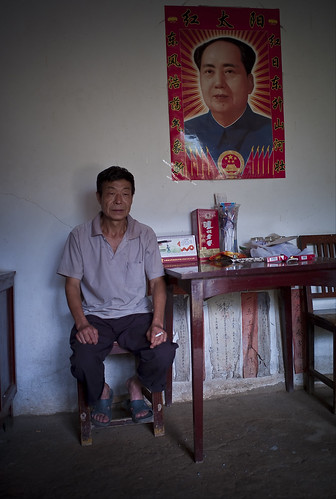
This #Chinese person owns $907Billion in#USTreasuryBonds but in order 2 get by he get's support from @UNwith #USAID fundingflickr.com/photos/undpchi…
Current challenges and measures to address them
2. For the 2006-2007 biennium the Board of Auditors had issued a modified audit opinion, in which, among other concerns, there were three matters of emphasis, namely, the unreconciled inter-fund account mainly with the United Nations Development Programme (UNDP), deferred revenue and non-expendable assets. The financial situation of the organization has improved significantly over the course of the last three biennia. This has occurred despite the fact that in the last five years, in addition to a number of significant write-offs, UNOPS made exceptionally high bad-debt provisions, covering sizeable losses from prior periods, and made full accrual for all end-of-service liabilities, including after-service health insurance. As at December 2009, UNOPS reserves were fully replenished at $42.7 million, representing an addition of some $38.4 million since December 2005.
Issues to watch and risks to mitigate
In paragraph 45, UNOPS agreed with the Board’s reiterated prior recommendation to review its accounting policies regarding revenue recognition, as part of its preparation for IPSAS implementation.
1. UNOPS has established an IPSAS project board to drive the organization-wide
transition from UNSAS to IPSAS by January 2012. UNOPS is presently reviewing
and drafting its revenue recognition policy for project revenue. The policy will be
based on the percentage completion method.
Department responsible: Finance
Status: In progress
Priority: High
Target date: December 2010
In paragraph 48, UNOPS agreed with the Board’s recommendation to establish procedures to review the reasonableness of the interest income received from the UNDP Treasury.
2. UNOPS has conceptualized a methodology to review the interest received
from the UNDP Treasury for reasonableness on a quarterly basis.
Department responsible: Finance
Status: In progress
Priority: High
Target date: December 2010
In paragraph 51, UNOPS agreed with the Board’s recommendation to regularly monitor administrative budgets on a line-by-line basis to ensure that budgets are not exceeded.
3. UNOPS follows a rigorous half-yearly budget review process of administrative
expenditures throughout its country offices, regional offices and headquarters.
Department responsible: Finance
Status: In progress
Priority: Medium
Target date: December 2010
In paragraph 57, UNOPS agreed with the Board’s recommendation to address instances of obligations raised that are not supported with valid and appropriate obligating documents.
4. UNOPS retired the imprest modality in April 2010, and further occurrences of
the instances noted by the Board have been prevented. UNOPS monitors purchase
orders on its financial dashboard, and random purchase orders are selected for
review at headquarters. In addition, quarterly certification of obligating documents
is requested from regional directors.
Department responsible: Finance
Status: Completed
Priority: High
Target date: Fully implemented
In paragraph 64, UNOPS agreed with the Board’s recommendation to implement controls and reports to accurately differentiate between project receivable and payable balances and project balances that represent over-expenditure.
5. UNOPS has implemented a quarterly project quality assurance review process
for all projects. Any project over-expenditure is highlighted for action through the
quality assurance process. Furthermore, reports will be prepared for the next audit to
clearly differentiate project receivable and project payable balances.
Department responsible: Finance
Status: In progress
Priority: High
Target date: December 2010 & April 2011
In paragraph 65, UNOPS agreed with the Board’s further recommendation to improve its system controls to prevent and detect any classification errors in financial reporting in a timely manner.
6. UNOPS will implement monitoring and review controls to detect
misclassifications in a timely manner and prior to financial reporting.
Department responsible: Finance
Status: In Progress
Priority: High
Target date: December 2010
In paragraph 69, UNOPS agreed with the Board’s recommendation to account for the funds received in advance from donors as a liability upon receipt of the funds and not as a credit entry within the accounts receivable accounts.
7. UNOPS will implement an annual review process to identify credit balances in
accounts receivable and to reclassify these as accounts payable.
Department responsible: Finance
Status: In Progress
Priority: Medium
In paragraph 72, UNOPS agreed with the Board’s recommendation to (a) follow-up and clear the credit balances in the accounts receivable, and (b) reclassify credit balances in accounts receivable and account for them as payable.
8. UNOPS will implement an annual review process to identify credit balances in
accounts receivable and to reclassify these as accounts payable.
Department responsible: Finance
Status: In Progress
Priority: Medium
Target date: December 2010
In paragraph 83, UNOPS agreed with the Board’s recommendation to resolve the disputed inter-fund differences in its accounts with UNDP.
9. Resolution of the historic UNOPS-UNDP inter-fund differences is sought and
is currently under discussion at the Executive Director level. These negotiations are
expected to be finalized by the end of 2010.
Department responsible: Finance
Status: In progress
Priority: High
Target date: December 2010
In paragraph 86, UNOPS agreed with the Board’s recommendation to (a) follow-up the rejected project expenditures and make appropriate accounting entries, (b) improve the validation of information captured on its system to ensure that the incidents of rejections are minimized, and (c) consider alternate arrangements with UNDP to further improve the acceptance rate.
10. UNOPS continues to submit project expenditures to UNDP on a quarterly
basis. In late 2009, UNOPS developed a project expenditure validation system to
detect possible rejections and correction of data prior to submission to UNDP.
Overall, the validation process has reduced the rate of rejections to below 1 per cent
for the 2009 year. In addition, UNOPS is also in the process of implementing new
controls to prevent incorrect posting of project expenditures to the chart of accounts.
Department responsible : Finance
Status : In Progress
Priority : High
Target date : December 2010
In paragraph 91, UNOPS agreed with the Board’s recommendation to (a) continue to follow-up on the unreconciled inter-fund differences in its accounts, and (b) engage with the relevant United Nations agencies in order to resolve the old inter-fund differences.
11. As part of the UNOPS project closure phase 2 initiative, meetings will be set
up with the relevant UN agencies to negotiate a resolution of the old inter-fund
differences.
Department responsible: Finance
Status: In Progress
Priority: High
Target date: March 2011
In paragraph 111, UNOPS agreed with the Board’s recommendation to consider a revision of its policy for the valuation of the annual leave liability in its implementation of International Public Sector Accounting Standards.
12. UNOPS selection of policies for the valuation of the annual leave liability is
based on decisions made for the entire United Nations system. At the United
Nations IPSAS task force meeting, which was held in late August through early
September 2010, further guidance on the accounting and disclosure of all end-ofservice-
liabilities in compliance with IPSAS was requested.
Department responsible: Finance
Status: In progress
Priority: High
Target date: December 2010
In paragraph 116, UNOPS agreed with the Board’s recommendation to take appropriate measures to ensure the validity, accuracy and completeness of the data used in the computation of all post-retirement and end-of-service liabilities in future financial periods by ensuring that the information pertains to the correct reporting period.
13. UNOPS selection of policies for the valuation of all end-of-service liabilities is
based on decisions made for the entire United Nations system. An expected outcome
of the aforementioned UN IPSAS task force meeting has been further guidance on
the accounting and disclosure of all end-of-service-liabilities in compliance with
IPSAS.
Department responsible: Finance
Status: In progress
Priority: Medium
Target date: December 2010
 In a total contrast from US Mission to the UN (USUN), already in the first few weeks in job the UK Government is challenging the United Nations and the rest of multilateral organizations with Transparency and Accountability.
“To the British taxpayer I say this: our aim is to spend every penny of every pound of your money wisely and well. We want to squeeze every last ounce of value from it. We owe you that.
“And I promise you as well that in future, when it comes to international development, we will want to see hard evidence of the impact your money makes. Not just dense and impenetrable budget lines but clear evidence of real effect.”

The United States has proposed a new global fund that would direct billions of dollars to help poor countries prepare for climate disasters and adjust to low-carbon economies.
The fund would likely operate under the World Bank, U.S. Treasury officials said, and would be the main vehicle to deliver emissions reduction and adaptation measures throughout the world.
William Pizer, deputy assistant secretary for environment and energy at the U.S. Treasury Department, explained that the fund would contribute to a spectrum of projects from "building a solar park or creating a financial vehicle to support investments in energy efficiency to creating an insurance mechanism for disasters or crops."
The world's poorest countries also are among the most vulnerable to climate change and will be disproportionately affected by harsher droughts, rising sea levels and fiercer storms, scientists say. The World Bank estimates it will cost $75 billion to $100 billion annually for developing nations to accommodate a world that is warmer by 2 degrees Celsius.
Part of the global climate deal that nations are negotiating in U.N.-sponsored talks in Copenhagen next week involves the promise of substantial funding to help defray those costs.
Just how much money nations will put into the pot remains unknown. That is one of the prickliest questions that negotiators face. Yet while dollar figures -- or absence of them -- grab headlines, analysts say the architecture of the fund is one of the nuts-and-bolts issues fundamental to the climate talks.
"It's certainly a critical part of what needs to be addressed and concluded in the negotiations," said David Waskow, climate change program director at Oxfam America. "At the end of the day ... it's never a just a question about money, but also how the money is governed and spent."
An expected target of $7B to $10B
Countries are expected in Copenhagen to offer between $7 billion and $10 billion for immediate needs in poor countries, with about $1.3 billion expected to come from the United States. The United States has not declared how much it will allocate in the long term. Pizer didn't offer any clues, but said agreeing on a structure for delivering and accounting for the money would be a major step forward.
"I don't think we would be going down this avenue if we didn't see the need for scaling up funding in the future," he said.
Under the proposal the U.S. submitted in October -- which mirrors ideas put forward by Mexico and Australia -- the fund would be governed by a board made up equally of net donors and recipients. All countries except the least-developed nations would be expected to contribute "in accordance with their national circumstances and respective capabilities."
Elliot Diringer, vice president for international strategies at the Pew Center on Global Climate Change, noted that the proposal reflects "a growing view that some of the faster-growing developing countries are in a position to help," as well as industrialized ones. A number of environmental groups oppose the notion and say only rich countries should be expected to foot the bill for climate change.
In a recent analysis, ActionAid USA, Friends of the Earth US and the Sustainable Energy and Economy Network faulted the proposal for failing to force countries to contribute to the fund. The groups also argue that any money for poor countries to address climate change must be in addition to regular foreign assistance, and call for a board governed by a majority of developing countries.
"This is important so as to mirror the composition of parties in the UNFCCC [U.N. Framework Convention on Climate Change] and to ensure that those most affected by climate change are in the majority on the governing bodies," the groups wrote.
Narrowly focused on easing burdens of climate change
Treasury officials said they envision a fund that can leverage private-sector investments as well as public funds. They described it as one of several financial arrangements available to help developing countries access funds for different needs.
Currently, the Global Environment Facility acts as the financing arm for the UNFCCC. Established within the World Bank, the coalition of 178 international government institutions manages several pots of money for climate change-related activities. Treasury officials said the new proposal still envisions a role for the GEF. But, they said, it would be more narrowly focused on helping developing nations set efficiency standards, regulate power sectors and take other steps to improve their institutions so clean energy projects can thrive.
"We think that if we're going to significantly scale up financing to deal with climate change, we need a different kind of vehicle," Pizer said. "In particular, we need a vehicle that is more focused on financing investments like the ones that are necessary [to address] climate change." A senior GEF official said the institution is not worried that it will be sidelined, but declined to say whether the agency supports the U.S. plan.
"We welcome all the proposals for this discussion," the official said.
The biggest fight, if there is one, will likely center around the involvement of the World Bank. Treasury officials said they believe the World Bank has the expertise, standards and "internal safeguards" to oversee the financing, though the fund would likely have a governing structure separate from the multilateral bank's normal channels.
Environmental activists have long fought the institution, arguing that it favors wealthy nations and funds too much fossil fuel development. But the U.S. proposal is also getting points from some nonprofit groups for taking a major step toward trying to solve one of the more complicated issues in the climate change negotiations.
"Hopefully, we can at least make some headway in developing the architecture," even if the dollar figure is unsettled, Diringer said.
Added Waskow, "It's really important that they've clearly said they support a new global fund for climate. It's the beginnings of building a bridge to developing countries."
Copyright 2009 E&E Publishing. All Rights Reserved.