Showing posts with label usaid. Show all posts

Thursday, June 20, 2013

USAID funds UNDP's project on: "legal and social challenges facing the lesbian, gay, bisexual, and transgender (LGBT) in Viet Nam"

LGTB dialogueHa Noi, 5 June 2013 – A first-ever national dialogue on the legal and social challenges facing the lesbian, gay, bisexual, and transgender (LGBT) community in Viet Nam kicked off today with representatives  of LGBT people throughout the country; civil society organizations working on LGBT issues; United Nations agencies and other development partners.

The National LGBT Community Dialogue was supported by the U.S. Agency for International Development (USAID) and the United Nations Development Programme (UNDP). Participants discussed progress of the LGBT movement in Viet Nam and examined difficulties facing the community in such areas as education, health, employment, family affairs, the media, community and politics.

Click here to read this in full at UNDP Viet Nam: http://www.un.org.vn/en/undp-agencypresscenter1-99/2638-usaid,-undp-support-lgbt-dialogue-for-more-inclusive-development-in-viet-nam.html

Wednesday, November 7, 2012

Cyprus Scandal: UNDP spends $4 Million for restoring a church - instead the site is leased to a private company ! (Was UNDP/USAID aware of this?)

USAID - American Funds go wasted under UNDP in Cyprus

UNDP restorers dismayed by plans for historic Armenian church


Click here to read this in full @ Cyprus Mail: http://www.cyprus-mail.com/armenian-church/undp-restorers-dismayed-plans-historic-armenian-church/20121106


AN ORGANISATION for religious foundations in the north has leased an historic and beautifully restored Armenian site through an unfair and opaque tender procedure, the United Nations Development Program-Action for Cooperation and Trust (UNDP-ACT) program have said.

EVKAF, that oversees religious foundations in the north, leased in August the 14th century Armenian Church of Sourp Asdvadzadzin and Monastery complex (AMD) in the Arabahmet area of northern Nicosia that was renovated with UNDP-ACT funds as part of reconciliation efforts.

Turkish Cypriot press reports named the Near East University as the winner of a ten-year tender to turn the monastery into a cultural centre.

According to Vartkes Mahdessian, the Armenian representative in parliament, such a move goes against the project’s original intention.

“The objective was to have a multi-communal area where communities could come together and for the church to be used as a place of worship by the Armenian community,” he said yesterday.
UNDP-ACT echoed Mahdessian’s concerns in a news release yesterday.

Stakeholders worked “to restore the site to international standards so that it could encourage peace and reconciliation between all of the communities in Cyprus,” said the statement from UNDP-ACT and the United States Agency for International Development (USAID).

Although UNDP-ACT and USAID did not name the tender winner, they recently said that they learned that “the site had been leased by EVKAF through a tender process that was neither fair nor transparent.”

“We have expressed our serious concerns to EVKAF about this unacceptable result,” the news release said.

The Cyprus Mail was unable to speak to the UNDP-ACT to clarify the news release.

USAID and UNDP-ACT put €3.5 million into what they have called a “visionary endeavour” and a “unique confidence building measure” referring to efforts to build trust among the island’s communities.

“UNDP and USAID look forward to a speedy resolution of this issue so that we can continue to support all communities in Cyprus on cultural heritage initiatives,” the news release said.

Mahdessian said that the news release “enforces our efforts” adding that they have been meeting with diplomats and representations “and we are waiting for an outcome whereby justice will be restored”.
As a first step, the tender procedure must be annulled, Mahdessian said.

According to the UNDP and USAID, the Turkish Cypriot leadership agreed to investigate the outcome and take action “as appropriate”.

The AMD includes historic buildings partially surrounded by a tall masonry wall and including a Gothic masonry church and part of a monastery complex. It was in poor condition when the decision to fix it was taken.

Mahdessian yesterday praised the restoration work, now completed.

Click here to read this in full @ Cyprus Mail: http://www.cyprus-mail.com/armenian-church/undp-restorers-dismayed-plans-historic-armenian-church/20121106

Saturday, September 24, 2011

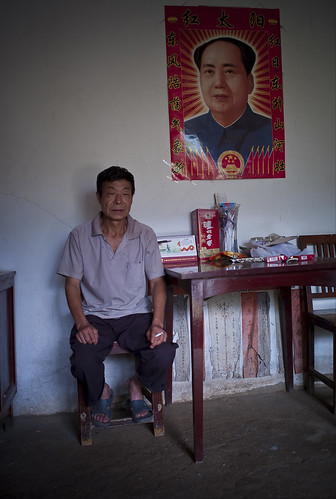
UNDP eradicating poverty in China with US funding - while China owns $907Billion in US Treasury Bonds

undpwatch
This person owns $907Billion in but in order 2 get by he get's support from with funding

Mentioned in this Tweet

  • United Nations · Unfollow
    Official twitter account of United Nations. Get the latest information on the UN.

Friday, July 22, 2011

USAID overpays ($25) for solar lanterns via UNDP Kenya - beter quality lanterns sold on Amazon for only $19


“The solar lights have a huge impact on health, education, productivity and overall improve the quality of people’s lives,” said Joseph Nganga from Solanterns, an initiative of Renewable Energy Ventures.

Its lanterns cost around $25 and are powered via a solar panel, which charges a lithium ion battery. Solanterns says it has reached over 1,500 households. This was partly helped by USAID which bought and distributed 500 lanterns around Nairobi. CLICK HERE FOR THIS

undpwatch
you paid $25 (overpriced) while you can buy a better one 4 only 19$

Thursday, December 2, 2010

New FAO Deputy Director-General appointed

WEBWIRE – Thursday, December 02, 2010

Ann Tutwiler will assume office in January 2011

Rome - FAO Director-General Jacques Diouf today announced the appointment of Ann Tutwiler, a citizen of the United States, as one of FAO’s two Deputy Directors-General. Ann Tutwiler will be the first female to hold this position.

Ms Tutwiler will be Deputy Director-General for Knowledge. She comes to FAO from the United States Department of Agriculture, where she served since January 2010 as Coordinator of Global Food Security in the Office of the Secretary of Agriculture. She is expected to assume her duties at FAO in January 2011.

Ann Tutwiler previously served as Senior Advisor for the Africa Bureau of the US Agency for International Development and prior to that, from 2006 to 2009, was the Managing Director for Agricultural Markets at the William and Flora Hewlett Foundation.

She holds degrees in Agribusiness from Purdue University and Harvard Business School, a Masters from the Kennedy School of Government at Harvard University, and a Bachelor of Arts from Davidson College.

Ms Tutwiler replaces James G. Butler who held the position since January 2008

Saturday, August 28, 2010

How Not to Win Hearts and Minds

THE WALL STREET JOURNAL


In a U.N. survey, 52% of Afghans said foreign aid organizations 'are corrupt and are in the country just to get rich.'


By WILLIAM EASTERLY


In June, this newspaper broke the story of how Afghan officials were literally stuffing suitcases with aid money and flying out of the country. As a result, the House foreign aid appropriations subcommittee voted to cut $4.5 billion from the U.S. aid program to Afghanistan.


The situation in Afghanistan is not unique. Indeed, the United States Agency for International Development (USAID) has long been plagued by accusations of corruption and lack of transparency. But foreign aid bureaucracies traditionally have two contradictory mandates: 1) We must not give aid to corrupt recipients; and 2) We must spend the entire aid budget. No. 2 usually beats No. 1. Aid agencies put a glossy face on this outcome, which makes the victory of corruption even more likely.


An Afghan government report in 2008 (the "Kazimi report") detailed abundant corruption and suggested that aid inflows contributed to it. USAID's own report in 2009 said "corruption is now at an unprecedented scope in the country's history" and that the "tremendous size . . . [of] development assistance . . . increase[s] Afghanistan's vulnerability to corruption." According to Transparency International, Afghanistan went from the 42nd most corrupt country in the world in 2005 to the second most corrupt in 2009 (Somalia was first).


The 2009 USAID report noted that domestic Afghan anticorruption efforts fail because "often the officials and agencies that are supposed to be part of the solution to corruption are instead a critical part of the corruption syndrome." Yet it recommends providing more "resources" to these same corrupt anticorruption fighters.


The report correctly noted that part of the solution to corruption is "transparency and accountability." True, but USAID itself lacks transparency and accountability. The report fails to mention a single USAID program that has suffered from corruption.

I run a blog called Aid Watch together with Laura Freschi at New York University. When we contacted USAID after its 2009 report was released to ask how this could be so, we started informative discussions with the Afghan country desk. Unfortunately, the USAID Press Office quickly intervened, saying that any response had to come from them. Then they failed to provide any such response.

Others have had similar experiences. Till Bruckner, a field-based researcher on corruption in the Republic of Georgia, asked USAID for information on the budgets of the NGOs they funded there. When USAID refused, he filed a Freedom of Information Act request in May 2009. After months of stonewalling, USAID finally responded last month, with copies of NGO budgets—but much of the key information blacked out.Why such impunity? Discussion about corruption in aid has been abundant since then World Bank President James Wolfensohn broke a longstanding taboo on the subject in a speech condemning corruption in 1996. Yet the share of the most corrupt recipients in foreign aid is actually higher today than it was in 1996.


Aid recipients understand unconditional conditions all too well. Afghanistan President Hamid Karzai knows that USAID will have to spend its Afghanistan budget no matter what, so he makes some token commitment, does nothing, and indeed the aid keeps flowing.

I can certainly understand why USAID would prefer not to talk about this unsavory equilibrium. But the stakes are far higher in Afghanistan than in the usual aid recipient.


As the war there drags on, we have to ask the following question: Is U.S. aid winning hearts and minds? A U.N. survey taken in January found that 52% of Afghans believe aid organizations "are corrupt and are in the country just to get rich." I don't know much about waging a counterinsurgency, but it seems to me that we're getting very little for our money.


Mr. Easterly is a professor of economics at NYU and author of "The White Man's Burden: Why the West's Efforts to Aid the Rest Have Done So Much Ill and So Little Good" (Penguin, 2007).

The accidental NGO and USAID transparency test

Aid Watch: just asking that aid benefit the poor

By Guest Blogger |

The following post was written by Till Bruckner, PhD candidate at the University of Bristol and former Transparency International Georgia aid monitoring coordinator. An op-ed from Bill in Monday’s Wall Street Journal mentioned Till’s struggles with USAID; here Till provides the details.

The aid industry routinely pushes institutions in developing countries to become more transparent and accountable. But a slow and almost comically incomplete donor response to a request to see some specific project budgets sheds light on exactly how willing donors are to apply such “best practices” to themselves.

As I described in a previous Aid Watch blog post, I filed a Freedom of Information request with USAID after ten international NGOs working in the Republic of Georgia refused to publish their project budgets. After a painful, 14-month struggle, including failing to respond at all to my first three communications, USAID finally released a set of documents covering project budgets of 19 UN bodies, NGOs and private contractors.

A portion of World Vision project budget provided by USAID

The documents are disappointingly full of blacked-out non-information. The level of disclosure varies drastically from one document to the next. Some budgets are provided in full, while others appear as blacked-out row upon row. In three cases, USAID even withheld the identity of the contractor itself. USAID explained this inconsistency saying that it was legally required to contact each grantee to give it “the opportunity to address how the disclosure of their information could reasonably be expected to cause substantial competitive harm.”

I wondered why USAID is legally bound to follow its grantees’ wishes in deciding which information to withhold. Can the grantees of a US federal agency really compel that agency to keep the total amount disbursed, or even their very identities, secret? Why doesn’t USAID specify full disclosure as a grant condition? I have filed an appeal with USAID to address these questions, and will keep the readers of this blog updated.

Since according to USAID every piece of blacked-out information was withheld on request of the grantee, the budgets provide a fascinating glimpse into aid agencies’ willingness to open their books. If USAID blackouts do NOT correspond to NGO requests, I would be happy to correct the record.

Perhaps surprisingly, the United Nations showed the highest consistent commitment to transparency. The budgets of the two UN agencies funded by USAID are both reproduced in full.

UMCOR, Mercy Corps, and AIHA emerge as the most transparent NGOs. These charities apparently felt that they had nothing to hide, and did not request USAID to black out any of the information contained in their budgets.

In contrast, Save the Children apparently asked USAID to withhold all information related to salaries. As even the aggregate subtotals for international and national staff have been blacked out, concerns about the privacy of individual staff members cannot have been the sole concern driving the organization’s response. Still, the fact that all non-salary related budget lines remain visible put Save the Children in the middle ground in terms of NGO transparency.

CARE’s response is harder to interpret as USAID inexplicably sent only an aggregated “summary budget” that leaves little to conceal. What information exists shows that CARE did not object to the release of unit prices for supplementary food items, or of aggregated staff and operational support costs. In contrast, CARE appears to regard its “indirect cost rate” and “cost share” as confidential. To hide this information, USAID also had to black out the budget’s bottom line, thus leaving unclear how many taxpayer dollars were handed over in total.

Portion of CNFA project budget provided by USAID

The least transparent NGOs in this test are CNFA, World Vision, and Counterpart International. They apparently requested that USAID black out all information in their budgets except for the grand total. Apparently, these NGOs consider budget items such as “office furniture” (CNFA), “visibility items (t-shirts, caps, publications)” (World Vision) and “forklift expenses” (Counterpart) as confidential information whose release could cause them substantial competitive harm.

What does this transparency test tell us? First, USAID’s mechanism for responding to Freedom of Information requests desperately needs an overhaul. It took USAID 14 months to respond to a simple information request. Ironically, in terms of FOIA responsiveness, USAID is less transparent than public institutions in the Republic of Georgia, as recently assessed by a local watchdog organization. And we are still waiting to hear why USAID allows its own contractors to operate in secrecy whenever they wish. All of this places USAID in an awkward position as it recommends greater transparency and accountability to Georgia.

Second, NGOs have publicly committed themselves to transparency and accountability, but their actions show that their interpretations of what this entails in practice differ widely. For example, World Vision is a full member of theHumanitarian Accountability Partnership, but still asked USAID to hide all of its budget information apart from the bottom line. The Georgian country office of Mercy Corps had earlier refused to release its project budgets, but its headquarters apparently has no such reservations. Save the Children is willing to release indirect cost rates but refuses to divulge even aggregate salary information, while CARE appears more relaxed regarding human resource expenses even as it fiercely guards information on its indirect costs rates. Both USAID and the NGOs have too often violated the elementary principles of transparency.