Sunday, August 31, 2008

Every Dutch person who wrongfully receives a subsidy should be made to pay back every penny with interest

Eveline Herfkens to work for free for one year:

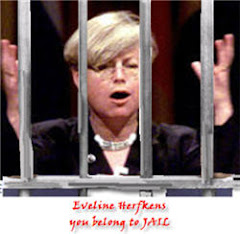
Someone facing a significant pay cut this year is former Development Cooperation Minister Eveline Herfkens who has announced that for one year she will work for the United Nations for the symbolic sum of just one dollar. Her gesture is the upshot of a scandal in which she received funds from the Dutch government towards her accommodation in New York, against the rules of the UN. Her refusal to pay the money back caused something of a stink.

"As far as I'm concerned, the case is now closed" says Foreign Minister Maxime Verhagen in de Volkskrant, admitting that legal action to recover the money would have been pointless since Herfkens "has done nothing illegal".

Not everyone agrees, however. The paper quotes one irate VVD MP who says "Every Dutch person who wrongfully receives a subsidy should be made to pay back every penny with interest" while a Socialist MP interprets the former minister's willingness to work for nothing as "an indirect admission of guilt".

De Telegraaf's editorial lambasts everyone concerned. "It's a typical wishy-washy political deal: everyone is responsible so no one is guilty." The paper goes on "That sum of EUR 190,000 was forked out by the Dutch taxpayers. And how exactly do they benefit from having Herfkens doing a spot of charity work in the bureaucratic jungle of the UN?"

Herfkens gaat 1 dollar verdienen


New York, 28 aug. Minister Verhagen (CDA, Buitenlandse Zaken) komt terug op zijn voornemen de ten onrechte aan Eveline Herfkens verstrekte huurvergoedingen terug te vorderen. Verhagen wil de zaak bij nader inzien achter zich laten door Herfkens één jaar voor de VN te laten werken voor een salaris van 1 dollar (0,68 euro).Nieuws - Verhagen gaat geld terugvorderen van Herfkens

Dat schrijft de minister in een brief aan de Tweede Kamer. Eerder vond de Kamer nog unaniem dat de vergoedingen moesten worden teruggevorderd.

Herfkens (PvdA) is oud-minister van Ontwikkelingssamenwerking. In 2002 werd zij een van Nederlands hoogste diplomaten bij de Verenigde Naties. De Nederlandse staat bood haar toen een huurvergoeding aan. Om de onafhankelijkheid van VN-diplomaten te waarborgen mogen zij geen geld aannemen van hun eigen overheid. Herfkens had dit kunnen weten omdat zij de interne gedragscode waarin dit staat heeft ontvangen en ondertekend.

De juridische dienst van de VN deed vier maanden onderzoek naar de kwestie. „Het lijkt erop”, stelden de onderzoekers in mei, dat Herfkens zich „niet bewust” was van de regels. Ook zou ze „in goed vertrouwen” gehandeld hebben. De Nederlandse staat had de VN-regels voor lidstaten ook overtreden en „had dat kunnen weten”.

In mei vond Verhagen dat de overtreding Herfkens was aan te rekenen. Daarom wilde hij „actie ondernemen” om het geld terug te vorderen, desnoods via de rechter. In de brief van vandaag gaat Verhagen voorbij aan zijn standpunt van mei. Hij verwijst slechts naar een brief uit februari toen het interne VN-onderzoek nog niet afgerond was.

Nu stelt hij dat UNDP de zaak als afgedaan beschouwt en dat hij zelf „nogmaals juridisch advies heeft ingewonnen”. Daaruit trekt hij de conclusie „dat er onvoldoende grondslag is voor het terugvorderen”.

Herfkens weigerde bij herhaling het geld terug te betalen; zij vond dat haar geen blaam trof omdat zij niet zelf om de huursuppletie gevraagd had. Bovendien was ze te druk met haar werk om zich in de VN-regels te verdiepen. Nu schrijft Verhagen dat Herfkens zelf het aanbod heeft gedaan tot een vergelijk te komen en zich daarmee „serieus rekenschap geeft van de politieke dimensie van de discussie”.

Herfkens noch UNDP reageerde vandaag op verzoeken om commentaar. Verhagen zegt te hopen dat deze oplossing „bijdraagt aan het herstel van de reputatieschade die mevrouw Herfkens heeft geleden”.

Tweede Kamer kan Herfkens-deal repareren

De deal tussen Eveline Herfkens en minister Verhagen betekent nog niet definitief dat de Nederlandse belastingbetaler zijn geld kwijt is. Als de Kamer wil, kan er nog veel worden rechtgezet

Door Eric Vrijsen

Van Eveline Herfkens (PvdA) kun je veel zeggen, maar ze geeft toch nog een jaarsalaris van 120.000 dollar toe. Ze erkent daarmee volmondig dat ze fout zat, of niet soms?

Tussen 2002 en 2007 had ze ten onrechte 280.000 dollar aan Nederlandse huursubsidie ontvangen. CDA-minister Maxime Verhagen (Buitenlandse Zaken) beloofde eind mei het bedrag geheel of gedeeltelijk terug te vorderen. Nu neemt hij genoegen met Herfkens’ gebaar om één jaar bij de VN te werken voor één symbolische dollar.


Dwingen
Niemand had haar daartoe kunnen dwingen, behalve het VN Ontwikkelingsproject (UNDP), haar werkgever. In 2002 kreeg Herfkens een duidelijk arbeidsreglement waarin stond dat ze van niemand anders geld mocht ontvangen. Ze tekende voor ontvangst. Dat ze toch 280.000 dollar aannam uit Nederland, was dus niet toegestaan. Maar de VN bedekte het met de mantel der liefde: ‘Ze was te goeder trouw.’

Dat laatste is natuurlijk onzin. Herfkens was niet alleen minister, maar ook bewindvoerder bij de Wereldbank geweest. Ze móet hebben geweten dat het niet mocht.

Maar juridisch is dat nu niet meer hard te maken. Hoe moreel verwerpelijk Herfkens in Nederlandse ogen ook handelde, Verhagen is in een rechtszaak kansloos. In juridische zin leeft Herfkens namelijk in conflict met de VN. Een rechter in New York zal al snel oordelen dat Verhagen daar niks mee te maken heeft.

Nog niet dood
Politiek is deze veelbesproken zaak echter nog niet dood. CDA en PvdA dekken Verhagen. Maar VVD, SP, PVV en CU pleiten tóch voor rechtszaken. Verhagen zal dat afwimpelen: ‘Dat kost kapitalen aan advocaten en het leidt tot niets.’

Toch kunnen de partijen nog veel rechtzetten. Ze kunnen proberen de begroting van Buitenlandse Zaken met 120.000 dollar, maar het liefst 280.000 dollar te verminderen. Dat geld kan makkelijk worden bespaard door de jaarlijkse bijdragen van tientallen miljoenen aan het VN Ontwikkelingsproject dienovereenkomstig te verminderen. Want: ‘Onze lieve Eveline werkt nu toch een jaartje voor één armzalige buck bij jullie!’

Zo keert de foutief uitgekeerde 280.000 dollar toch nog (deels) terug naar de Nederlandse belastingbetaler. En misschien nog belangrijker: die kauwgumachtige VN-organisatie met zijn ‘te goeder trouw’-directie wordt, althans symbolisch, op zijn nummer gezet.

Dat is in het belang van de armoedebestrijding. Verhagen en PvdA-collega Bert Koenders van Ontwikkelingssamenwerking moeten dus niet aankomen met een jammerklacht dat ‘de armen hier niet onder mogen lijden’.

Former Dutch minister keeps UN removal money


Former Dutch development cooperation minister Eveline Herfkens will not be forced to return money she received towards the cost of her apartment in New York. Between 2002 and 2006, the Dutch foreign ministry paid getting on for 200,000 euros towards her rental and removal expenses after she started working for the United Nations.

She had the rank of assistant secretary-general and was based in New York. The payments later turned out to be against UN regulations and Dutch MPs demanded she return the money.

However, Foreign Minister Maxime Verhagen has now written to parliament, saying Ms Herfkens acted in good faith. The United Nations Development Programme, her employer, is also not insisting on restitution. Ms Herfkens has apologised for her oversight and has offered to work for a year for no salary.

Dutch former Minister and UN employee - Eveline Herfkens Allowed to Keep 280,000 Dollars

THE HAGUE, 30/08/08 - Dutch UN employee Eveline Herfkens does not have to pay back any of the 280,000 dollars that she wrongfully received from the Foreign Ministry. She used this money to rent a luxury flat in Manhattan from 2002 to 2006.

Foreign Minister Maxime Verhagen concludes that Herfkens has not acted incorrectly as far as his department is concerned. There are therefore no grounds for demanding the money back, he wrote to the Lower House.

The MPs had insisted that steps be taken to recover the wrongfully paid money from Herfkens. The conservatives (VVD), socialists (SP) and Party for Freedom (PVV) are not satisfied with Verhagen's letter and will demand clarification.

Verhagen has agreed with Herfkens that as a gesture, she will "work for the UN Millennium Goals" for a year for the symbolic sum of 1 dollar. He did not specify what activities this involved, though.

Herfkens, a Labour (PvdA) member, was Develop Cooperation Minister from 1998-2002. She then took up work with the UNDP in New York. Verhagen's ministry paid her 7,000 dollars a month from 2002 to 2006 for the rent of a flat in Manhattan, in addition to her UN salary. This was not permitted by either the UN rules or the ministry rules.

Friday, August 29, 2008

Meanwhile, Over at the UN: Cashing In On Terrorism?

While we wait for details of an Obama-Biden ticket that will surely propose an even deeper love affair with the United Nations than that of the Condi Rice State Department, here’s one of those United Nations conundrums:

Secretary-General Ban Ki-Moon will be convening a UN symposium in New York next month on supporting victims of terrorism.

But the UN still hasn’t managed to come up with a basic definition of terrorism.

So if the UN can’t even figure out who’s a terrorist, how will the UN decide who’s a victim?

For a clue about where this latest initiative from Ban is likely to take us, check out the language in the UN press release linked above. Ban’s terror-victim forum, described as “the first of its kind at the United Nations,” is supposed to “help Member States to stand as one to support the victims of terrorism and to encourage civil society’s involvement against the scourge…” etc. etc.

“Stand as one”–?? Maybe Ban hasn’t noticed, but this is the fast track to the UN’s usual brand of Orwellian politics and moral bankruptcy. There are some UN member states — such as Iran — that like the idea of obliterating other entire member states, and support terrorists, such as Hezbollah, as a matter of state policy. (Although at the UN, Hezbollah cannot be regarded as a terrorist group, because there is no definition of terrorism).

For the UN, of course, it’s boom busines to keep ginning up new programs for an ever-expanding list of assorted groups of “victims.” Every new initiative becomes a rationale for more UN conferences, jobs, and solicitations for money. Whether any real victims are actually helped (or harmed) tends to become a secondary issue, if not simply irrelevant to the servicing and gourmet feeding of the UN organism — the conferences on Bali, the aid to dictators, the billions for peacekeeping forces that can’t keep peace and also can’t seem to keep their hands off the children they are supposed to protect. The UN has by now involved itself with so many categories of “victims” that by now the only victims for whom Ban is not convening forums or launching programs or dispatching envoys would seem to be the taxpayers of the developed democratic world, who fund most of the UN’s opaque, unaccountable patronage systems.

In this case, supporting victims of terrorism might sound worthy — after all, who wouldn’t be sympathetic to genuine victims of terrorism? But before Ban starts convening participants from “all regions, cultures and religions, representing a diversity of terror-victim experiences,” how about the UN producing a clear and reasonable definition of this experience Ban wants the world-as-one to address?

If Ban really wants the UN to do something useful to stop the scourge of terrorism, he’d do better to start by cleaning up his own house. Step one: Instead of holding a new symposium, he could stand up and call loud and clear for member states to stay away from the UN’s Durban II conference, now being planned for 2009 by the likes of Libya, Iran, Cuba, Russia and Pakistan — which shows every signs of becoming a replay of the malevolent 2001 hate-fest that was Durban I. Before the UN starts cashing in on teror-victims as a source of employment and per diems for the UN itself, His Eminence the Secretary-General ought to bestir himself to defuse the UN itself as a mothership of moral equivalence, and an incubator of hatred.

Thursday, August 28, 2008

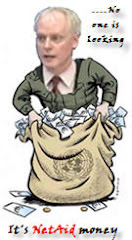
Kemal Dervis appoints the former President of NetAid and aide to Maurice Strong as head of UNCDF (what a shame)

PAYBACK TIME FOR LOYALTY TO THE SYSTEM

David Morrison joined the United Nations Capital Development Fund (UNCDF) as the Executive Secretary in July 2008. In this position, he sets UNCDF's strategic direction and provides organizational leadership and management for the organization.

Mr. Morrison began his career with the United Nations Development Programme (UNDP) as Junior Professional Officer in DPR Korea in the late 1980s. (Morrison knew well about the US$ counterfeit in UNDP's Safe in DPRK- his signature was in the safe-count inventory - but he lied to US Congress)

He returned to UNDP in 1999-2000 as an Advisor to the Administrator on Strategy and Partnerships, serving on the incoming Administrator's Transition Team, and helping to create UNDP's Business Plans 2000 - 2003. From 2000-2004 he was President of NetAid, a partnership initiative founded by UNDP and Cisco Systems to use the Internet to fight poverty. Prior to joining UNCDF he served as UNDP's Director of Communications. (Where is NetAid money Mr. Morrison??)

Mr. Morrison has also worked for the Foreign Service of Canada, where his assignments included the Canadian Embassy in Havana and the Policy Staff in Ottawa, and for the World Economic Forum, where he was programme director for the annual summit in Davos, Switzerland, from 1995-1999.

Mr. Morrison holds an M. Phil from University of Oxford and a B.A. from Yale University. He is a Canadian citizen and speaks English, French and Spanish.

UN Whistleblower in Tokyo Raises Questions of Fraud, Cover-Up and Retaliation from Below

Byline: Matthew Russell Lee of Inner City Press at the UN: News Analysis

UNITED NATIONS, August 26 -- Objections against UN management raised by a high-profile Japanese journalist who headed the UN Information Center in Tokyo until earlier this year reveal a culture of retaliation and denial, alongside questions about the purpose and performance of these Information Centers and the UN's relations with major donor nations like Japan.

Charmine Koda was named the director of UNIC-Tokyo in April 2006. Later that year, she discovered systemic financial irregularities at the Center, including the use of falsified invoices to pay for services not yet rendered. She blew the whistle on these irregularities, first to the Department of Public Information which oversees the Information Centers, then when nothing was done, to the Office of Internal Oversight Services. In the resulting audit, Ms. Koda's own management style came under review, and she was given a series of short-term contract renewals and stripped of various of her powers at the Center.

Ms. Koda filed a harassment complaint against DPI's then number-two official in March 2008, heretofore not reported in the English language press. When Ms. Koda moved to schedule a press conference in Tokyo, DPI's top official Kiyotaka Akasaka in turn summoned some of the UN press corps to his office for a counter-briefing. Only representatives of the Japanese press were invited, an incongruity Inner City Press noted soon thereafter. (Click here for that May 21, 2008 article.)

After questions from Inner City Press, last week finally some answers were provided. Two individuals who requested to be identified only as "UN officials knowledgeable about the case" spoke with Inner City Press for an hour. They emphasized their argument that Ms. Koda cannot be considered a whistleblower, since "it was her job to report what she saw." They stressed that complaints were filed about Ms. Koda by six of the seven staffers of UNIC-Tokyo "and even the interns." They said that the money the UN had spent arranging for management training for Ms. Koda could have been spent on substantive programs in other UNICs.


They could not directly explain, however, why if in their view Ms. Koda was such a bad manager, she had been given the management job in the first place. They said that the selection of UNIC directors is vetted by the host governments, particularly in cases like the Tokyo Center where the host government provides most of the funding for the Center's work. So does a government's view come into play even earlier in the selection process? The two UN official acknowledged that it does.


How this plays out in the UN Information Centers in Sudan, Zimbabwe and Myanmar will be the subject for future Inner City Press articles. As related to Ms. Koda, the two officials repeated sought to portray the UN as the victim, and Ms. Koda as "not a whistleblower." Inner City Press disagrees, for the reasons summarized below.

When Ms. Koda finally left the UNIC in June 2008, she wrote a lengthy expose of her time at the UN. This appeared in the Japanese magazine Bungeishunju and has yet to appear in English. Inner City Press has reviewed a 23-page translation of the article. DPI's attempts to limit it responses to the Japanese-language press, and to claim that Ms. Koda is not and cannot be a whistleblower, are now more understandable, as Ms. Koda's critique is comprehensive -- and she names names.

To set the stage, Ms. Koda describes UNIC-Tokyo as

"a small office made up of the Director and 7 staff members, and the Directors have been senior level staff hired by the UN Headquarters and were changed approximately every 2 or 3 years ever since it was founded. In the beginning, foreign nationals were appointed, but in recent years, the position was assumed by Japanese. The first was Mr. Hatsuhisa Takashima (2000 ~ 2002, from NHK), next was Mr. Akio Nomura (2003 ~ 2005, from Asahi Shimbun), and the third Japanese Director was myself."

To this we can add that the Government of Japan's role in the selection of directors, and the use of Japanese taxpayers' funds for the work of the Center, making even more significant the reports of financial irregularities. As stated by Ms. Koda

"The contents of these financial irregularities were later summarized briefly in the report (dated March 11, 2008) of the UN Office of Internal Oversight Services (OIOS) audit. In December 2005, during the time of the former Director, the Center had 3 companies produce fictitious invoices and remitted a total of 3,130,000 yen... According to the explanation of the staff, they were 'pre-payments' that were intended to be consumed in the following fiscal year (the end of the fiscal budget year is December), and it is said that this practice had been prevalent since 2000. The audit report states that this is against UN financial rules and is requesting that 'appropriate measures' be taken against the concerned staff. The signatures of the former Director and the administrative assistant remain clearly on the fictitious vouchers. And fictitious reporting was being done to the UN Headquarters... I immediately reported all to Director [Paula] Refolo at the Department of Public Information."

But the UN's focus soon turned on Ms. Koda herself. As another UN system whistleblower has phrased it to Inner City Press, "the UN always shoots the messenger." The twist in this case is that, at least on its face, the retaliation was from below. Long-time UNIC staff members who were there are the time of the financial irregularities sent complaints to the UN in New York. Specifically, according to Ms. Koda, six staff members

"sent a letter to Director Refolo accusing me of 'power harassment' and 'misbehavior as International Civil Servant.' (One staff member opposed this kind of action and did not sign the letter.) Letters in support of the accusations addressed to Under-Secretary-General [Shashi] Tharoor by the two former Directors, Mr. Takashima and Mr. Nomura, and a letter by 2 interns addressed to the Secretary-General were also attached... the Department of Public Information took them up at face value, incorporated their arguments one-sidedly, wrote a report pursuing my responsibility, and took the measure to not allow me to refute."

An official the Japanese Foreign Ministry consulted by Inner City Press for this story stated that "we are keen" on getting to the bottom of the financial improprieties at UNIC-Tokyo "since the money is that of the Japanese taxpayers," and that Ms. Koda as well as the UNIC-Tokyo staff should be treated fairly during these reviews. A senior Japanese official expressed support for Ms. Koda. But not enough, apparently, to protect her from retaliation, at least for now. Following this report, Ms. Koda says,

"Refolo sent me an email telling me, 'It has been decided that staff A will do the staff members' PAS evaluation this year.' She was going to rob me of what was close to the only authority I had as the Director and hand it over to A. This will be equivalent to DPI’s recognition of staff A as the virtual Director. When I wrote back to that effect, Ms Refolo responded, 'It is a one- time measure which is necessary... and is being taken mainly as a way to protect you, given that even your most objective evaluation could be perceived by staff as retaliation.'"

The irony appears lost on DPI -- they retaliated by stripping Ms. Koda, who had complained of financial impropriety, of her responsibilities, ostensibly so that she would not be charged with retaliation. Ms. Koda continues that in early 2008

"in Bangkok, a meeting among Directors of UNICs in Asian countries was held and USG Akasaka, Director Refolo and I were there on site. That morning, when I met USG Akasaka at the hotel restaurant and offered him to join me, he asked, 'Have you seen the OIOS draft report?' When I answered, 'Not yet,' he told me to get a copy from Director Refolo. That evening, as she was leaving to go out for dinner, I somehow managed to stop her and receive a copy. I felt my blood freeze. It wrote the problem of staff management as top priority, and by quoting the contents of the staff’s allegations and the Panel report, it recommended my reassignment. Procurement issues such as financial irregularities were placed in the back inconspicuously."

Inner City Press has asked OIOS' Inga Britt Ahlenius about among other things OIOS' role in the matter, including the allegation by some of the use of OIOS as a part of retaliation, but Ms. Ahlenius has not responded. Hours later a message arrived, that Ms. Ahlenius is on "annual leave" extending from July 28 through September 15. But the questions asked cannot wait that long. Ms. Koda, for the record, says she keeps an open mind. She concludes

"Inside the United Nations, the reputation of the Department of Public Information of its heavy-handed attitude is being talked about. Also from subordinate organizations of other area discontent towards the ways of Director Refolo is being heard. However, as long as the issue is discussed and dealt with only inside the closed environment of the organization called the UN, a fundamental solution to this kind of problem can hardly be expected. I have decided to resign from my post and expose the problem to public review. I would like to express my gratitude to all the people for their trust and support in my work at the UN, and at the same time, I wish to apologize from my heart for not being able to fulfill it. I am still a believer in the principles and the meaningfulness of the activities of the United Nations. To contribute my humble part to the reform of that United Nations, I am determined to fight all the way."

In light of the repeated argument of the two "UN officials" provided by DPI that Ms. Koda cannot be considered a whistleblower since it was her duty to report improprieties, Inner City Press asked the Washington-based Government Accountability Project (GAP) for comment. In response, Tom Devine, GAP's legal director, said that "there's not even a syllable in the UN policy that provides an opening for that loophole. It's entirely a bureaucratic creation to avoid the approved U.N. rules on whistleblower rights."

Inner City Press wants to cover more of the UN DPI's side. The initial block was DPI's decision to limit its story-telling to the Japanese media. Now, an outgoing difficulty is the unwillingness of DPI to tell any part of its story on the record and for attribution. As Ms. Koda asks, how then are they the Department of PUBLIC Information?" Perhaps DPI is in a difficult position. But how would one know? To be continued.

Thursday, August 21, 2008

COMMENT: How Much Discretion? U.N.’s Anti-Poverty Program Wants Unlimited Spending Power

Um, On First Glance, I Vote Not Only “No,” But “HELL NO!“

Especially when you get facts like these:
  • The United Nations Development Program, the U.N.’s anti-poverty agency, which systematically ignored its own financial rules and regulations while funneling millions of dollars to North Korea, wants to give its chief operating officer the right to make out discretionary checks of unlimited amounts, without normal budgetary approval.
  • That’s up from the current limit of $50,000 which can be dispersed without regulatory oversight.
  • UNDP argues that the new ability to write such checks without normal authorization would only bring its discretionary powers into line with those currently exercised by other U.N. programs, like UNICEF and the World Food Program (WFP).
  • The problem is that at the Rome-based WFP, the use of the same unlimited discretionary authority to pay off job-eliminated contract employees was condemned just last year as a $90 million abuse of authority and a violation both of U.N. payment rules for contractors, and of fairness to longer-term employees.
  • The condemnation was issued by the only budget oversight committee that includes the entire membership of the U.N. It was ignored both by WFP bureaucrats and by the WFP’s 36-nation governing executive board.
  • UNDP’s desire to have the same unlimited discretionary power for its No. 2 bureaucrat, Associate Administrator Ad Melkert, is contained in support documents for the next meeting of its own, similarly-sized executive board, which meets in New York City from September 8 to 12.
  • The discretionary money is known in technical parlance as “ex gratia” funds, which UNDP describes as “payments which are made where there is no legal liability to UNDP, but the moral obligation justifies making such payments, which are in the interest of UNDP.” The question of what defines that interest is left to top administrators to decide.
  • The whole article is filled with examples of UN malfeasance or potential malfeasance, which - trust me! - is just as bad, from what I read.

Not only “No!” but “HELL NO!”

COMMENT ON: How Much Discretion? U.N.’s Anti-Poverty Program Wants Unlimited Spending Power

Economic globalization at it’s worst!

Along with it’s other countless reprehensible actions and disgraceful behavior, can we really expect the United Nitwits to handle our (The United States Taxpayers ) moneys correctly.

Beware of this Bipartisan bill:

A nice-sounding bill called the “Global Poverty Act,” sponsored by Democratic presidential candidate and Senator Barack Obama could result in the imposition of a global tax on the United States makes levels of U.S. foreign aid spending subservient to the dictates of the United Nations.

The legislation would commit the U.S. to spending 0.7 percent of gross national product on foreign aid, which amounts to a phenomenal 13-year total of $845 billion over and above what the U.S. already spends.”

The bill, called the Global Poverty Act, is the type of legislation, “We can – and must – make … a priority,” said Obama

It would demand that the president develop “and implement” a policy to “cut extreme global poverty in half by 2015 through aid, trade, debt relief” and other programs…

Obama wants us to support the world. I wonder how they intend to eliminate poverty. Most of the money always winds up in some dictator hands and in the U.N. coffers.” Just check out Kofi Annan’s family bank account.

What the U.S. Pays the U.N. Already

US contributions to UN Regular Budget

The United States has the maximum assessed contribution to the UN regular budget — 22%. In 2005 the assessed amount is $439,611,612. The minimum assessed contribution is 0.001%. The scale of assessments for each UN member for the required contributions to the regular budget is determined every 3 years on the basis of Gross National Product (GNP).

Only nine countries (starting with the largest contributor: United States, Japan, Germany, United Kingdom, France, Italy, Canada, Spain, China) contribute 75% of the entire regular budget. Cuba, which accounts for much of the behavior of the UN Human Rights Commission and its Sub-Commission, contributes .043% of the regular budget. Oil-rich Saudi Arabia contributes .713%.

UN members also make voluntary contributions to UN specialized agencies and subsidiary organizations. The administrative costs of such bodies, though, are met from the regular budget.

In addition to their contributions to the UN regular budget, member states contribute to the peacekeeping operations budget and the cost of international courts and tribunals. The level of these contributions is based on their assessed contributions to the regular budget plus variations which take account of permanent membership on the Security Council.

UN members also make voluntary contributions to UN specialized agencies and subsidiary organizations. The administrative costs of such bodies, though, are met from the regular budget.

U.S. contributions to the UN in 2005 totaled: $5,327,276,000.
(Regular budget, extra budgetary contributions, in-kind contributions)

The fact is that if you just keep throwing people fish, the fish pile up and rot!

Kimlik olarak Adalet

Cumartesi günkü yazımda Doç. Burhanettin Duran'ın makalesine atfen Adalet kavramının AK Parti'nin özgün bir kimlik iddiasını kanıtlayabileceği son derece geniş bir siyaset alanını işaret ettiğinden bahsetmiştim. Ancak partinin bu konudaki anlayışını sergileme veya ifade etme konusunda yeterince istekli göründüğü söylenemez. İsminde “adalet” sözcüğü bulunan bir iktidar partisinin, parti programındaki bir-iki sayfalık tanıtımın dışında, şu ana kadar kavramın içeriği, felsefesi, sorunları üzerine kayda değer bir söylemde bulunmamış olması biraz izaha muhtaç değil mi? Kanaatimce, “muhafazakâr demokrasi” gibi partiye sonradan yapıştırılan bir kimlik üzerine yapılan sempozyumdan veya söylemlerden daha fazlasını hak ediyor adalet kavramı.

Gerçekten de altı yıldır iktidarda bulunan yedi yaşındaki partinin kimliğini tanımlamak üzere kendine seçtiği ismin kalkınma ayağında sergilediği performans konusunda selef hükümetlere ve muhaliflerine nazaran ciddi bir fark ortaya koymuş olduğu açık. Yine de ekonominin yönetimi konusunda ortaya koyduğu fark bir siyasi partinin ortaya koyması beklenen farktan ziyade bir teknik kadronun teknik becerisi olarak da değerlendirilebilecek bir konudur.

Siyaset partilerle yapılır ve partiler zaten liberal (teorinin değilse bile) ideolojinin baskısı altında bir fark ortaya koyamadıkları ekonomik alanda sadece daha iyi performans iddialarıyla var olmaya çalışıyorlar. Oysa parti varlığı bu farktan ötesini gerektirir. Daha iyi kalkınma iddiası taşımakla bir parti kimliği tebarüz ettirilmez. Parti kimliği ancak dünyaya karşı daha farklı bir duruşla, farklı epistemolojik kaynaklardan beslenmeyle ifade edilir.

Herkesin kabul ettiği bir gerçektir ki, 2002 yılına kadar Ecevit hükümetince Kemal Derviş yönetiminde izlenen ekonomik politika teorik olarak AK Parti'nin sonradan uyguladığıyla aynıydı. Ancak yine de aynı programın daha mükemmeli bile olsa o yönetimle başarıya ulaşma şansı hiç yoktu. Çünkü siyaset sadece teoride bazı programların uygulanması değil, bunları kimin uyguladığı, nasıl bir niyet ve yaklaşımla uyguladığı da büyük bir fark ortaya koyuyor.

Siyaset tek taraflı işleyen bir süreç değil, onun bir de yönetilenler ayağı vardır ki, onlar nezdinde bir güven ve rıza tesis edilmedikçe ne kadar mükemmel olursa olsun, hiçbir ekonomik veya siyasi programın uygulanma şansı yoktur.

AK Parti'nin kimliği içinde “Adalet” ve “Kalkınma” unsurlarının çok güçlü bir dengesi olduğunda da kuşku yok. Adalet unsuru tam da parti kimliğinin kitlelerce bir sözleşme esası gibi görüldüğü ve arkasından bu partinin kalkınma programının veya pratiklerinin tanınmasını temin eden bir diyalog süreci gibi çalışıyor.

Ancak bu diyalogun AK Parti'ye sınırsız bir kredi açmış olduğunu düşünmemek gerekiyor. Partinin kalkınma programına adalet sözleşmesi çerçevesinde tanınan prim başarısız bir ekonomi politikası, adil olmayan bir dağılım, yolsuzluk ve yozlaşma durumunda tıkanma sürecine girer.

Türk siyasi hayatında Adalet bir kavram, değer ve siyasi kimlik olarak Adnan Menderes'e ve Demokrat Parti'ye karşı işlenmiş büyük zulmü de ima eden bir zemine dayanarak Adalet Partisi tarafından kullanılmıştır. Ancak kurulduktan hemen sonra partinin başına geçen Süleyman Demirel'in siyaset tarzı adalet kavramının hiç bir adalet vaadi olmayan içi boş bir kavrama dönüşmesine hizmet etti. Sağ muhafazakâr iktidarlar döneminde adalet kavramı kurulu eşitsizliklerin tanrı'nın bir kaderi gibi görüldüğü ve bu haliyle yeterince adil addedilerek meşrulaştırıldığı bir ideolojinin hizmetine koşuldu. O kadar ki süreç Muğla Üniversitesinden Dr. Necdet Subaşı'nın Adalet Sempozyumu'nda kaydettiği gibi tam bir “adalet kaybı” ile ifade edilebilecek bir noktaya geldi.

Toplum hayatının merkezinde duran bir değer ve standart olarak adaletin kaybı bir toplumun dirlik ve düzeninin de en büyük tehdididir. Çünkü çok iyi bildiğimiz gibi adalet mülkün temelidir. Adalet kaybı mülkün temellükünde sadece gücü ve marifeti yetenin hükmünü geçerli kılan bir düzen tesis eder. Ekonomik, kültürel ve siyasal bölüşüm konusunda bir türlü o ortak standardı yaratamıyor oluşumuz da bununla ilgilidir. Adalet kaybını telafi edecek bir farkı ortaya koyabilecek bir kurucu siyaset oluşamıyor.

Ak Parti'nin bu kurucu siyaseti üstlenme noktasına yaklaşmış olduğu bir ölçüde doğrudur. Ekonomi alanındaki başarısını bile adalet anlayışı veya pratiği konusunda toplumun önemli kesimleriyle olan sözleşmesine şimdiye kadar sadık kaldığını göstermesine borçludur. Bu adalet duygusundaki bir zedelenme uygulayacağı ekonomik programı da güvenilmezleştirir, işlemez hale getirir.

Fehmi Koru'nun dünkü yazısında isabetle belirttiği gibi AK Parti'yi bekleyen en büyük tehlike bundan sonra herhangi bir kapatılma davası değil yolsuzluk ve yozlaşma görüntüleridir ki bunlar sadece AK Parti'ye değil toplumdaki adalet duygusuna da büyük bir darbe vurur.

Tabii ki CHP'nin bir iftira potansiyeli her zaman mevcuttur. Ama iftira ihtimalinin varlığı sadece bu iddialara dayanarak yargısız infazı engellemelidir. Yoksa bu iddiaların tam bir şeffaflıkla irdelenmesini ve halkta güçlü bir adalet duygusunu besleyen fırsatlara dönüştürülmesini engellememelidir. Bunun için CHP'ye teşekkür bile edilmelidir.

Kötü niyetle bile olsa varlığı ve takibi, toplumda AK Parti'nin de iddiası olan adalet değerinin güçlenmesine, adalet kaybının telafisine hizmet edecektir.

Derviş durup dururken yasayı yumuşattı

GEÇMİŞTE limit aşımı yaşayan ve banka kaynaklarını kendi grup şirketlerine kullandırdığı için Fon’a geçen bankalar olmasına rağmen, bu uygulamadan Aydın Doğan’ın bankası için vazgeçildi. Çünkü başta Mesut Yılmaz, Ankara bürokrasisi Aydın Bey’i çok seviyordu. O dönem yasal limitlerin üzerine çıkan bankalara el konulmadı. 2002 yılında BDDK’nın bankalara bakış açısındaki değişime dikkat çekerek şu yorumu yapmak mümkün: Geçmişte bazı limitler vardı ama yüzde 25 limiti dönemin Ekonomi Bakanı Kemal Derviş getirdi. Eğer bu limit getirilmemiş ve yeni bir yumuşama havası yaratılmamış olsaydı pek çok bankanın daha Fon’a alınması gerekiyordu. Ancak BDDK limiti aşan bankalara ‘7 yıl içinde yasal limit altına ineceksiniz’ uyarısı yaptı. Bunun üzerine bankalar gereğini yapmaya başladı. 11 Ocak 2002 tarihinde, Derviş şu açıklamayı yaptı: Geçmişte yüzde 25 sınırı yoktu. Bankalara diyoruz ki bu kredileri 7 yılda temizleyin... Ortağına kredi vermek suç değil ama batık bir ortağa kredi verip bunu canlıymış gibi göstermek suç. Bu bankacılık kriterleri içinde olduysa, suç değil.