Showing posts with label Olav Kjørven. Show all posts

Monday, February 18, 2013

UNDP leadership fails to publicly disclose assets and interests (only 8 out 59 disclose)

Secretary-General Ban Ki-moon

2011 VOLUNTARY PUBLIC DISCLOSURE

The following is a list of Senior Officials of the United Nations at the level of Assistant Secretary-General and above who participated in the 2011 Voluntary Public Disclosure initiative (VPD).
For those participants who chose to disclose their interests, a summary is provided. The summary contains a declaration of assets and interests for the 2010 calendar year which the Senior Official confidentially disclosed under the 2011 United Nations Financial Disclosure Programme (FDP).
The list has been presented in alphabetical order by family name.

These are the only ones who participated from UNDP:

Helen Clark (click here to read it in full)

Rebeca Grynspan (click here to read it in full)

Gettu Tegegnework (click here to read it in full)

Jordan Ryan (click here to read it in full)

Ajay Chhibber (click here to read it in full)

Kaag Sigrid (click here to read it in full)

Olav Kjorven (click here to read it in full)

Heraldo Munoz (click here to read it in full)


Wednesday, February 13, 2013

Olav Kjorven is looking for a Director for UNDP's Seoul Policy Center (do you think it will be a fair selection..??)


DIRECTOR, UNDP SEOUL POLICY CENTER FOR GLOBAL DEVELOPMENT PARTNERSHIPS

Location : Seoul, KOREA (REPUBLIC OF)
Application Deadline :22-Feb-13
Type of Contract :FTA International
Post Level :D-1
Languages Required : English  
Starting Date :
(date when the selected candidate is expected to start)
01-May-2013
Duration of Initial Contract :One (1) Year
Expected Duration of Assignment :One Year (renewable)

Thursday, September 27, 2012

Time to integrate traditional and formal justice | Olav Kjørven

http://www.undp.org/content/undp/en/home/ourperspective/ourperspectivearticles/2012/09/26/time-to-engage-with-customary-justice-olav-kjorven.html

26 Sep 2012
image
Women take an active part at a village meeting in India.Photo: Sephi Bergerson/ UNDP India

In some developing countries, informal or traditional justice systems resolve up to 80 percent of disputes, over everything from cattle to contracts, dowries to divorce. Disproportionately, these mechanisms affect women and children. A new report, commissioned by UNDP, UNICEF, and UN Women and produced by the Danish Institute for Human Rights, provides the most comprehensive UN study on this complex area of justice to date. It draws conclusions based on research in Bangladesh, Ecuador, Malawi, Niger, Papua New Guinea, Uganda, and 12 other developing countries. These systems, it concludes, are a reality of justice in most of the countries where UNDP works to improve lives and livelihoods and government capacities to serve. The evidence illustrates the direct bearing such systems can have on women and children’s legal empowerment, covering issues from customary marriage and divorce to custody, inheritance, and property rights. It’s time to engage squarely with customary justice systems and integrate them into broader development initiatives aimed at guaranteeing human rights and access to justice for all. These systems are often far more accessible than formal mechanisms and may have the potential to provide quick, inexpensive, and culturally relevant remedies. But traditional development models have for years paid them little Read More

Tuesday, September 25, 2012

Olav Kjørven says that "stakes are high for UN panel replacing MDGs" - but doesn't explain why were MDGs expired and what did they achieved so far?

Read full article on The Guardian: http://www.guardian.co.uk/global-development/poverty-matters/2012/sep/25/replacing-millennium-development-goals?newsfeed=true

Stakes are high for UN panel replacing millennium development goals

The UN panel starting work on a post-2015 development vision faces huge pressure to cover issues left out of the original goals, to decide who to consult and how to set measurable targets
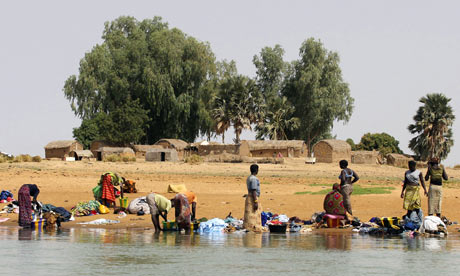
MDG : High Level panel post Millennium Development Goals : washing clothes in Niger River, Mali
Residents washing clothes on the banks of the Niger River, in central Mali. Their future, along with millions of others, is the focus of UN discussions to replace the MDGs. Photograph: Francois Xavier Marit/AFP/Getty Images
 
For the past 12 years, the millennium development goals (MDGs) have shaped policy, guided political agendas, and channelled hundreds of millions of dollars of aid money around the globe. But with the MDGs due to expire at the end of 2015, the international community is starting to tackle the huge, inevitable follow-up question: what comes next?

The post-MDG process will officially begin on Tuesday, when a UN-appointed committee of international political big-shots will meet for the first time in New York. Led by the UK prime minister David Cameron, Liberia's President Ellen Johnson Sirleaf, and Indonesia's President Susilo Bambang Yudhoyono, the 26-member committee has been assigned the task of creating a "development vision" to replace the MDGs after they expire.

"The stakes are very, very high," says Ben Leo, global policy director of the anti-poverty organisation, One Campaign. "Not just in terms of money, but also how much time and energy is going to be spent on monitoring and implementing these goals – and creating additional political momentum over the next 10 to 15 years."...

Read full article on The Guardian: http://www.guardian.co.uk/global-development/poverty-matters/2012/sep/25/replacing-millennium-development-goals?newsfeed=true