Showing posts with label Michelle Bachelet. Show all posts

Friday, December 28, 2012

In Spain 1 in 3 young people is unemployed - but former Socialist Minister "bribes" her way into United Nations with spanish taxpayers money

The Spanish government stops paying the international fund


Click here for this story in full @ Periodista Digital: http://www.periodistadigital.com/economia/instituciones/2012/10/29/rajoy-corta-grifo-onu-mujeres-organismo-ficho-ministra-bibiana-aido.shtml


Bibiana Aído.
NY

El Gobierno español deja de pagar al fondo internacional

Rajoy corta el grifo a ONU-Mujeres, el organismo que fichó a Bibiana Aído

En total, desde 2006 España le ha donado 178 millones de euros

Geolocalización de la noticia
Periodista Digital, 29 de octubre de 2012 a las 17:42
El Gobierno de Mariano Rajoy cierra el grifo de forma definitiva a ONU Mujeres. El organismo en el que Bibiana Aído trabaja como asesora desde 2011 dejará de recibir las cantidades de dinero que recibía con Rodríguez Zapatero.
En total, desde 2006 España donó 178 millones de euros. Una ayuda que el actual ejecutivo no considera 'prioritaria' ya que España ya ha sido 'especialmente generoso en este aspecto'.

Según informa ABC, las aportaciones a este programa comenzaron en 2006. Las primeras se hicieron al antiguo fondo par la Mujer, Unifem, que alcanzaron los 8,16 millones de euros.

En los años siguientes la cuantía de la ayuda fue en ascenso. Así en 2007 el Estado español entregó 10,6 millones de euros, 74,07 en 2008, 32,11 en 2009, 33 en 2010 y 20 en 2011.

Click here for this story in full @ Periodista Digital: http://www.periodistadigital.com/economia/instituciones/2012/10/29/rajoy-corta-grifo-onu-mujeres-organismo-ficho-ministra-bibiana-aido.shtml

UNDP SCANDAL: Former Spanish Socialist Minister - gives 200 Million to UN-Women two months before leaving her job - than becomes the number #2 at the same United Nations Fund ...

CORRUPTION--CORRUPCION

Click here to read this in full @ El Confidencial : http://www.elconfidencial.com/espana/2012/10/17/el-gobierno-de-zapatero-dono-200-millones-a-onu-mujeres-antes-del-fichaje-de-bibiana-aido-107164/


Un país comprometido con la mujer y la igualdad de género. España abandera el ránking de los países que más dinero destinan a combatir la violencia y la desigualdad de género entre hombres y mujeres. Un liderazgo mantenido en el tiempo durante los años en los que José Luis Rodríguez Zapatero ocupó la Moncloa. Desde 2006 hasta este año, el Gobierno ha donado más de 200 millones de euros al proyecto estadounidense de ONU Mujeres que fichó a Bibiana Aído, exministra de Igualdad, como asesora "especial" de la directora ejecutiva de ONU-Mujeres, el organismo que preside Michelle Bachelet. 

En 2006, dos años antes de crear el ministerio de Igualdad que dirigiría Bibiana Aído hasta su extinción, el por entonces presidente del Gobierno José Luis Rodríguez Zapatero dedicó de los fondos públicos 8,8 millones de euros para Unifem, el Fondo de Naciones Unidas para la Mujer. Una cantidad que se elevó hasta los 16,8 millones de euros en el siguiente ejercicio. Las aportaciones son mínimas si se compara con el chorreo de dinero que el Gobierno destinaba al mismo fondo a partir de 2008, cuando Zapatero es reelegido presidente del Gobierno y Bibiana Aído sube al Ejecutivo como ministra de Igualdad.

España inyectó más de 76 millones de euros a la ONU entre 2008 y 2009, convirtiéndose en el país que más dinero abonaba a la causa (una cuarta parte del montante global que aportaban todos los países del mundo) y coincidiendo en el tiempo con la aparición de los primeros brotes de la crisis que todavía asola al país. Ser la nación que más dinero invertía a la causa sirvió como razón de peso para que la organización compensase a España colocando en abril de ese mismo año a Inés Alberdi, esposa del exgobernador del Banco de España, Miguel Ángel Fernández Ordóñez, al frente de la dirección ejecutiva del Fondo de Desarrollo de Naciones Unidas para la Mujer (Unifem).
Ya con la hermana de la exministra Cristina Alberdi involucrada de lleno en el proyecto desde Estados Unidos, el Gobierno socialista se volcó de lleno en la organización. Pronto llegó la creación de ONU-Mujeres, una nueva agencia que englobaría Unifem y otros tres fondos y organismos que en Naciones Unidas se dedicaban a asuntos relacionados con la promoción de las mujeres, y con la que España contribuyó en 2010 ofreciéndoles otros 35,18 millones de euros, una cantidad que duplica la aportación hecha por Noruega, el segundo país que más dinero invertía en el proyecto (17,2 millones de euros anuales).

En 2011, el último año en el que Zapatero se mantuvo en el poder, España siguió imbatible en el Top One de los países más comprometidos con los proyectos de igualdad de género de la ONU. Esta vez, con la crisis ya de lleno azotando a los españoles, la aportación del Ejecutivo central superó los 20 millones de euros, once millones más que la cantidad que abonó Reino Unido y Noruega.
Lluvia de millones mientras la crisis se agudizaba

Con el ministerio de Igualdad desaparecido del organigrama oficial del Ejecutivo desde octubre de 2010, Bibiana Aído dejó su cargo como secretaria de Estado en junio de 2011 para trabajar codo con codo con la expresidenta de Chile. Muchos relacionan este ‘fichaje’ como medida compensatoria a la abultada cantidad de subvenciones que el Gobierno socialista entregó durante seis años consecutivos al proyecto estadounidense y que ahora solventaría colocando a la gaditana en un puesto bien remunerado (unos cien mil euros anuales) en Nueva York.

Tras la caída del PSOE del Ejecutivo central tras las elecciones del 20-N, los presupuestos del 2012 guardaron 9,2 millones de euros más para el proyecto que trabaja Bibiana Aído en Nueva York. Por ahora, el Ejecutivo de Mariano Rajoy todavía no ha abonado ni un solo euro de lo prometido.

Click here to read this in full @ El Confidencial : http://www.elconfidencial.com/espana/2012/10/17/el-gobierno-de-zapatero-dono-200-millones-a-onu-mujeres-antes-del-fichaje-de-bibiana-aido-107164/

Thursday, October 27, 2011

After Herfkens Exposed Taking Dutch & UN Money, On Bachelet & ILO Panel

By Matthew Russell Lee

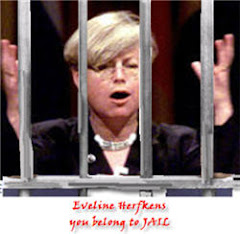
UNITED NATIONS, October 27 -- For an Organization that preaches accountability, the UN system displays little of it. Three years after Eveline Herfkens of The Netherlands was exposed for violating UN system rules by accepting a substantial UN salary as well as $7,000 a month from her government -- allegedly as an entertainment budget -- and she was forced to step down, she had reappeared on the UN Advisory Group on social protection chaired by Michele Bachelet, convened by the International Labor Organization.

At a UN press conference Thursday, Inner City Press asked if Ms. Herfkens' past had been ignored in giving her this new UN system post. Ms. Herfkens was in attendance, in the front row, but did not answer. The ILO's Juan Somavia said yes, there was a "controversy," but Herfkens' "experience" was deemed to trump it.

So high officials in the UN can violate the rules but be quietly recycled back into UN system "advisory" jobs based on their experience.


Herfkens on UNTV in 2005, before the fall (c) UN Photo

This is only one example. After the deadly bombing of the UN compound in the Canal Hotel in Baghdad in 2003, then Secretary General Kofi Annan's spokesman said that Ramiro Lopes da Silva would be required to resign but could "return to his 'D-2' (Director) post in World Food Programme," emphasizing that "his future assignments will not include any responsibilities for security matters."

Two weeks ago, WFP staff contacted Inner City Press to complain that despite this history, Ramiro Lopes da Silva had been put in charge of WFP security by chief Josette Sheeran. On October 17 Inner City Press sought an explanation from four WFP official, including spokesman Greg Barrow and Ms. Sheeran herself:

"please respond to criticism of having put Ramiro Lopes da Silva in charge of security for WFP, given his role in Iraq in connection with the Canal Hotel bombing."

Only after a week had passed, and Inner City Press has published a first story, did WFP respond, through its spokesman Greg Barrow:

In response to your questions: DED Ramiro Lopes da Silva is one of WFP's most experienced senior managers, and we have the utmost confidence in him.

This did not in anyway respond to Ramiro Lopes da Silva's role in Iraq in connection with the Canal Hotel bombing, much less Kofi Annan's spokesman Fred Eckhard's statement that Ramiro Lopes da Silva's "future assignments will not include any responsibilities for security matters."

Inner City Press wrote back to Barrow, and wrote directly to Ramiro Lopes da Silva

"I have asked WFP without much substantive response the question below, now having found your contact information in fairness and hoping for a response I ask you: please respond to criticism of having put Ramiro Lopes da Silva in charge of security for WFP, given his role in Iraq in connection with the Canal Hotel bombing. Please respond - on deadline."

Ramiro Lopes da Silva not having responded, Inner City Press asked the spokesman of Ban Ki-moon, who has inissted that UN system staff security is important to him, whether he gave Ramiro Lopes da Silva a waiver from the action of Kofi Annan after the Canal Hotel bombing, or if there was simply no UN system follow through. Spokesman Martin Nesirky said on October 25 that he would answer. But two days later he has not. Watch this site.

Footnote: Herfkens' fall was in early 2008, before the global financial blow out later that year. On Thursday Inner City Press asked Michelle Bachelet about the place of privatization and, in essence, Wall Street in social protection plans. She said that the Report is for "all countries," but did not squarely address the privatization question. To be continued.

Tuesday, April 12, 2011

Should world Women trust United Nations ? A FOXNEWS published UN internal investigation says ...NO

Fox News - Fair & Balanced click here for story

U.N. Investigators Depict Equality for Women Efforts Within U.N. System are a Costly Failure

By George Russell

Published April 11, 2011

| FoxNews.com


EXCLUSIVE: A month after the United Nations last summer announced the creation of a new, $500 million-a-year organization to promote equality for women in global affairs, the U.N.’s own investigators revealed that 15 years of “gender mainstreaming” efforts within the UN Secretariat have been a sweeping and costly failure.

The report, issued in August 2010, evaluates how gender mainstreaming -- the term that the U.N. uses to describe achieving equality between the sexes in all walks of life -- is being incorporated in all U.N. work to “ensure that the different needs and circumstances of women and men are identified and taken into account when policies and projects are developed and implemented.”

The evaluation carried out by the U.N. watchdog, the Office of Internal Oversight Services (OIOS), looked at 20 of the U.N.’s most important departments and offices. It found glaring deficiencies almost everywhere.

Among them:

- A fundamental lack of knowledge among U.N. staffers about the gender policy, with less than half of program managers polled saying they “always” or “mostly” believed their staff understood what gender mainstreaming is or why it should be implemented.

- An equally fundamental lack of understanding of what “gender mainstreaming” was supposed to achieve. According to the report, U.N. staffers often assess evidence of gender mainstreaming by counting the number of references to “gender,” “women,” and “girls” in documents, “rather than undertaking a considered, qualitative assessment of whether a gender perspective [meaning sensitivity to sexual equality] informs work processes.”

- “Weaknesses in leadership and accountability” in making gender equality programs work -- along with a pointed observation that U.N. Secretary General Ban Ki-Moon and his top managers “carry the responsibility for the implementation of gender mainstreaming in the United Nations Secretariat.”

- “Lack of comprehensive and systematic evidence of results.”

In other words, there was little evidence that anyone was even trying systematically to make the programs work. In the 20 departments and programs surveyed, only 12 had policies or strategies or had distributed specific guidelines on how gender mainstreaming was supposed to operate.

Click here for the full report.

Those conclusions were not for lack of U.N. efforts -- and hundreds of millions of dollars in spending -- on behalf of women’s rights, as the report documents a welter of U.N. officials, many specifically appointed to the task, running off in various directions to promote improved attitudes toward sexual equality, without necessarily indicating what they were trying to promote.

The picture painted by the document is a particular embarrassment to Secretary General Ban Ki-moon, who has made women’s rights a personal crusade since he took office in December 2006, and who orchestrated the latest U.N. agency to boost the promotion of the issue.

Ban’s own office, it appears, declined to contribute to the OIOS effort to analyze the U.N.’s gender mainstreaming effort. One reason for the lack of input may have been a simmering feud that broke into the open last year between Ban and the then-head of OIOS, Inga-Britt Ahlenius, who was about to end her mandated term as chief of the watchdog group.

In an end-of-mandate letter to Ban in July 2010, which was promptly leaked to the press, Ahlenius accused the secretary general of blocking key personnel choices, “undermining” her organization and leading a Secretariat that was “drifting into irrelevance.”

Ban denied all the charges. The OIOS report on “gender mainstreaming” was published just weeks after news of the quarrel broke.

The U.N. established its gender mainstreaming policy as a global plan of action in 1995, at the Fourth World Conference on Women in Beijing. The Beijing Platform for Action, which resulted from the conference, required nations to work toward ending discrimination against women by reforming areas such as health care and education to take greater account of women’s needs.

A host of other UN conferences and documents have emphasized the same theme.

But that only scratches the surface of the UN’s efforts, since a flock of U.N. agencies had been working in support of a female economic and social agenda for decades previously.

Four of the most important -- the Office of the Special Adviser on Gender Issues and Advancement of Women; the Division for the Advancement of Women; the United Nations Development Fund for Women; and the International Research and Training Institute for the Advancement of Women -- had a combined annual budget last year of $250 million, according to the U.N.

Those are the agencies that the UN announced in July 2010 would be merged into the new body known as the “United Nations Entity for Gender Equality and the Empowerment of Women,” or U.N. Women, effective January 2011.

The first head of the new organization is Chile’s former Socialist president, Michelle Bachelet.

The new agency got $70.2 million in start-up donations last year, and has begun fundraising for its $500 million annual budget target.

It says it will present its first strategic plan to the 41-member supervisory executive board this June. Almost as soon as it was announced, the organization drew controversy when Saudi Arabia and Libya, both countries where women have secondary status, were chosen to sit on the executive board.

One of the main functions of the new organization, according to the U.N, Women website, is to help “intergovernmental bodies” in their formulation of “policies, global standards and norms” in the women rights area. U.N. Women is especially supposed to support the U.N.’s Commission on the Status of Women --- composed of 45 U.N. member states on a rotating basis, mandated in 1946 to make recommendations on “urgent problems requiring immediate attention in the field of women’s rights.”

The commission is described as “the U.N.’s principal policy-making body” on the issue.

Presumably in executing the Council’s wishes, U.N. Women is supposed to help member states implement pro-female standards -- and hold the entire U.N. system itself “accountable for its own commitments on gender equality, including regular monitoring of system-wide progress.”

Via a U.N. inter-agency network, U.N. Women, according to its website, “helps orchestrate the efforts of 25 U.N. organizations to promote gender equality across the U.N. system.” Apparently the four organizations now blended into U.N. Women, were doing a pretty poor job, according to the OIOS findings. Among other things, the report says, there was plenty of bureaucratic action on the gender equality front, but not much coordination.

The U.N. programs surveyed all have different ideas about what the objectives of gender mainstreaming ought to be, and different ideas about how to carry out the sexual equality agenda. Only three programs surveyed actually “went beyond objectives to specify required actions for staff at each level,” the report reveals, a task it admitted was “inherently difficult.” But there were plenty of office holders claiming to be heavily involved in gender-related work.

Many U.N. programs, the report says, “had a gender unit, or adviser, and some also had specialist gender expertise at field locations.” Others had developed “a network of gender focal points, who had gender mainstreaming responsibilities in addition to their substantive work.”

Some had definite lines of accountability for what they did, and others did not. “Approaches to resourcing, capacity development, monitoring and reporting were also varied,” the report notes dryly. Just how much all that effort cost is not known. Few U.N. programs “claimed to track the human and/or financial resources associated with gender mainstreaming,” the OIOS report noted. Nor was anyone trying very hard to learn from anyone else.

“In searching for effective approaches, each program appears to be constantly reinventing initiatives,” the report notes. One outcome of the disorganized efforts: Only 45 percent of U.N. managers surveyed said they felt UN staff “always” or “mostly” understood what gender mainstreaming was, compared to 49 percent who said staff “sometimes” or “never know.”

In more general terms, the report notes, “when asked how gender mainstreaming contributed to the goal of gender equality, those interviewed often struggled to offer concrete or documented examples.”

According to OIOS, one way to remedy the deficiencies would be to shift the UN’s focus “from process to results.”

Some “common principles, tools and indicators for common tasks” would also help. So would an action plan that contained “desired outcomes and indicators,” as well as “establishing clear expectations for [U.N.] managers and staff at all levels.” Many of the OIOS recommendations appear to have been included in U.N. Women’s first 100-Day Action Plan, announced by Bachelet in February.

Among other things, it claims that the new organization “will prepare a system-wide coordination strategy on gender equality in the first half of 2011, with clear deliverables for U.N. Women and the U.N. system, to promote greater coherence in line with existing agencies’ mandates and priorities.”

Bachelet also promised to clear up some of the fog surrounding how much money the U.N. already spends on women’s equality issues, by creating a “shared resource tracking system for the U.N. system.” How long will it take to see if the new organization does any better than the constellation of organizations it has replaced?

In its report, the OIOS calls the launch of U.N. Women “an opportunity for an early re-evaluation of gender mainstreaming in the Secretariat” -- preferably within three years. Given its current projected budget, that would allow UN Women to spend at least $1.5 billion on supporting “policies, global standards and norms” for sexual equality before deciding whether the U.N. had done any better than in the past.

An important U.N. budget committee, however, has already declared its concern that the new agency’s launch plans are “overly ambitious,” and that its management, drawn from the organizations it replaces, runs the risk of being top-heavy.

George Russell is executive editor of Fox News

Monday, February 14, 2011

Appoint a woman for U.N. secretary-general

Click here to view this story on San Francisco Chronicle

In 2011, Ban Ki-moonbegins the fifth year of his five-year term as United Nations secretary-general, and a discussion will begin about a possible extension of his term or a possible successor for him.

U.N. member states should appoint a woman to be the next secretary-general starting in January 2012.

World leaders have made many solemn declarations about the empowerment and advancement of women. In 1997, the General Assembly passed a resolution that recognized the importance of gender equality in the selection of the secretary-general. In recent months, the world community marked the 10th anniversary of the adoption of Security Council Resolution 1325, which called on member states "to ensure increased representation of women at all decision-making levels in national, regional and international institutions." World leaders have said all the right things. It is time to do the right thing.

Appointing a woman to be the next United Nations secretary-general would place a woman in a position of singular prominence. It would have tremendous symbolic importance, and symbolism matters - culturally and politically.

Appointing a woman also would have concrete policy effects. A leader committed to these issues would advance the cause of providing women and girls around the world with greater and equal access to health care, education, economic opportunities, political rights and basic security. This would empower women and girls - half of the human race - to contribute to local, national and international development in the 21st century. This will be vital not just for women and girls but for men and boys - for humanity as a whole.

U.N. member states usually take regional considerations into account in selecting a secretary-general, but there are brilliant female leaders in every region of the world who have the policy expertise, political experience and gravitas that this position requires:

-- Michelle Bachelet has a medical degree, she has studied military strategy, and she was the first female president of Chile. She is currently U.N. under-secretary-general for gender equality and the empowerment of women.

-- Helen Clarke served as prime minister of New Zealand for nine years, and her policy priorities included conflict resolution and sustainable development. She is currently head of the U.N. Development Programme.

-- Radhika Coomaraswamy has been chairwoman of the Sri Lanka Human Rights Commission and director of the International Centre for Ethnic Studies in Colombo. Since 2006, she has been the U.N. secretary-general's Special Representative for Children and Armed Conflict.

-- Graça Machel was Mozambique's minister of education and culture for 14 years. She is renowned for her international advocacy of women's and children's rights and for her work on education and hunger.

-- Margot Wallström has held multiple ministerial positions in Sweden, and she has been the European Union environmental commissioner and first vice president of the European Commission, the European Union's executive branch. She is currently U.N. special representative on sexual violence in conflict.

The United States has made the empowerment of women and girls a cornerstone of its foreign policy. Secretary of State Hillary Rodham Clinton has argued that "women's equality is not just a moral issue, it's not just a humanitarian issue, it is not just a fairness issue. It is a security issue, it is a prosperity issue, and it is a peace issue." Clinton said this is "in the vital national interest of the United States of America."

The same could be said of all 192 member states of the United Nations. Appointing a woman to be the next U.N. secretary-general would have a transformational impact on the advancement of women and girls around the world. This, in turn, would have a tremendous impact on the world itself. This is one of the best opportunities member states will have in this decade to advance global development and international peace and security in the 21st century.

The problem is not a lack of capable women. The problem is a lack of determination, political will and vision.

Michael E. Brown is dean of the Elliott School of International Affairs at George Washington University. Chantal de Jonge Oudraat is associate vice president for the Jennings Randolph Fellowship Program at the U.S. Institute of Peace. Contact The Chronicle at SFGate.com/chronicle/submissions/#1.

This article appeared on page F - 8 of the San Francisco Chronicle

Wednesday, March 3, 2010

Chilean president's name floated for U.N.


Posted By Colum Lynch

Chilean President Michelle Bachelet has been engaged in highly discreet talks with the United Nations about coming to work for the organization after she steps down next month as her country's first female leader, according to senior U.N. sources.

Bachelet's name has been floated in recent weeks as a possible special representative to Haiti and as a candidate for a soon-to-be-created high-level post as Ban Ki-moon's point person on issues relating to women, according to senior U.N. officials and diplomats."There are people who think she would be great for a number of U.N. jobs," said a senior U.N. diplomat familiar with the matter.

Bachelet has signaled that she is not interested in the women's post, and sources say it is unlikely that she will go to Haiti. But they say she is interested in pursuing a senior position in the United Nations, preferably as the head of a U.N. agency or another high-flying U.N. job.

U.N. sources said any talk about Bachelet's future will have to be put off for the immediate future while she leads the Chilean response to Saturday's massive, 8.8-magnitude earthquake.

But she is unlikely to play any political role in the incoming government of the conservative leader, Sebastian Pinera, whose election ends 20 years of center-left rule in Chile.

The Socialist political leader, who briefly went to high school in Bethesda, Maryland, in the early 1960s, has been considered among the world's most powerful and influential women since her election as president in 2006. Last year, Forbes magazine placed her 22nd on its list of the most powerful 100 women in the world.

Bachelet's father, Air Force Brigadier General Alberto Bachelet, was a senior military advisor to President Salvador Allende, the Socialist Chilean leader who was killed during a U.S. backed military coup. He was imprisoned and tortured by Gen. Augusto Pinochet's military government and died in prison. Michelle Bachelet was also detained along with her mother in 1975 andtortured.

A trained doctor and student of military strategy, Bachelet has headed Chile's health and defense ministries.