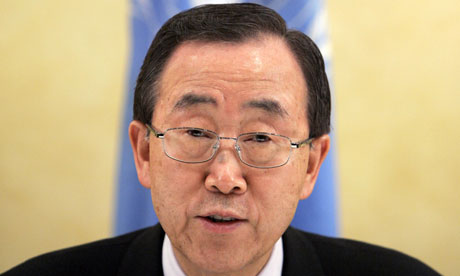
"....The staff is sick and tired of the impunity extended by the office of the Secretary-General to senior managers for their failings especially in situations where it has led to death and disability....."
- UN Staff Union
Luisa Blanchfield Specialist in International Relations
Since
its establishment in 1945, the United Nations (U.N.) has undergone numerous
reforms as international stakeholders seek ways to improve the efficiency
and effectiveness of the U.N. system. During the past two decades,
controversies such as corruption in the Iraq Oil-For-Food Program,
allegations of sexual abuse by U.N. peacekeepers, and instances of waste,
fraud, and abuse by U.N. staff have focused attention on the need for
change and improvement of the United Nations. Many in the international
community, including the United States, continue to promote substantive
reforms. The 113th Congress may focus on U.N. reform
as it considers appropriate levels of U.S. funding to the United Nations
and monitors the progress and implementation of ongoing and previously
approved reform measures.
Generally, Congress has maintained a significant interest in the overall
effectiveness of the United Nations. Some Members are particularly
interested in U.N. Secretariat and management reform, with a focus on
improving transparency and strengthening accountability and internal oversight. In
the past, Congress has enacted legislation that links U.S. funding of the
United Nations to specific U.N. reform benchmarks. Supporters of this
strategy contend that the United Nations has been slow to implement
reforms and that linking payment of U.S. assessments to progress on U.N.
reform is the most effective way to motivate member states to efficiently
pursue comprehensive reform. Opponents argue that tying U.S. funding to
U.N. reform may negatively impact diplomatic relations and could hinder
the United States’ ability to conduct foreign policy.
In September 2005, heads of U.N. member states met for the World Summit at U.N.
Headquarters in New York to discuss strengthening the United Nations
through institutional reform. The resulting Summit Outcome Document laid
the groundwork for a series of reforms that included enhancing U.N.
management structures; strengthening the U.N. Security Council; improving U.N.
system coordination and coherence; and creating a new Human Rights Council.
Since the Summit, U.N. member states have worked toward implementing these
reforms with varied results. Some reforms, such as the creation of the
Human Rights Council and improving systemwide coherence, are completed or
ongoing. Others reforms, such as Security Council enlargement and changes
to management structures and processes, have stalled or not been addressed.
One of the key challenges facing reform advocates is finding common ground
among the disparate definitions of reform held by various stakeholders. There
is no single definition of U.N. reform, and consequently there is often
debate over the scope, appropriateness, and effectiveness of past and
current reform initiatives. U.N. member states disagree as to whether some
proposed reforms are necessary, as well as how to most effectively
implement reforms. Developed countries, for example, support delegating
more power to the U.N. Secretary-General to implement management reforms,
whereas developing countries fear that giving the Secretary- General more
authority may undermine the power of the U.N. General Assembly and therefore the
influence of individual countries.
Generally, U.N. reform is achieved by amending the U.N. Charter or through
various non-Charter reforms. Charter amendment, which requires approval by
two-thirds of the General Assembly and ratification “according to the
constitutional processes” of two-thirds of U.N. member states (including
the five permanent Security Council members), is rarely used and has been
practiced on only a few occasions. Non-Charter reforms—which include
General Assembly action or initiatives by the U.N. Secretary-General—are
more common and comparatively easier to achieve. This report will be
updated as policy changes or congressional actions warrant.
Date of Report: February 20, 2013
Number of Pages: 24 Order Number: RL33848 Price: $29.95
For email and phone orders, provide a Visa, MasterCard, American Express, or Discover card
number, expiration date, and name on the card. Indicate whether you want e-mail
or postal delivery. Phone orders are preferred and receive priority processing.
Amid protests from congressional leaders from both parties, the
Obama administration is helping an obscure United Nations agency create
an investigation into whether it shipped computers and sophisticated
servers to North Korea, in violation of the U.N.’s own sanctions against
the communist regime.
The Geneva-based World Intellectual Property Organization, or WIPO,
told Fox News on Friday that a “full independent external inquiry” into
the murky issue would start next week. The “modalities and terms of
reference of this inquiry,” a WIPO spokesman declared, “have been
completed in close consultation with the U.S. Department of State.”
A State Department spokesman subsequently told Fox News that “we are
aware” of the inquiry and that it was being conducted by a “very
credible investigator.”
The same spokesman underlined that the State Department “has taken
this issue very seriously since it came to our attention in March” and
that “we have been working with WIPO to get to the bottom of this,” a
process that has involved “asking and pressuring” the U.N. organization
for answers. Nonetheless, the spokesman did not bring up the existence
of the inquiry until Fox News asked about it.
The WIPO announcement came after a briefing by senior State
Department officials yesterday to the House Foreign Affairs Committee,
held behind closed doors.
After that session, committee aides complained that legislators “on
both sides of the aisle” remain frustrated by the muffled approach that
the Obama Administration is taking to the controversial transfer of
technology the nuclear-ambitious regime in North Korea, despite U.N. and
U.S. sanctions against the communist government, and said the lawmakers
were told nothing that they could not have heard in open session.
“They’re deliberately being reticent,” an aide told Fox News,
speaking on condition of anonymity. “They have yet to commit to appear
before us in open session, or to provide documents to us,” he added,
using the excuse that the crucial paperwork had not yet been received.
Nor, according to the aide, did the State Department officials agree
in response to committee demands to help pressure WIPO to send two of
its senior officials to testify in Washington, a course of action
demanded by the committee and rejected by WIPO early last week.
The hearing and the complaints came only a day after the chairman of
the House committee, Ileana Ros-Lehtinen, a Florida Republican, and
ranking member Howard Berman, a California Democrat, sent a letter to
the head of WIPO, Francis Gurry, accusing him of failing to provide
“full cooperation” to U.S. legislators, “in default of your commitments
and in default of your responsibilities as an official of an
international organization.”
The committee members repeated a previous demand that WIPO allow WIPO
deputy director general James Pooley and senior advisor Miranda Brown
be allowed from testifying in Washington. WIPO has blocked both from
appearing, saying that they “did not have any involvement in or direct
knowledge of this assistance program.”
For its part, WIPO told Fox News that it “continues to respond
promptly and in good faith to all the requests for information and
documentation received from the U.S. government,” before revealing that
imminent startup of the “independent external inquiry” with State
Department collaboration. The inquiry, WIPO said, expects to report its
findings on September 10.
According to the U.S. legislative aides, Foreign Affairs Committee
members learned little in their meeting that they did not already know
about the puzzling transfer of computers by WIPO, ostensibly part of a
program to modernize North Korea’s ability to access the U.N.
organization’s global archive of patents.
Among other things, the committee aides said, Administration
officials claimed that they had not yet received the documentation that
the committee demanded to see about the controversial shipment, which
was revealed by Fox News last April.
The staffers were venting their frustration after a session with
Assistant Secretary of State for International Organizational Affairs
Esther Brimmer, whose bureau handles U.N. matters in Washington. Brimmer
was backed up through a video link with Betty King, the U.S. Ambassador
to U.N. organizations in Geneva.
Neither the U.S. nor the U.N. sanctions committees concerned with the
issue were informed in advance of the shipment, which took place either
late last year or early in 2012. The equipment was sent to Pyongyang by
the United Nations Development Program (UNDP), via its China office, a
method that appeared designed to avoid heightened oversight over UNDP
activities in North Korea following an earlier controversy involving the
transfer of sensitive equipment and cash to the communist regime.
That incident also culminated in the formation of an “independent external “ panel of investigators, who were chosen by UNDP.
Even though WIPO had not yet announced that an “independent external
inquiry” was about to begin shortly, a State Department spokesman had already declared last week
that it “doesn’t appear” that WIPO’s actions -- which involved sending
the equipment and paying for it via China, to avoid heightened U.N.
oversight -- amounted to a U.N. sanctions violation, though WIPO had
asked a U.N. sanctions committee to rule—retroactively—on the issue.
When it comes to whether stricter U.S. sanctions against North Korea
have been violated, the State Department spokesman who spoke to Fox News
today underlined that the determination ultimately would be made by the
U.S. Commerce Department, after State had gotten the requisite
information from WIPO. Getting that information, the spokesman said, was
“much like a dialogue,” in which WIPO has been “forthcoming.”
Nonetheless, the spokesman added, “This is not simple stuff. It’s complicated. The answers aren’t there yet.”
Adding to the confusion and apparent disarray surrounding the
handling of the issue, a second State Department spokesperson separately
emailed Fox News a one –sentence reply to a number of questions sent
yesterday about the controversial shipment and the Foreign Affairs
Committee hearing.
That statement, in full, declared: “We share the Committee’s concerns
and are continuing our own inquiry into the facts surrounding this
issue.”
A leading MEP strongly reacted after the US
Senate transport committee cleared a key vote on a measure that would
ban American airlines from paying for their carbon emissions and
participating in the EU’s controversial cap-and-trade scheme.
"The United States spurn international
efforts to mitigate climate change," said German Socialist democratic
MEP, Jo LEINEN, slamming a US bill under which American airlines would
not pay into the EU Emission Trading Scheme (ETS).
Leinen called the upcoming decision by the U.S. Congress ‘arrogant’ and ‘ignorant’.
“It would be absolutely arrogant to prohibit American companies to
comply with EU legislation. This would be an unprecedented step to
thwart the legal standards in Europe. The decision would be ignorant as
well because it neglects the increase in greenhouse gas emission caused
by aviation. There shall be no special treatment for American Airlines,"
said Leinen.
The MEP argued that it would be surprising for the US to accept air
passenger duties and taxes in Europe, but not the costs from the ETS.
(CNSNews.com) – A study by the Government Accountability Office (GAO) determined that the United States funded the Intergovernmental Panel on Climate Change (IPCC), the United Nations’ authority on alleged man-made global warming, with $31.1 million since 2001, nearly half of the panel’s annual budget.
The GAO also found that this funding information “was not available in budget documents or on the websites of the relevant federal agencies, and the agencies are generally not required to report this information to Congress.”
In a Nov. 17, 2011 report, “International Climate Change Assessments: Federal Agencies Should Improve Reporting and Oversight of U.S. Funding,”the GAO found that the State Department provided $19 million for administrative and other expenses, while the United States Global Change Research Program (USGCRP) provided $12.1 million in technical support through the U.S. National Science Foundation (NSF), averaging an annual $3.1 million to the IPCC over 10 years -- $31.1 million so far.
The IPCC runs an annual budget of $7 million, according to the Wall Street Journal, making the United States a major benefactor for its global warming agenda.
IPCC Chairman Hairma Rajendra-Pa. (AP Photo)
An international body, the IPCC was created in 1988. Though thousands of scientists contribute to the panel, only 11 working members support the organization. Set up by the World Meteorological Organization (WMO), the IPCC is an “effort by the United Nations to provide the governments of the world with a clear scientific view of what is happening to the world’s climate,” according to its Web site.
The organization has been the subject of controversy in the last several years when thousands of e-mails from the University of East Anglia's (UEA) Climatic Research Unit (CRU) were stolen and released in 2009, and again in November 2011, on the eve of climate talks in Durban, South Africa.
The e-mails included those between Michael Mann, the director of the Earth System Science Center at Penn State University and author of the infamous “hockey stick” graph that apparently showed global temperatures reaching “unprecedented” levels, and Phil Jones, director at CRU, which brought into question the validity of the IPCC’s work, with the reported statements “hide the decline,” and “Mike’s Nature Trick.”
In explaining its reason for auditing U.S. funding of the IPCC, the GAO said, “Interest in IPCC’s activities increased after the theft of e-mails among IPCC scientists was made public, and with the discovery of several errors in its 2007 set of reports.”
Global warming activist and former Democratic vice president, Al Gore. (AP Photo)
The IPCC’s Fourth Assessment Report (AR4), released in 2007, included several errors, including claims that the Himalayan glaciers would melt by the year 2035, which the IPCC, in a statement, later admitted was based on inconclusive data.
After facing “key challenges” in determining the amount of funding to the IPCC, the GAO now recommends that U.S. funding be reported annually to Congress with “accurate and consistent information.”
The report said documents on U.S. financing for the IPCC were “not available in budget documents or on the websites of the relevant federal agencies, and the agencies are generally not required to report this information to Congress.”
Conflicting State Department numbers also made it more difficult for the GAO to assemble the data. The GAO “reviewed documents and interviewed officials from federal agencies and IPCC” to reach its findings.
A 2005 GAO report entitled “Federal Reports on Climate Change Funding Should Be Clearer and More Complete” found that federal funding for climate change was not adequately accountable. “Congress and the public cannot consistently track federal climate change funding or spending over time,” the report concluded.
The report also found federal funding for global warming had increased by 116 percent between 1993 and 2004, to $5.1 billion.
The $3.1 million annual U.S. funding goes towards the IPCC’s “core activities”: meetings of the governing bodies, co-ordination meetings, support for the developing country co-chairs, the IPCC Web site and Secretariat. The IPCC assesses scientific information, but does not conduct any research of its own.
According to the U.S. Climate Change Science Program, the United States “has made the world’s largest scientific investment in the areas of climate change and global change research” with a total of nearly $20 billion over the past 13 years.
Treasury officials have rejected claims their carbon price modelling collapses if the United States does not introduce an emissions trading scheme.
Treasury macroeconomic executive director David Gruen told a parliamentary inquiry the department had made assumptions about international climate change action based on the "best information" available now.
"The modelling is based on the US taking action but it's not based on the US taking action specifically as an emission trading scheme," he said.
Advertisement: Story continues below
Dr Gruen said the US could take action through regulatory measures.
Liberal senator Mathias Cormann then asked the treasury officials to clarify earlier statements that the modelling assumes comparable carbon pricing in other major economies from 2015/16.
"We have modelled abatement in the US but that abatement could take alternative ways," Dr Gruen said.
"We are doing the best we can do based on the information we have now.
"We do not have a crystal ball that tells us actually what is going to happen."
The Treasury official said treasury had taken into account countries' pledges at the UN climate talks in Cancun last year.
"We have operationalised those in our modelling but it does require those countries to live up to those pledges," Dr Gruen said.
Last week, opposition climate action spokesman Greg Hunt said Treasury's updated carbon tax modelling was worthless "because it's based on a fantasy that the Unites States would be part of a global trading scheme by 2016".
"This is utterly out of line with anything that is realistic," Mr Hunt said.
The federal government has introduced bills to price carbon emissions from mid-2012.
The price would begin at a fixed rate of $23 per tonne, rising for three years, before a floating market-based scheme would start in mid-2015.
The joint select committee on Labor's so-called clean energy future legislation continues in Canberra.
While President Obama exhorts American taxpayers to tighten their belts, and the U.S. flirts with default, the United Nations is setting new records for spending American money. The White House’s Office of Management and Budget has produced its latest report, required by Congress, on U.S. contributions to the UN. For the 2010 fiscal year, the U.S. bankrolled the UN to the tune of $7.69 billion. As the Heritage Foundation’s Brett Schaefer notes, that’s a “staggering 21 percent increase over FY2009.”
It’s also more than double the $3.539 which U.S. Ambassador Susan Rice, in testimony this April to the House Committee on Foreign Affairs, implied was the rough amount of U.S. annual spending on the UN.
The rise in U.S. contributions reflects soaring UN budgets over the past decade, to which the U.S. has been the biggest contributor. The exact percentage of UN activity funded by the U.S. varies, depending on which part of the UN we’re talking about. But browsing the OMB report can give you a pretty good idea of how big a hunk of the UN tab is bankrolled by American taxpayers. Scroll down in the report to page 2, where you can discover that the U.S. in fiscal 2010 bankrolled 27.3% of all UN peacekeeping, 22% of the regular budget, 33.6% of the World Food Program, and 26.5% of the budget of the UN’s Palestinian refugee agency (UNRWA).
What’s America getting for all this money? One seat, with one vote, in a 192-member General Assembly dominated by the largely anti-American preferences of the Organization of the Islamic Conference and the G-77 plus China. One permanent seat on the Security Council, alongside veto-wielding China (which contributes a mere 3.189% of the UN’s regular budget) and Russia (which contributes 1.6%). And such privileges as a chance to rub elbows with the likes of Iran and Cuba on the governing board of the UN’s flagship agency, the UN Development Program (UNDP). Plus the endless circus act in which the UN promises transparency, better oversight and more efficient management — and delivers soaring budgets, opaque finances and bubbling scandals. All those American billions now pouring into the UN had their origins in work done by Americans, who earned that money, and then had it taxed away by government — and turned over to the UN. Given a choice, could those taxpayers perhaps find better uses for their dollars?
On Monday, South Korea's Ban Ki-moon threw his hat into the ring to serve a second five-year term as head of the United Nations. While he is very likely to keep his post, and has the backing of the White House, he continues to face criticism he hasn't done enough to reform the UN's dysfunctional budget operations.
Congress is moving to do it for him. For the first time in years, Congress has moved to aggressively cut the U.S.'s share of the UN's budget due to chronic waste, fraud and abuse, a time when the U.S. is facing record deficit shortfalls.
President Barack Obama today issued a statement on Ban Ki-moon's bid for a second term, in which the president noted that while the UN "is an imperfect, but indispensible institution," the U.S. "strongly supports further efforts for reform to improve effectiveness, streamline bureaucracy, reduce costs, and update business practices to improve the United Nation's ability to meet its mandate," including peace-keeping worldwide.
America has been the largest contributor to the UN’s budget ever since its founding in 1945. The U.S. is currently funding 22% of the regular UN budget and more than 27% of its peacekeeping budget. The U.S. paid in about $6.4 billion out of the UN’s $22.3 billion budget. In fiscal 2001, the U.S. gave $3.2 billion.
In that same time span, the UN’s regular budget has more than doubled and its peacekeeping budget has more than tripled. Those growth rates are faster than the growth rates of the economies of its 192 member nations, including the U.S., says Citizens Against Government Waste.The U.S. budget grew by 97% between 2000 and 2010 in nominal terms “because of an enormous increase in expenditures, including costs associated with the war on terrorism, two major military operations, and the unprecedented government expenditures to address the financial crisis and stimulate the economy,” say experts at the Heritage Foundation, a conservative think tank.
Reducing the U.S. contribution to the UN by 25% would save taxpayers $7.9 billion over five years, according to estimates from Citizens Against Government Waste (CAGW).
“As the U.S. attempts to grapple with mounting deficits and debt, organizations like the UN should not be spared the knife when it comes to trimming budget fat,” said CAGW President Tom Schatz in a statement. “The United States is still the world’s largest economy, but its share of UN funding is entirely out of proportion. The ramping up of other members’ contributions is long overdue.”
Schatz added: “After all, former UN Secretary General Boutros Boutros-Ghali once estimated that ‘perhaps half of the UN work force does nothing useful.’”
For the first time in years, Congress moved aggressively to cut the U.S.’s funding of the U.N. by $377 million in the continuing resolution that funded the government for the remainder of fiscal 2011. But that’s just about a 6% cut in overall U.S. funding.
Because the UN has ramped up its spending “so dramatically, it makes sense to enact larger cuts,” Schatz adds.
The U.S. voted against the U.N. 2008-2009 budget in December 2007 because of out of control costs, non- transparency, and apathetic reforms to stop waste, mismanagement and corruption. But over a U.S. objection, for the first time the other U.N. member states broke with a 20-year consensus tradition and voted to approve the budget.
That the U.N.’s budget has veered out of control over this past decade has been easy to see compared to its growth in prior years. It had “relatively flat budgets from the mid-1980s until 2000,” says Heritage. “For instance, the U.N. regular budget grew only 45% in nominal terms--less than 5% in real terms measured in constant 2000 U.S. dollars--from the 1986-1987 biennium through the 2000-2001 biennium.”
A directive from Hillary Clinton ordered US diplomats to gather biometric information on the UN secretary general, Ban Ki-moon. Photograph: Bernat Armangue/AP
Washington is running a secret intelligence campaign targeted at the leadership of the United Nations, including the secretary general, Ban Ki-moon and the permanent security council representatives from China, Russia, France and the UK.
A classified directive which appears to blur the line between diplomacy and spying was issued to US diplomats under Hillary Clinton's name in July 2009, demanding forensic technical details about the communications systems used by top UN officials, including passwords and personal encryption keys used in private and commercial networks for official communications.
Washington also wanted credit card numbers, email addresses, phone, fax and pager numbers and even frequent-flyer account numbers for UN figures and "biographic and biometric information on UN Security Council permanent representatives".
The secret "national human intelligence collection directive" was sent to US missions at the UN in New York, Vienna and Rome; 33 embassies and consulates, including those in London, Paris and Moscow.
The operation targeted at the UN appears to have involved all of Washington's main intelligence agencies. The CIA's clandestine service, the US Secret Service and the FBI were included in the "reporting and collection needs" cable alongside the state department under the heading "collection requirements and tasking".
The leak of the directive is likely to spark questions about the legality of the operation and about whether state department diplomats are expected to spy. The level of technical and personal detail demanded about the UN top team's communication systems could be seen as laying the groundwork for surveillance or hacking operations. It requested "current technical specifications, physical layout and planned upgrades to telecommunications infrastructure and information systems, networks and technologies used by top officials and their support staff", as well as details on private networks used for official communication, "to include upgrades, security measures, passwords, personal encryption keys and virtual private network versions used".
The UN has previously asserted that bugging the secretary general is illegal, citing the 1946 UN convention on privileges and immunities which states: "The premises of the United Nations shall be inviolable. The property and assets of the United Nations, wherever located and by whomsoever held, shall be immune from search, requisition, confiscation, expropriation and any other form of interference, whether by executive, administrative, judicial or legislative action".
The 1961 Vienna convention on diplomatic relations, which covers the UN, also states that "the official correspondence of the mission shall be inviolable".
The emergence of the directive also risks undermining political trust between the UN leadership and the US, which is the former's biggest paying member, supplying almost a quarter of its budget – more than $3bn (£1.9bn) this year.
Washington wanted intelligence on the contentious issue of the "relationship or funding between UN personnel and/or missions and terrorist organisations" and links between the UN Relief and Works Agency in the Middle East, and Hamas and Hezbollah. It also wanted to know about plans by UN special rapporteurs to press for potentially embarrassing investigations into the US treatment of detainees in Iraq, Afghanistan and Guantánamo Bay, and "details of friction" between the agencies co-ordinating UN humanitarian operations, evidence of corruption inside UNAids, the joint UN programme on HIV, and in international health organisations, including the World Health Organisation (WHO). It even called for "biographic and biometric" information on Dr Margaret Chan, the director general of WHO, as well as details of her personality, role, effectiveness, management style and influence.
The UN is not the only target. The cables reveal that since 2008 the state department has issued at least nine directives to embassies around the world which set forth "a list of priorities intended to guide participating US government agencies as they allocate resources and update plans to collect information".
They are packed with detailed orders and while embassy staff are particularly encouraged to assist in compiling biographic information, the directive on the mineral and oil-rich Great Lakes region of Africa alsorequested detailed military intelligence, including weapons markings and plans of army bases. A directive on "Palestinian issues" sent to Cairo, Tel Aviv, Jerusalem, Amman, Damascus and Riyadh demanded the exact travel plans and vehicles used by leading members of Hamas and the Palestinian Authority, without explaining why.
In one directive that would test the initiative, never mind moral and legal scruples, of any diplomat, Washington ordered staff in the DRC, Uganda, Rwanda and Burundi to obtain biometric information of leading figures in business, politics, intelligence, military, religion and in key ethnic groups.
Fingerprints and photographs are collected as part of embassies' consular and visa operations, but it is harder to see how diplomats could justify obtaining DNA samples and iris scans. Again in central Africa, embassy officials were ordered to gather details about countries' military relations with China, Libya, North Korea, Iran and Russia. Washington assigned high priority to intelligence on the "transfer of strategic materials such as uranium", and "details of arms acquisitions and arms sales by government or insurgents, including negotiations, contracts, deliveries, terms of sale, quantity and quality of equipment, and price and payment terms".
The directives, signed simply "Clinton" or "Rice", referring to the current and former secretaries of state, Hillary Clinton and Condoleezza Rice, form a central plank of America's intelligence effort and reveal how Washington is using its 11,500-strong foreign service to glean highly sensitive information on both allies and enemies.
They are compliant with the National Intelligence Priorities Framework, which is approved by the president, and issued by James Clapper, the director of national intelligence who oversees the CIA, the Defence Intelligence Agency, FBI and 13 other intelligence agencies.
Washington circulated to its Middle Eastern embassies a request for what was effectively a counter-intelligence operation against Mukhabarat, the Palestinian Authority's secret service, and Istikhbarat, its military intelligence.
The directive asked for an assessment of the foreign agencies' "signals intercept capabilities and targets, decryption capabilities, intercept sites and collection hardware, and intercept operation successes" and information of their "efforts to illicitly collect classified, sensitive, commercial proprietary or protected technology information from US companies or government agencies".
Missions in Israel, Jordan, Syria, Saudi Arabia and Egypt were asked to gather biometric information "on key Palestinian Authority and Hamas leaders and representatives, to include the young guard inside Gaza, the West Bank", as well as evidence of collusion between the PA security forces and terror groups.
Taken together, the directives provide a vivid snapshot of America's perception of foreign threats which are often dazzlingly interconnected. Paraguayan drug traffickers were suspected of supporting Hezbollah and al-Qaida, while Latin American cocaine barons were linked to criminal networks in the desert states of west Africa, who were in turn linked to Islamist terrorists in the Middle East and Asia.
High on the list of requests in an April 2009 directive covering the Saharan west African countries, including Burkina Faso, Chad, Mali,Mauritania, Niger and Senegal, was information about the activities of fighters returning from Iraq and Afghanistan. Information was wanted on "indications that international terrorist groups are seeking to take advantage of political, ethnic, tribal or religious conflict".
Sometimes the directives appear linked to forthcoming diplomatic obligations of the secretary of state. In a cable to the embassy in Sofia last June, five months before Clinton hosted Bulgaria's foreign minister in Washington, the first request was about government corruption and the links between organised crime groups and "government and foreign entities, drug and human trafficking, credit card fraud, and computer-related crimes, including child pornography".
Washington also wanted to know about "corruption among senior officials, including off-budget financial flows in support of senior leaders … details about defence industry, including plans and efforts to co-operate with foreign nations and actors. Weapon system development programmes, firms and facilities. Types, production rates, and factory markings of major weapon systems".
Top tips for dealing with defectors and turncoats
One cable offered a detailed and practical guide for embassies on how to handle possible defectors, known as "walk-ins", who turned up at embassies offering to switch sides. It called for them to be treated with considerable care because they "may be sources of invaluable intelligence".
"Walk-ins may exhibit nervous or anxious behaviour, particularly because access controls and host nation security forces around many of our diplomatic posts make it difficult for walk-ins to approach our facilities discreetly," it warned. "All briefings should also stress the importance of not drawing attention to the walk-in or alerting host nation security personnel."
Embassy staff should immediately copy the person's identification papers or passport, in case they got cold feet and ran off, it said. A walk-in who possessed any object that appeared potentially dangerous should be denied access even if the item was presented "as evidence of some intelligence he offers, eg, red mercury [a possibly bogus chemical which has been claimed to be a component of nuclear weapons] presented as proof of plutonium enrichment".
637 UNDP Staffers are Millionaires, and another 1041 UNDP staffers have enough salary (income) to justify million dollar homes in New York (or tri-state area NY/NJ/CT).
UN/UNDP's budgets are untransparent !
U.N. budget is “utterly opaque, untransparent and completely in the shadow” and would benefit from being consolidated and audited from the outside. MMB from NyTimes
JOSE RAMOS HORTA - PRESIDENT OF EAST TIMOR
‘‘You know how many layers of bureaucracy there are when the European Union wants to help East Timor? Well, they don’t provide the funds to us, the funds allocated are managed by world bank. And the world bank has its own layers of bureaucracy. And they charge for that. The project is then managed by UNDP. But UNDP is only good at doing studies, they don’t execute projects.’‘
Boutros Boutros-Ghali on UN:
"perhaps half of the UN work force does nothing useful"
Can Helen Clark be trusted on Climate Change ?
President Obama's answer to Helen Clark's appeal for US to do more on climate change was : "I think the American people right now have been so focused, and will continue to be focused, on our economy and jobs and growth that ... if the message is somehow, we're going to ignore jobs and growth simply to address climate change, I don't think anybody's gonna go for that," he said. "I won't go for that."
In 2011 Rami Makhlouf - a trusted development partner of UNDP in Syria
In 2008 U.S. Treasury designation: Rami Makhluf Designated for Benefiting from Syrian Corruption (Click on photo to see US Treasury page)
"Screwed" How Foreign Countries Are Ripping America Off
A full chapter (7) dedicated to UNDP and UN Secretariat. But it today at Amazon.com (click above picture)
Asma al-Assad is UNDP's champion of reform in Syria
UNDP's special relations with dictators and terror is well documented. Yet, they continue to operate covered by UN Immunity. Click on immage for story.
Aicha Gaddafi You are Fired !
UNDP continues to be in bed with other dictators. Will clean it one at a time.
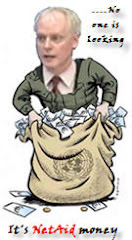
Where is NETAID money David Morrison?
UNDP Transparency Censored
UNDP's moto is: - eliminate the uncomfortable, frighten those who disagree, "educate" the perplexed..
UNDP Chief Finance Officer
The UNDP is a secretive organization and so far has kept in the dark every information related to its Chief Finance Officer and Deputy Assistant Administrator, Mr. Darshak Shah. Click on the picture for more on Finance Office of UNDP.
UNDP Belarus - best breast corner
Should tax-payers dollars be used to photograph beautiful breasts - even when making a valid point?
Uncle Helen turning UNDP into a cove of corrupt NZ labour politicians
CLICK ON PICTURE TO SEE Chris Carter's latest Credit Card scandal - can he work at UNDP after that? It seems YES he is full tested!!
Helen Clark says: "No more cars"
Thinking about buying a new car this year? Why, you evil Westerner! You don’t need that. You are demanding your new car off the sweat, toil, and exploitation of the world’s poorest people in developing countries.
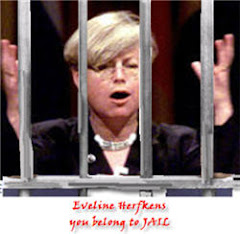
Eveline Herfkens belongs to Jail - she should return imemdiately Dutch Taxpayers money.
if anyone else would have done what Eveline Herfkens did, would have long been in jail. We denounce this impunity and demand justice.
Andrew Mitchell - says Helen Clark is up to no good!
1. UNDP’s partnership with the World Bank needs to be more effective, particularly in fragile and crisis-affected countries. 2. UNDP’s near universal mandate means its technical resources are spread very thinly. The Board does not provide strategic direction. HR management is weak. It has a weak results chain. 3. There is limited evidence of active senior management consideration of cost control. Country evidence points to mixed progress on demonstrating cost-efficiency. 4. The Executive Board is politicised and there is a lack of consensus on the key areas for reform. It is not clear that current plans for change will deliver the required depth and breadth of reform. 5. Evidence gathered at country level was highly critical of UNDP’s ability to deliver results. Its delivery can be undermined by staffing issues and bureaucratic processes. 6. Its performance in fragile states is mixed. It has reasonable training and a range of guidance and analytical tools but struggles to fill posts. 7. There is no evidence that the Climate Strategy was directly guiding resource allocation decisions
Mark Malloch Brown outraged over Aicha Gaddafi
“I hope she's not a UNDP Ambassador,” ...“I don't think it's UNDP. I was surprised when I saw that... she was an Ambassador to any part of the UN system.”
Travel Palestine - Rediscover Your Senses
Get ready to a sensual feast of ...sounds...scents of The Land of حماس Ḥamās Documentary sponsored by UNDP Funds (click on picture for video)
Helen Clark on UNDP's own corruption (Can she be trusted?)
“When funds intended for life-saving treatment and prevention are stolen, that theft is tantamount to murder.” CLICK ON PICTURE FOR MORE
Scandal in Rwanda with Human Development Report
Aurelien Agbenonci, UNDP's RR in Kigali accuses Khalid Malik of making up data without UNDP Rwanda's knowledge. Rwanda Government is unhappy !!!
H.E. Dirk Niebel - German Development Minister
"I take the accusations made in the media concerning corruption and breach of fiduciary duty at the Global Fund very seriously and I am sure that the Fund will clarify the matter without delay. Germany is one of the biggest donors to the Global Fund. I have therefore seen to it that a special review will be held. I have frozen all further disbursements to the Fund until matters have been fully clarified, and I will ask a representative of the Fund to come to the BMZ to discuss the matter."
US Amb. Joseph Torsella blows the whistle on UN budgets
U.N. Secretariat’s proposed $5.2 “regular” budget for 2012-2013, was “simply loosening our belt a little less than we originally planned.”
The U.N. Exposed
How the United Nations Sabotages America's Security and Fails the World (Click in picture to purchase the book)
Share now information about illegal dealings at United Nations
If you are in possession of UNDP or any other United Nations Agency' contracts, correspondence, financial records or databases, which you believe detail wrongdoing such as fraud, mismanagement and abuse of authority, and you have failed to have UN's internal control, oversight and justice systems respond and/or react to your claims, you can send them to UNDP-WATCH and we will make them public keeping your identity anonymous and confidential.
Send an email to: undpwatchmeister@gmail.com
Helen Clark is watching you!
Gaddafi aint got nothing on UNDP - Click on the picture for more!
Malakia: A Turk advises Greece on Economy
Kemal Dervis (Turkish) and George Papandreou (Greek) share many late-night phone calls together (Click on picture to read story)
Where does Ban stand on Libya?
C'est vraiment ce que tu veux pour ta carriere?
United Nations Dispute Tribunal finds Ethics Office decisions Appealable
Because UNDT is the first level of the UN’s two-tiered justice system, there is a possibility that this decision may be appealed. Hopefully, the Secretary-General will not be “absurd” enough to do so. Click above to go to GAP page.
Andrew Mitchell Demands Transparency from United Nations
And I promise you as well that in future, when it comes to international development, we will want to see hard evidence of the impact your money makes. Not just dense and impenetrable budget lines but clear evidence of real effect
YOUR TAX DOLLARS AT UNITED NATIONS
Ban Ki Moon supports Ethics Decision on UNDP North Korea
Question: He recommends strongly that UNDP pays 14 months back pay to the whistleblower. Does the Secretary-General stand behind that recommendation? Should UNDP in fact pay that money, or are they free to rebuff that recommendation? Spokesperson: We will see what is going to happen. The Secretary-General of course is behind Mr. Benson on his report. There is no doubt about it. What UNDP will do, we will be seeing this; how they will implement that report.
UNDP Watch is a grouping of United Nations Staff committed to openness. We believe that everyone has the right to access information held by United Nations.
Despite a stated commitment to openness, UNDP remain a highly secretive agency.
Although a wealth of information is available on some UNDP websites, its Executive Board operate behind closed doors, much important programme and administrative information is never made available and, as a rule, information that is disclosed is provided only after relevant decisions have effectively been taken.
While UNDP has adopted “internal policies” on information disclosure, they in fact operate on precisely the opposite presumption. For the most part, they list which documents will be disclosed and when, and there is a presumption against the disclosure of all the other information they hold. They do not establish right of access, the lists of documents subject to disclosure is limited, they do not set out clear and narrow grounds for refusing access and they do not provide for independent oversight mechanisms to ensure proper implementation of the policy.
The UNDP WATCH is calling for the complete overhaul of these policies.
"...We believe that without accountability, there is impunity. We ask that you (Secretary General) not be complicit in cover-up of what happened prior to 11 Dec attack. The staff is sick and tired of the impunity extended by the office of the Secretary-General to senior managers for their failings especially in situations where it has led to death and disability."