"....The staff is sick and tired of the impunity extended by the office of the Secretary-General to senior managers for their failings especially in situations where it has led to death and disability....."
- UN Staff Union
UNITED NATIONS -- At least $35 billion to $40 billion of annual investments will be required to link all people in the world with modern forms of energy by 2030, a goal that must be reached while reducing heat-trapping carbon dioxide emissions, a U.N. advisory group recommended yesterday.
Fifteen billion dollars of this should be in the form of annual grants donated by rich nations to expand electricity access to the poor. And the world should not only achieve universal access to energy by 2030, but it should do so while increasing efficiency by 40 percent overall, or 2.5 percent per year. Such steps will be necessary to not only reduce extreme poverty but also combat climate change.
These proposals and others were put forward yesterday by the Advisory Group on Energy and Climate Change (AGECC), a committee set up by U.N. Secretary-General Ban Ki-moon, charged with assessing the global energy picture and incorporating this into international climate change talks. Kandeh Yumkella, chairman of AGECC, insisted that his group's recommendations, while daunting, are not unprecedented.
"We call for smart private-public partnerships to do this, to spread electrification and to give access to various communities and to the energy-poor," said Yumkella.
Spending on new energy sources for the poorest may also be needed to head of future crises, Yumkella added. Most new oil and gas projects coming online today can be found in places like the Gulf of Guinea region in West Africa, the Middle East and Central Asia, where sophisticated hydrocarbon developments exist alongside pockets of extreme poverty and social unrest.
"It's not enough to just take energy out," said Yumkella.
On 20-22 September 2010, the UN celebrated the 10th anniversary of the Millennium Development Goals (MDG) program. This was with the intention of taking stock of the progress made thus far and to urge governments and the private sector to help meet the ambitious goals by the target date of 2015. The eight goals that 140 leaders from around the world came together to discuss in New York, include:
a) end poverty and hunger;
b) universal primary education;
c) gender equality and empowering women;
d) reduce child mortality;
e) maternal health;
f) combating HIV/AIDS, malaria, and other diseases;
g) environmental sustainability;
h) global partnership for development.
In all eight goals some progress has been made in the past decade. Guide and guardian of finance capital, the IMF proclaimed that the key to meeting MDG program targets is economic growth – always under the neo-liberal economic model whenever possible with minimal state intervention. Former President Bill Clinton has been soliciting financial assistance from high-profile individuals in Hollywood, businesses and governments. All efforts are better than watching more than 2 billion people go hungry and without medicine when there is more than enough food, water, and medicine to take care of their basic needs.
But is it profitable to provide basic needs for two-thirds of the world’s population, or do we confine ourselves to thanking billionaires and multi-millionaires who give a part of their wealth to charity, as nice as that is on their part to return wealth they have appropriated, wealth they accumulated by investing in corporations doing business in less developed countries where labor values are low and in part at least account for endemic poverty?
Is the market economy based on capital concentration and accumulation of capital, as well as social and geographic inequality undergoing transformation from its neo-liberal phase under globalization to an “enlightened capitalist phase,” or is this merely a very elaborate exercise in convincing world public opinion that capitalism can solve human rights problems?
The ultimate irony in this UN project is that the countries that MDG is designed to help possess most of the world’s natural resources, but the same are exploited directly or indirectly by the 20 richest nations mostly for the benefit of multinational corporations. For UN secretary-general Koffi Annan, who led the initial MDG effort, accused the rich nations of failing to meet their obligations. Even if rich nations heed his advice, the North-South divide will not be solved by MDG because its ambitious goal to eradicate poverty runs counter to the political economy of capital concentration on a world scale.
Considering that the recession of 2007-2011 has created greater poverty not only in the G-7 but throughout the world, with the exception of very few countries; considering that most countries even within the G-7 are diluting the social welfare state and strengthening corporate welfare, what is the best hope for MDG targets to be realized and for the poor countries not to have the problems that the UN has identified as chronic?
Let us consider the empirical reality that market economy in rich nations, including the US, is weakening the middle class and creating greater gap between rich and poor social classes, as evidenced by the fact that the US has 1 in 7 living below the poverty line; adjusted for inflation, the average weekly pay has dropped 13% since 1973–the base line for the end of upward middle class mobility in the US. Within the US the creation of a ‘Third World’ segment has been growing in the last three decades and it will grow even faster in the current decade. Why would a country like the US whose policies are creating poverty help other countries eradicate it by introducing the same policies to the others?
The fact that roughly 80% of the world’s wealth is concentrated in the G-20 and within those countries the majority of wealth is in the hands of a small minority, entails there is no hope for UN’s MDG program to be realized not by 2015 but not even in the next 100 years! What are some other obstacles to progress that go to the heart of contradictions of the market economy itself? The economies of the rich nations are inward-oriented, catering first to the domestic market and selling the surplus to foreign markets, especially to semi- and less developed countries where labor values are low and profits high. By contrast, the economies of the semi- and less developed countries where poverty is widespread are outward-oriented, based on few exports from which most of the revenue emanates. The rhetoric notwithstanding, there is no sustainable development; a concept that has been co-opted by multinationals as a backdoor channel to continue the dependency pattern of underdeveloped countries.
Because the export sector in underdeveloped countries is invariably owned directly of through local contractors by multinationals, national capitalism and the state as a support mechanism are very weak in comparison with the rich nations. This makes it easier for the multinationals to manipulate through bribery and legal methods using the World Bank, IMF, and the services of their government in the underdeveloped countries that need capital. The result is less stringent legislation (environmental, labor relations, health codes, etc.) affecting foreign companies, lower taxes than they pay in their own countries, and of course easy terms for repatriating profits. This situation entails perpetual movement of capital from the semi and less developed countries to the core or rich nations.
Trade dependence is directly linked to deteriorating terms of trade at the expense of the less developed countries with low labor values and low consumption. Former Indian government official Shashi Tharoor, who took part in the initial MDG conference in 2000, commented:
“Many countries are prevented from trading their way out of poverty by the high tariff barriers, domestic subsidies, and other protections enjoyed by their rich-country competitors. The European Union’s agricultural subsidies, for example, are high enough to permit every cow in Europe to fly business class around the world. What African farmer, despite his lower initial costs, can compete?”
Another very significant area of structural weakness is what Chancellor Angela Merkel identified when she blamed governance in the debtor nations as part of the problem. Indeed it is true that the state structure in a semi- and less developed nation is weak, especially the fiscal system that is needed to support national capitalism, in comparison with the rich nations. But why is the state structure weak and do rich nations and international organizations like IMF and World Bank have any role in contributing to its weakness today and in the past? Debtor countries are in eternal need of loans–monetary (currency stabilization) or development (project).
To secure such loans they must meet criteria that the rich nations and/or IMF, European Central Bank and FED establish, all instruments for strengthening private capital. Such criteria is designed to maintain a very strong market economy, namely, domestic and foreign capital enjoy the support and protection of the state because ‘national interest’ and economic development is equated with private capital, while the enemy is the public sector and labor. Poorer countries are invariably perpetual debtors and financially dependent on the rich nations. Financial dependence is invariably linked to trade, manufacturing, transportation, and service sectors dependence, which does not permit for the less developed nations to emerge from perpetual poverty that a substantial segment of their population is suffering.
This does not mean that Merkel’s comment is not to be taken seriously, especially after the revelation that India falsified maternal death reports to meet MDG targets, or the fact that local politicians and military officials use foreign aid to enrich themselves. Indeed corruption in semi and less developed countries is a large part of the problem. However, even if corruption were to disappear by magic in a single day, the chronic problems that the UN has identified will remain for as long as the political economy is based on the principle of capital concentration and accumulation flowing outward from the less developed nations to the rich nations, and from labor to business.
The larger question to ponder in the UN’s MDG program is why the political and business establishment is behind this effort, why the same elites largely responsible for the calamities of chronic poverty are insisting they wish to eradicate it? One answer is that MDG is morally correct and that businesspeople and government and non-government organizations like the IMF and World Bank that support MDG are motivated by humanitarianism, compassion for the poor, for tens of thousands of children dying each day of hunger.
My answer to MDG and its supporters is that there are interesting parallels between the British ending slavery and UN’s MDG. Did the British end slavery out of consideration for non-white people, did they do it owing to pressure from minister of the church, or was there another motive that was rooted in the changing economy? British policy to retain the population in their colonies as the economy was changing from commercial to industrial capitalism thus the slave trade (ACT OF 1807) followed by the Abolition Act of 1833 was based on the realistic need for labor in the colonies to supply the mother country with raw materials for global trade. Industrial capitalism was based on free labor as it was on free trade, therefore the institution of slavery was anachronistic, for it was the product of commercial capitalism that was overtaken by industrial and finance capitalism.
Today, we have the evolution of globalization that needs a solid work force in the semi- and less developed countries where labor values are low, otherwise the growth and expansion of capitalism cannot continue. The UN is offering the forum and the means for governments of the rich nations serving the market economy to create a more viable work force in the semi- and less developed nations, and to continue the thorough geographic and economic integration of every inch on the planet in order to realize the goal of capital concentration.
I know times are hard, and we’re all facing cuts – as was illustrated last week when the BBC and the Today programme in particular gave possibly more coverage to one union-funded campaign in a morning than they did to the Taxpayers’ Alliance during the entire rule of New Labour – but I’m sure you’ll agree that we can still afford to fund Palestinian suicide bombers.
Indirectly, that is. It has been claimed that the Palestinian Authority, which, theoretically, could become a recognised state later this year, has given almost £5 million to the families of shaheed, or martyrs – or, as we call them, suicide bombers. The authorities there have also given £3 million to 5,500 Palestinian prisoners in Israeli jails.
KINSHASA, Congo — A judge in eastern Congo says he has sentenced a United Nations driver to three years in prison for attempting to traffic cassiterite, a metal used to make cell phones.
AIDS Healthcare Foundation Criticizes Global Fund Decision to Restore Monies to China to Fight HIV/AIDS, TB and Malaria in the Country, Now the Second Largest Economy in the World
LOS ANGELES--(EON: Enhanced Online News)--Today AIDS Healthcare Foundation (AHF) criticized the decision by the Global Fund to Fight AIDS, Tuberculosis and Malaria to restore funds to China, the second largest economy in the world.
“The decision by the Global Fund to restore funding to China is irresponsible and will likely undermine the credibility of the Fund”
According to the Associated Press in Global Fund lifts China grant freeze (Gillian Wong, August 23, 2011): “The Global Fund froze payments of a $283 million AIDS grant in November after finding that Chinese government agencies had breached an agreement by channeling too small a share of the funds to grass-roots groups. Then in May, it stopped payments of all other grants in China after concerns about how the money was being used by the thousands of counties that receive grant payments.”
Yesterday it was announced that the freeze on grants had been lifted.
“The decision by the Global Fund to restore funding to China is irresponsible and will likely undermine the credibility of the Fund,” saidMichael Weinstein, President of AIDS Healthcare Foundation. “At a time of economic crisis, when contributions to the Fund are decreasing, giving money to China makes no sense. The mandate of the Global Fund is to support countries to fight AIDS, TB and Malaria that cannot afford to do it themselves. Giving precious monies to a country that spends so lavishly on public spectacles like the Shanghai Expo and the Olympics deprives desperately poor countries of what they need to control these infectious diseases.”
According to the Associated Press article: “The dispute comes amid a larger debate among international aid donors and groups about whether China should continue to receive foreign aid, considering its relative prosperity resulting from decades of high economic growth. Critics point to the government's ability to fund a manned space program and extravaganzas like the 2008 Beijing Olympics, while proponents say China still has hundreds of millions of poor and needs international know-how.”
Background on AHF, the Global Fund and China
A number of critics, including AHF, have called into question whether China should be receiving assistance from the Global Fund, which was created by the members of the G8 to help developing countries combat AIDS, tuberculosis and malaria epidemics. As the world’s second largest economy, China has spent tens of billions on the Beijing Olympics and the World Expo in recent years while its contribution to the Global Fund has amounted to $16 million over the past decade. Despite China’s small contribution, the Global Fund has approved over $1 billion in grants to the Chinese CDC — the primary grant recipient in the country — since the Fund’s inception in 2001.
In December of 2010 during the commemoration of the World AIDS Day, AHF kicked off the Fair Share advocacy campaign with a series of protests in front of the Chinese consulates across the United States, Mexico, Russia and South Africa, calling on China to assume its new responsibility as a donor country in the global fight against AIDS.
The Global Fund’s decision to resume grants to China means that poor countries, hard-hit by the epidemics will have fewer resources to provide life-saving treatment and services to their people. According to the AP article, the Chinese government has agreed to allocate 25% of the Global Fund money to NGOs. As a result, the bulk of aid will continue to subsidize the Chinese Health Ministry, while the country’s own resources are invested in pursuits that are perhaps more glamorous than the global fight against AIDS.
AIDS Healthcare Foundation (AHF), the largest global AIDS organization, currently provides medical care and services to more than 181,000 individuals in 26 countries worldwide in the US, Africa, Latin America/Caribbean, the Asia/Pacific region and Eastern Europe.www.aidshealth.org
Contacts
AIDS Healthcare Foundation
Lori Yeghiayan Assoc. Dir. of Communications
323-308-1834, 323-377-4312
loriy@aidshealth.org or
Ged Kenslea Communications Director
323-308-1833, 323-791-5526
gedk@aidshealth.org
GENEVA (AP) — The CEO of a Chinese-owned solar panel maker says the Group of 20 summit in November will emphasize ways to invest in "green growth" to boost renewable energy and tackle climate change.
Suntech Power Holdings Co. CEO Shi Zhengrong told The Associated Press on Thursday the G-20 advisory panel he chairs will recommend that leaders of "traditional economies" boost solar, wind and other alternative energy sources, even in dire financial times.
He said the group of the largest economies in the world would be asked to adopt "action plans" and form a private-public investment vehicle to invest in sustainable energy.
Shi said Germany and Switzerland could achieve plans to phase out nuclear power by replacing 30-50 percent of that energy with solar and wind sources "if they install enough capacity."
Rep. Connie Mack (R-Fla.) has introduced an amendment to restrict U.S. funding used to mitigate the impact of global warming overseas/Credit: Gage Skidmore
WASHINGTON—House Republicans are applying a search and destroy tactic to international funding for global warming this budget season. It goes like this: Ax any line items with the words "climate change."
Their primary targets are a pair of crucial United Nations initiatives designed to slow warming worldwide and educate policymakers about the evolving science of climate change.
On the chopping block for 2012 are millions in funding for theIntergovernmental Panel on Climate Change (IPCC), the world's leading scientific advisory body on global warming. The IPCC shared the Nobel Peace Prize with Vice President Al Gore in 2007, and governments often use its periodic reviews of climate risks to set targets for reducing carbon emissions.
The GOP-led effort would also cut all U.S. funding for the 19-year-old U.N. Framework Convention on Climate Change (UNFCCC), the main forum for the global effort to limit emissions of heat-trapping gases. UNFCCC climate treaty talks are mired in longstanding rich-poor rifts and mistrust of the United States for its refusal to ratify the 1997 Kyoto Protocol and accept binding emissions limits.
UNITED NATIONS, August 17 — In Haiti, UN peacekeepers from Uruguay are accused of having sex with children in their base, and taking nude photos of the children to show other soldiers, according to the Comité de recherches pour le développement et l’organisation de Port-salut.
This was described as Ban confronting a sordid chapter of the UN’s history, but Ban has apparently not confronted alleged misdeed under his watch and responsibility. The UN in New York, in the six days after the allegations were made in Haiti, said nothing about them.
Inner City Press on August 17, the day after the UN had canceled its normal noon briefing, asked Ban’s acting deputy spokesman about the allegations against the Uruguayan UN peacekeepers in Port-Salut.
Haq said, “MINUSTAH is in fact looking into this allegation, to see if there is any credibility to it. If there are any facts… we will share them.”
While some doubt that the UN would “share facts” about wrongdoing by its peacekeepers, given for example that the UN just airbrushed out from its final report allegations of inaction by Egyptian peacekeepers in Southern Kordofan. But even if the UN did report back on the allegations in Haiti, the UN does not state what happens to individual peacekeepers, by name or even nationality. The statement “any facts… we will share them” must be seen in that light.
It’s worth nothing that dozens of Sri Lankan soldiers were repatriated from the UN mission in Haiti charged with sexual abuse, but the UN has never reported any accountability in Sri Lanka. Ban, Haq said, is “working from his home” this week; this was offered as a reason to cancel regular noon briefings, on August 16 and prospectively August 18 and beyond. And so it goes at (Ban’s) UN
The UN has been involved in all sorts of crimes, since it was inflicted upon the Haitian people years ago. We have seen their involvement in the cocaine trade…..members of MINUSTAH have been involved in kidnapping…members of MINUSTAH have opened brothels using young Haitian boys and girls…and members of MINUSTAH have raped those who would not cooperate for a few pennies or a plate of rice and beans.
The most recent incident involves the Uruguayan detachment at Port Salut. Their conduct, if performed in the United States, would see them locked up for 10 – 20 years. Unfortunately, the poor of Haiti must tolerate the humiliations brought to them by the intellectually superior South Americans, supervised by the Korean moron Ban Ki Moon. Of course I am joking about the intellectually superior as I view a bunch of Spanish speaking peasants with assault rifles.
If they tried this in Ireland the gentle folk would cut the offenders’ balls off with bolt cutters.
We were inflicted by a team from Sri Lanka that imprisoned and sexually assaulted numbers of young women. When there were complaints, the officers and 100 men were sent home. To add insult to injury, the returning criminals were treated as heroes.
Martelly must move forward with his revival of the Forces Armees d’Haiti and take steps to eliminate the MINUSTAH from our land.
This entry was posted on August 18, 2011 at 1:49 pm and is filed under Crime/Corruption, Earthquake/CHOLERA. You can follow any responses to this entry through the RSS 2.0 feed.
The Horn of Africa is experiencing a food crisis and the UN has declared famine in parts of Somalia. What does the relief effort look like? And what comes next?
According to the UN, Somalia faces the most severe humanitarian crisis in the world today and the worst food security crisis in Africa since the early 1990s. After the worst drought in 60 years, an estimated 12.4 million people across the Horn of Africa are in need of urgent humanitarian assistance.
But this crisis was largely foreseen. Why didn't early warning translate into early action? What does the humanitarian response look like? And what comes next?
In this month's global development podcast we look at the unfolding crisis in the Horn and focus in on Somalia, where conflict and political instability pose steep challenges for short-term relief and long-term development.
To discuss these issues, Madeleine Bunting is joined in the studio bySamir Elhawary, research fellow in the Humanitarian Policy Group at the Overseas Development Institute, David Bull, chief executive of Unicef UK, and Jamal Osman, an independent journalist who came to the UK from Somalia in 1999 and has been going back and forth ever since.
LOS ANGELES, California - The Heritage Environmental Management Company (Heritage) has become one of only two environmental certification standards worldwide to be affiliated to the UN World Tourism Organization (UNWTO), it was announced today.
Heritage’s membership of the UNWTO was approved during the 90th session of the UNWTO’s Executive Council held in Mombasa, Kenya, in June this year. Heritage has become the first UNWTO private sector affiliate in South Africa.
The only other tourism certification standard to be formally recognized by the UNWTO is Heritage’s strategic partner, the US-based Green Globe Certification company.
The UNWTO is a specialized agency of the United Nations and the leading international organization in the field of tourism. It serves as a global forum for tourism policy issues and a practical source of tourism know-how. It also plays a pivotal role in promoting the development of responsible, sustainable and universally-accessible tourism, paying particular attention to the interests of developing countries.
The organization encourages the implementation of the Global Code of Ethics for Tourism, with a view to ensuring that member countries, tourist destinations, and businesses maximize the positive economic, social, and cultural effects of tourism and fully reap its benefits, while minimizing its negative social and environmental impacts.
Its membership includes 154 countries, 7 territories, and over 400 affiliate members representing the private sector, educational institutions, tourism associations, and local tourism authorities. Acceptance by the UNWTO proves that the South African-developed standard is of international relevance and a leader in the field of environmental certification in tourism.
“With the United Nations Framework Convention on Climate Change (COP17) just around the corner, it is extremely gratifying to be recognized by an organization of this standing, and this proves that South Africa is at the forefront of environmental certification development and standards,” said Greg McManus, Managing Director of the Heritage Environmental Certification Company.
“In this light, Heritage is taking a leading role in ensuring that visitors to the conference experience an environmentally-responsible stay while in Durban. Efforts to encourage as many hotels and accommodation establishments in the city to commit to responsible business practice are well underway,” McManus said.
COP17 takes place from November 28 to December 9 at the ICC in Durban and will see the world’s attention focused on South Africa and its sustainable practices. The event is expected to draw almost 15,000 delegates to Durban with a spending potential of more than R300-million.
ABOUT THE HERITAGE ENVIRONMENTAL MANAGEMENT COMPANY
The Heritage Environmental Management Company was formed in 2002 as southern Africa’s first environmental performance rating initiative. It has since become the largest and most successful environmental management system and certification program of its kind in Africa. In May 2009, Heritage was appointed the Green Globe preferred partner for sub-Saharan Africa and the Indian Ocean Islands.
The Heritage Program is currently being operated by over 150 tourism-based businesses across southern Africa. The program is recognized by the UNWTO and has partnered with FEDHASA in the Imvelo Awards held annually to recognize responsible tourism practice. Contact: Virginia McManus, Manager, Corporate Communications, The Heritage Environmental Management Company, Phone: 012 665 1028, Fax: 082 903 8118, Email: communication@heritagesa.co.za , Web:www.heritagesa.co.za .
ABOUT GREEN GLOBE CERTIFICATION
Green Globe Certification is the worldwide sustainability system based on internationally-accepted criteria for sustainable operation and management of travel and tourism businesses. Operating under a worldwide license, Green Globe Certification is based in California, USA, and is represented in over 83 countries. Green Globe is the only certification brand to be an affiliate member of the World Tourism Organization (UNWTO) an agency of the United Nations, and is partly owned by the World Travel and Tourism Council (WTTC). For information visit www.greenglobe.com .
12 August 2011, Geneva, Switzerland – UNOSAT announced today the completion of one essential step forward in its plan to secure long-term efficient and rapid access to satellite imagery to derive accurate and timely information in support of humanitarian relief and human security. The acquisition of DigitalGlobe’s FirstLook Service by UNOSAT will reduce substantially the time it takes to expert analysis to produce accurate information in rush mode and marks another step forward not only for UNOSAT but for the entire UN community of users.
When UNOSAT started operations in 2001 access to appropriate satellite imagery was far too slow, difficult and uncertain compared to today. Yet nowadays quick and easy access to accurate, up-to-date satellite scenes is still far from being optimal especially taking into account the long UN procurement procedures. UNOSAT data-in-hand is an initiative combining commercial and partner sources to consolidate and concentrate access to valuable data for all types of emergency response and human security monitoring developed at UNOSAT.
DigitalGlobe's FirstLook is an online subscription service for emergency management that provides fast web-based access to pre- and post-event imagery of crisis areas in the world. High-resolution satellite imagery provides the best available basis to generate through analysis essential information required for emergency planning, risk assessment, monitoring, emergency response, damage assessment, and recovery. The service just purchased by UNOSAT after an initial trial between 2010 and 2011 is operational since 12 August 2011. It is supported at DigitalGlobe by a team that continuously monitors world situations using sources such as GDACS, the Global Disaster and Coordination System, an open channel of liaison with UNOSAT operations management in Geneva, and information from the International Space Charter. Once an event has been identified, DigitalGlobe establishes high priority collection sites over the event. Post-event imagery of affected areas are acquired as soon as access allows, typically within 24 hours to 48 hours. UNOSAT experts can then view and download the imagery straight from their desktops in Geneva.
Francesco Pisano says: “We are continuing to equip the Programme with what it takes to do this job effectively and professionally. But this is done also to bring a distinct advantage to the entire UN family. After the partnership with Google to share crowd generated data with UNOSAT and the rest of the UN, this is a second main achievement by UNOSAT which will change the way we do things and the overall technology level of the UN. I hope this can be of help to the entire UN”. UNOSAT in fact has added to the purchase order the funds necessary to endow 3 other UN bodies with a free license each. “Normally this would take months and months of discussions in working groups and committees to then find out that there are insufficient funds to implement decisions. At UNITAR we value our responsiveness and action once we determine the best way forward. We are proud of this but we are and remain committed to sharing the benefits, it is part of the UNOSAT concept”.
Image: very-high resolution imagery is an essential tool for analysis today. UNOSAT is trying to help in concrete terms to make access easier for the UN (image from WorldView satellite, courtesy of Digitalglobe)
637 UNDP Staffers are Millionaires, and another 1041 UNDP staffers have enough salary (income) to justify million dollar homes in New York (or tri-state area NY/NJ/CT).
UN/UNDP's budgets are untransparent !
U.N. budget is “utterly opaque, untransparent and completely in the shadow” and would benefit from being consolidated and audited from the outside. MMB from NyTimes
JOSE RAMOS HORTA - PRESIDENT OF EAST TIMOR
‘‘You know how many layers of bureaucracy there are when the European Union wants to help East Timor? Well, they don’t provide the funds to us, the funds allocated are managed by world bank. And the world bank has its own layers of bureaucracy. And they charge for that. The project is then managed by UNDP. But UNDP is only good at doing studies, they don’t execute projects.’‘
Boutros Boutros-Ghali on UN:
"perhaps half of the UN work force does nothing useful"
Can Helen Clark be trusted on Climate Change ?
President Obama's answer to Helen Clark's appeal for US to do more on climate change was : "I think the American people right now have been so focused, and will continue to be focused, on our economy and jobs and growth that ... if the message is somehow, we're going to ignore jobs and growth simply to address climate change, I don't think anybody's gonna go for that," he said. "I won't go for that."
In 2011 Rami Makhlouf - a trusted development partner of UNDP in Syria
In 2008 U.S. Treasury designation: Rami Makhluf Designated for Benefiting from Syrian Corruption (Click on photo to see US Treasury page)
"Screwed" How Foreign Countries Are Ripping America Off
A full chapter (7) dedicated to UNDP and UN Secretariat. But it today at Amazon.com (click above picture)
Asma al-Assad is UNDP's champion of reform in Syria
UNDP's special relations with dictators and terror is well documented. Yet, they continue to operate covered by UN Immunity. Click on immage for story.
Aicha Gaddafi You are Fired !
UNDP continues to be in bed with other dictators. Will clean it one at a time.
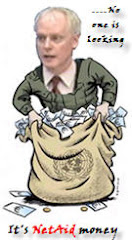
Where is NETAID money David Morrison?
UNDP Transparency Censored
UNDP's moto is: - eliminate the uncomfortable, frighten those who disagree, "educate" the perplexed..
UNDP Chief Finance Officer
The UNDP is a secretive organization and so far has kept in the dark every information related to its Chief Finance Officer and Deputy Assistant Administrator, Mr. Darshak Shah. Click on the picture for more on Finance Office of UNDP.
UNDP Belarus - best breast corner
Should tax-payers dollars be used to photograph beautiful breasts - even when making a valid point?
Uncle Helen turning UNDP into a cove of corrupt NZ labour politicians
CLICK ON PICTURE TO SEE Chris Carter's latest Credit Card scandal - can he work at UNDP after that? It seems YES he is full tested!!
Helen Clark says: "No more cars"
Thinking about buying a new car this year? Why, you evil Westerner! You don’t need that. You are demanding your new car off the sweat, toil, and exploitation of the world’s poorest people in developing countries.
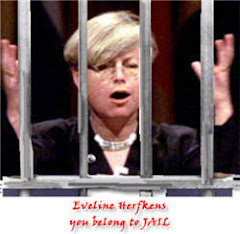
Eveline Herfkens belongs to Jail - she should return imemdiately Dutch Taxpayers money.
if anyone else would have done what Eveline Herfkens did, would have long been in jail. We denounce this impunity and demand justice.
Andrew Mitchell - says Helen Clark is up to no good!
1. UNDP’s partnership with the World Bank needs to be more effective, particularly in fragile and crisis-affected countries. 2. UNDP’s near universal mandate means its technical resources are spread very thinly. The Board does not provide strategic direction. HR management is weak. It has a weak results chain. 3. There is limited evidence of active senior management consideration of cost control. Country evidence points to mixed progress on demonstrating cost-efficiency. 4. The Executive Board is politicised and there is a lack of consensus on the key areas for reform. It is not clear that current plans for change will deliver the required depth and breadth of reform. 5. Evidence gathered at country level was highly critical of UNDP’s ability to deliver results. Its delivery can be undermined by staffing issues and bureaucratic processes. 6. Its performance in fragile states is mixed. It has reasonable training and a range of guidance and analytical tools but struggles to fill posts. 7. There is no evidence that the Climate Strategy was directly guiding resource allocation decisions
Mark Malloch Brown outraged over Aicha Gaddafi
“I hope she's not a UNDP Ambassador,” ...“I don't think it's UNDP. I was surprised when I saw that... she was an Ambassador to any part of the UN system.”
Travel Palestine - Rediscover Your Senses
Get ready to a sensual feast of ...sounds...scents of The Land of حماس Ḥamās Documentary sponsored by UNDP Funds (click on picture for video)
Helen Clark on UNDP's own corruption (Can she be trusted?)
“When funds intended for life-saving treatment and prevention are stolen, that theft is tantamount to murder.” CLICK ON PICTURE FOR MORE
Scandal in Rwanda with Human Development Report
Aurelien Agbenonci, UNDP's RR in Kigali accuses Khalid Malik of making up data without UNDP Rwanda's knowledge. Rwanda Government is unhappy !!!
H.E. Dirk Niebel - German Development Minister
"I take the accusations made in the media concerning corruption and breach of fiduciary duty at the Global Fund very seriously and I am sure that the Fund will clarify the matter without delay. Germany is one of the biggest donors to the Global Fund. I have therefore seen to it that a special review will be held. I have frozen all further disbursements to the Fund until matters have been fully clarified, and I will ask a representative of the Fund to come to the BMZ to discuss the matter."
US Amb. Joseph Torsella blows the whistle on UN budgets
U.N. Secretariat’s proposed $5.2 “regular” budget for 2012-2013, was “simply loosening our belt a little less than we originally planned.”
The U.N. Exposed
How the United Nations Sabotages America's Security and Fails the World (Click in picture to purchase the book)
Share now information about illegal dealings at United Nations
If you are in possession of UNDP or any other United Nations Agency' contracts, correspondence, financial records or databases, which you believe detail wrongdoing such as fraud, mismanagement and abuse of authority, and you have failed to have UN's internal control, oversight and justice systems respond and/or react to your claims, you can send them to UNDP-WATCH and we will make them public keeping your identity anonymous and confidential.
Send an email to: undpwatchmeister@gmail.com
Helen Clark is watching you!
Gaddafi aint got nothing on UNDP - Click on the picture for more!
Malakia: A Turk advises Greece on Economy
Kemal Dervis (Turkish) and George Papandreou (Greek) share many late-night phone calls together (Click on picture to read story)
Where does Ban stand on Libya?
C'est vraiment ce que tu veux pour ta carriere?
United Nations Dispute Tribunal finds Ethics Office decisions Appealable
Because UNDT is the first level of the UN’s two-tiered justice system, there is a possibility that this decision may be appealed. Hopefully, the Secretary-General will not be “absurd” enough to do so. Click above to go to GAP page.
Andrew Mitchell Demands Transparency from United Nations
And I promise you as well that in future, when it comes to international development, we will want to see hard evidence of the impact your money makes. Not just dense and impenetrable budget lines but clear evidence of real effect
YOUR TAX DOLLARS AT UNITED NATIONS
Ban Ki Moon supports Ethics Decision on UNDP North Korea
Question: He recommends strongly that UNDP pays 14 months back pay to the whistleblower. Does the Secretary-General stand behind that recommendation? Should UNDP in fact pay that money, or are they free to rebuff that recommendation? Spokesperson: We will see what is going to happen. The Secretary-General of course is behind Mr. Benson on his report. There is no doubt about it. What UNDP will do, we will be seeing this; how they will implement that report.
UNDP Watch is a grouping of United Nations Staff committed to openness. We believe that everyone has the right to access information held by United Nations.
Despite a stated commitment to openness, UNDP remain a highly secretive agency.
Although a wealth of information is available on some UNDP websites, its Executive Board operate behind closed doors, much important programme and administrative information is never made available and, as a rule, information that is disclosed is provided only after relevant decisions have effectively been taken.
While UNDP has adopted “internal policies” on information disclosure, they in fact operate on precisely the opposite presumption. For the most part, they list which documents will be disclosed and when, and there is a presumption against the disclosure of all the other information they hold. They do not establish right of access, the lists of documents subject to disclosure is limited, they do not set out clear and narrow grounds for refusing access and they do not provide for independent oversight mechanisms to ensure proper implementation of the policy.
The UNDP WATCH is calling for the complete overhaul of these policies.
"...We believe that without accountability, there is impunity. We ask that you (Secretary General) not be complicit in cover-up of what happened prior to 11 Dec attack. The staff is sick and tired of the impunity extended by the office of the Secretary-General to senior managers for their failings especially in situations where it has led to death and disability."



 click here for AP story