Showing posts with label Anthony Banbury. Show all posts

Wednesday, March 17, 2010

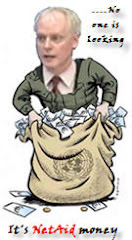
CORRUPTION: - United Nations to charge International Donors $700 Million dollars per year for its own staff salaries in Haiti !

FOX News.com

Haiti: Is $700 Million Peacekeeping Bill Getting Too High?

By George Russell

- FOXNews.com

Before Haiti's shattering earthquake, the U.N. was already six months behind in paying countries that provide peacekeeping troops and police on the island -- and the bill is about to get much, much bigger.

Are the countries that normally foot the U.N.'s bills drawing a line in Haiti?

There are some unsettling signs to consider, weeks before the start of an international donors' conference on March 31 that is reportedly expected to face requests for more than $11.5 billion to rebuild the shattered island.

Even before the mammoth earthquake that virtually destroyed the capital of Port au Prince in January, the spiraling cost of United Nations peacekeeping on the ravaged island was apparently outstripping the ability — or willingness — of rich Western nations to support it.

Since then, the financial strains rippling out from Haiti's latest calamity have become even more severe.

A $1.4 billion, worldwide, post-quake aid appeal for Haiti, orchestrated by the U.N.'s Office for the Coordination of Humanitarian Affairs, had by March 15 drawn only $701 million — or 48 percent of the total, with the U.S. and the mostly American private sector far ahead of any other country in giving.

Click here to see the appeal results by country.

That emergency aid total does not include the huge and still rising outlay for peacekeeping by the United Nations Stabilization Mission in Haiti (MINUSTAH), which in the wake of the earthquake is growing faster than the ability of U.N. budgeters to estimate it.

Indeed, U.N. peacekeeping in Haiti, with a combined military, police and civilian force of about 13,000, is expected to soak up nearly as much money in its next budget year as the world has so far given in emergency aid to the island's entire population of 9.5 million or so.

According to a new U.N. budget report on global peacekeeping operations, the world organization at the end of 2009 was six months behind in paying countries that had supplied some 7,000 troops and 2,000 policemen who were keeping order in Haiti before the cataclysm. The report says the shortfall was "primarily" caused by the slow rate at which donor countries were paying their share of the peacekeeping bills.

A U.S. diplomatic spokesman told Fox News that the U.S. had paid its share of peacekeeping for the 12 months ending June 30, 2010, "in full."

The countries contributing troops range from Brazil and Argentina to India and Nepal, with an even more diverse roster contributing police.

The U.S. is the largest contributor to U.N. peacekeeping, paying 27 percent of the worldwide tab — more than double the rate of the next-highest contributor, Japan — which the U.N. estimated to reach $7.9 billion for the 12 months ending on June 30, 2010. The five members of the U.N. Security Council — the U.S., Britain, France, Russia and China — pay nearly half of the total (China pays just under 4 percent), while 32 other, predominately Western countries pay nearly the same amount.

The remainder of the U.N.'s 192 members contribute 4.1 percent of the total. Oil exporting giant Saudi Arabia pays 0.5 percent and Kuwait 0.42 percent, while Brazil pays 0.32 percent and India 0.11 percent — or slightly less than Hungary.

Click here to see the scale of payments.

The Haiti peacekeeping effort is not the only one where the U.N. was six months behind on payments, but it is by far the biggest. (Others include a $54 million operation in the Western Sahara, a small force in Cyprus and a $205 million peacekeeping effort in East Timor.)

According to the budget report, MINUSTAH was slated to cost $611 million for the 12 months ending next June 30, but the earthquake has made those numbers fiction.

In the new U.N. report, planners have apparently struggled with that issue for the upcoming financial year. According to the report, Haiti peacekeeping is budgeted for $700 million for the 2010-2011 period — a 14.4 percent increase over the previous 12-month period, and more than double the previous hikes in MINUSTAH budgets from previous years.

A brief footnote emphasizes, however that the $700 million figure is "for information only" — translation: a much rougher guess than usual — since it was compiled only weeks after the earthquake brought chaos to the island. A total of 101 U.N. staffers, troops and police died in the disaster.

Click here to see the new budget for MINUSTAH and other U.N. peacekeeping operations.

In the wake of the calamity, the U.N. Security Council had authorized boosting the number of peacekeeping troops on the island to more than 8,900, and upping the police force to more than 3,700 — roughly a 40 percent increase in staffing. Some of those additional forces are already on the ground. (There was no increase mandated for the U.N.'s civilian staff in Haiti of roughly 2,000.)

How much those additional forces will further skew the projected cost of MINUSTAH — and increase the strains on Haiti's supporters — is still unknown.

George Russell is executive editor of Fox News.

Sunday, March 7, 2010

Billions spent in Haiti to no avail

Sunday, March 7, 2010

Dozens of governments and aid groups are scheduled to meet at the United Nations later this month to pledge millions, perhaps billions, in assistance to Haiti. My advice to many of those donors: Stay home.

Sure, everyone wants to help rebuild Haiti and finally turn the country into a thriving, self-sustaining state. But after decades of effort, many of the donors themselves have concluded that it's a Sisyphean task without end. By late January, more than $1 billion had been pledged for emergency earthquake recovery. From 1990 through 2009, donors spent nearly $5 billion on projects there, nearly all of it for naught.

The last event before the earthquake to prompt a spasm of foreign aid came in 2004, after Hurricane Jeanne devastated the island and left 700 people dead. The United Nations asked donor countries to provide $59 million in aid for Haiti and Grenada.

That effort spawned introspection because, once again, a flood of money had not changed facts on the ground at all. Haiti remained the poorest nation in the Western Hemisphere. Almost 30 percent of the children still were victims of stunting, meaning they did not grow properly, mentally or physically. Ten percent still suffered from wasting, meaning they were, essentially, starving.

By 2006, the National Academy of Public Administration, a nonpartisan, U.S. government-funded agency, had completed a comprehensive report titled "Why Foreign Aid to Haiti Failed." Its preface states: "This paper explains why, after consuming billions in foreign aid over three decades and hundreds of millions specifically for democratization programs, not to mention billions for other programs, Haiti remains politically dysfunctional and impoverished."

The report's conclusion, put simply: Haiti has no government to speak of. The state offers "dysfunctional budgetary, financial or procurement systems making financial and aid management impossible," the World Bank reported in 2005.

The National Academy described secret, off-the-books budgeting, "sole source contracts and unadvertised bidding" as well as government spending policies that "make it virtually impossible to identify fund uses, beneficiaries or impact." Meanwhile, "budget reductions and low salaries drove away most finance professionals."

All of that screamed: corruption! In fact, at the time of the National Academy report, Transparency International ranked Haiti the most corrupt nation on Earth. (Since then Haiti has climbed up a few notches, bettered by two other American client states, Iraq and Afghanistan.)

Why do you think Haiti's opposition leaders are clamoring to get involved in the foreign-aid funding debate? Perhaps some of them want a voice in rebuilding the nation. More likely, they want direct access to the cash.

Rene Preval, the Haitian president, is not letting them in the door. He may be ineffectual, but he's not stupid.

Even without the corruption problem, how can an aid group do anything useful - build a school, set up a health clinic - without involving the government in deciding where the school or clinic should go, and who the teachers or doctors will be? How will the school get textbooks, where will the clinic get its medications and supplies?

In 1998, the U.S. Agency for International Development concluded that "Haiti's public institutions were too weak and ineffective to provide the level of partnership needed with USAID or other donors to promote development." Almost 10 years later, the World Bank found "a total mismatch between levels of foreign aid and government capacity to absorb it."

The U.S. State Department classifies Haiti as one of the world's two least functional nations.

The other is Somalia, which also has next to no government. So when the donors meet at the United Nations later this month, what should they do? Give up on good governance projects, a favorite of NGOs.

Decades of effort have accomplished practically nothing. As the World Bank put it, "projects in Haiti have unusually low outcome ratings, along with very limited institutional-development impact."

What the world should do is what it has been doing since the earthquake on Jan. 12: Supply emergency food, clothing and medical supplies. Help Haitians rebuild the homes, schools, medical facilities and other infrastructure that collapsed in the quake. Reunite families; help orphans find homes.

Former Presidents George W. Bush and Bill Clinton, who were asked to serve as the chief fundraisers for Haiti, argued in a New York Times opinion article that it was time the West gave enough money "to help the Haitian people realize their dream for a stronger, more secure nation."

That's fine. But learn from the recent past. Don't throw money at programs that have been proved to produce no useful results.

Joel Brinkley, a professor of journalism at Stanford University, is a former foreign correspondent for the New York Times. To comment, e-mailBrinkley@foreign-matters.com. Contact us via our online submissions form at sfgate.com/chronicle/submissions/#1.

http://sfgate.com/cgi-bin/article.cgi?f=/c/a/2010/03/07/IN6O1C9OS2.DTL

Friday, March 5, 2010

ACABQ Report: - Ban Ki Moon more corrupt than Kofi Annan

Ban Ki-moon Tries Again on U.N. Efficiency

Friday , March 05, 2010

By George Russell

FC1

ADVERTISEMENT

What is the definition of accountability? United Nations Secretary-General Ban Ki-moon may be about to find out.

Nearly a year ago Ban got a semi-public spanking from branches of the world organization that are supposed to oversee and fund his 22,000-person bureaucracy, including the 192-member General Assembly itself, for his proposals to reform the organization.

Now Ban is apparently back for more. The question is whether the result will be the same. The object of the institutional overseers' disdain a year ago was Ban's — in their view — less-than-impressive proposals to make the sclerotic and underperforming organization with a soaring budget, more efficient, effective and accountable.

They were contained in a turgid 53-page document entitled "Accountability framework, enterprise risk management and internal control framework and results-based management framework," which it turned out was not written in Ban's office but came from a management consultant firm, which was paid $1.8 million for the effort.

The General Assembly sent Ban and his consultants back to the drawing board and told him, in remarkably sharp prose, to try again. One thing that made the episode particularly painful for the South Korean secretary-general — for whom "face," or public respect, is especially important — is that some of the storm of criticism came from parts of the bureaucracy that report directly to him, as well as from the nation states that sign the checks.

And already this time, a key U.N oversight body, representing all the 192 countries in the General Assembly, has fired off a 13-page broadside, obtained by Fox News, which takes Ban to task for some new and old failings in his latest purported effort to shake up the system.

The views of the oversight institution known as the Advisory Committee on Budgetary and Administrative Questions (ACABQ) are important because they are usually adopted by the U.N.'s budgetary committee and by the General Assembly itself.

Among other things, the new ACABQ report says that:

• Ban still did not consult enough with the U.N. bodies that criticized his earlier efforts;
• Ignored some of the important recommendations made earlier to improve his reforms;
• Is still suggesting relatively toothless ways to make his top managers accountable for their actions;
• Has not established an effective system of internal controls for the U.N. bureaucracy; and
• Has not yet even provided an acceptable definition of what the word "accountability" means.

This time, however, the ACABQ stops short of a blanket rejection of all of Ban's efforts. Instead, it balks at some of them, snipes skeptically at others — especially Ban's bureaucratic proposals to reinforce "accountability" under whatever definition — and proposes further submissions by Ban to buttress his proposed changes.

Click here to read the ACABQ report.

"There is more work still to be done," says a Western diplomat familiar with the reform effort. "We are getting there, but slowly." Ban's efforts mean things were "getting better in some areas," he said. "And in others, not."

At issue is a 26-page document (with 39 pages of annexes) Ban submitted to the U.N. General Assembly for consideration this week entitled "Towards an accountability system in the United Nations Secretariat."

Click here to read the main report.

The tentative title on the document — implying that more negotiation lies ahead — is already a concession on Ban's part, and its first-person narrative is a signal that this set of proposals was actually written in his own office.

But this is the U.N., meaning that fluency, clarity and jargon-free coherence are still not the new document's strong suits — starting with an 85-word definition of accountability that includes the notion of the "obligation of the Organization and its staff members to be answerable for delivering specific results."

The same wordy definition, however, also includes the provisos that accountability depends on "a clear and transparent assignment of responsibility, subject to the availability of resources and the constraints posed by external factors" — a very sizeable trap door in an organization notorious for under-performing, over-spending and rarely if ever bringing punishment down on its top managers for their behavior.

Among other things, the ACABQ report points to that wording, which it says "may provide grounds for not holding the staff accountable under certain circumstances."

The overseers also note the "lack of reference to efficiency, effectiveness and timeliness" in Ban's definition, along with the omission of "personal responsibility for results." The ACABQ calls the "lack of clarity" in the definition to be one of the "fundamental weaknesses" in Ban's overall "accountability architecture," and suggests that a common definition of the term used by all U.N. bodies would be "desireable."

When it comes to making the U.N. focus on results, an area where all its internal critics agree it has been badly lacking, Ban admits candidly that a "chain of cause-and-effect relationships from inputs through outputs to outcomes" at the U.N. is "broken in several places."

Reverting to the U.N.'s customary opaque prose, he then says this "makes it impossible to advance the results-based management framework in a coherent and holistic manner and, at the same time, adversely affects the accountability framework of the Secretariat."

To fix that, Ban returns to an idea from his previously rejected proposals: yet another new mini-bureaucracy, nestled in the controller's office in the U.N.'s department of management. Ban calls it a Results Management Unit. (In his last attempt to outline reforms, Ban called it the Division for Accountability and Results Management.)

The Unit would have a variety of coordinating and monitoring roles, and would provide "training and guidance on the results-based management concept" across the U.N.'s sprawling area of departments and functions. It would also support a "network of results-based management/results-based budgeting practitioners across Ban's Secretariat."

All of this, Ban says, would be part of his attempt to change the entire culture of the bureaucracy — which he evidently agrees is not oriented toward a performance ethic that other organizations would consider basic and fundamental.

"I intend to promote a cultural change within the Organization," he asserts, "whereby staff understand that they will be held accountable for the quality and timely delivery of their work and supervisors understand they will be held accountable for effectively managing their staff towards that end."

"Training," he adds, "will be essential to effect this cultural change." He soon intends to announce a whole new set of management tools that will increase evaluation of managers, as well as "creative ways to reward, recognize and motivate staff and strengthen the remedies to address underperformance."

All of this comes atop a system Ban installed to sign contracts, known as "compacts," with his senior managers aimed at specifying their performance, which he also sees as a significant reform.

The ACABQ is only grudgingly impressed. While acknowledging the existence of the "compacts" the budget overseers note the "insufficient accountability awareness of all levels in the Secretariat," and says acidly that "thus far, the impact of the compacts on enhancing accountability at the United Nations has yet to be felt."

In the process of preparing its rejoinder to Ban's report, the committee also notes that it held a number of hearings with the Secretary General and complains that it "was not provided with adequate explanations ... as to the consequences stemming from mismanagement or wrongful or improper decisions." It wants more specifics from Ban as he defends his proposals before the General Assembly.

Nor is the committee impressed with Ban's proposed Results Management Unit. Rather than a bureaucratic add-on, the report would have "no objection" to a "dedicated focus" on results that would start with a "clear conceptual framework of results-based management," which the U.N. evidently lacks.

The ACABQ further complains that the bureaucracy has a bad habit, "year after year," of ignoring recommendations by its auditors and other bodies charged with overseeing its operations that would reduce the U.N.'s financial and other kinds of risk.

In other words, the U.N. does not pay timely attention to the overseers who already tell it where the bureaucracy is going wrong, or violating its own rules.

The ACABQ clearly feels it's time for Ban to begin asking why, through "a review of the underlying causes." It also offers one possible cause of its own: in Ban's report, "the Secretary-General does not make mention of the consequences in cases when [his] delegated authority is mismanaged or abused."

What Ban himself thinks of the ACABQ's criticism is not known. A detailed series of questions sent Wednesday from Fox News about the Secretary General's reactions to the main elements of the ACABQ report had not received a reply before this article was published.

George Russell is executive editor of Fox News.

Wednesday, March 3, 2010

U.N. Is Faulted as Lacking Coordination of Aid and Security in Haiti

Todd Heisler/The New York Times

Women in camps for displaced people in Haiti have reported an increase in sexual violence.

UNITED NATIONS — Humanitarian efforts by the United Nations inHaiti have lacked sufficient coordination with local organizations in delivering aid and establishing security, according to an independent assessment released on Tuesday.

One consequence was a surge in the sexual abuse of women and girls living in camps for the displaced, with some young girls trading sex for shelter, said Emilie Parry, an aid consultant who helped write the evaluation of the United Nations’ effort for Refugees International, a nonprofit organization that advocates on behalf of refugees.

“Women reported to us that there has been a lot of violence and sexual abuse at nighttime,” Ms. Parry said, noting that there is no system of nighttime patrols in the makeshift camps where many displaced people have been living.

“By all accounts, the leadership of the humanitarian country team is ineffectual,” said the report, based on 10 days of evaluations in February. The report, titled “Haiti: From the Ground Up,” also acknowledged that the scale of the disaster made the response a singular challenge.

Closer work with Haitian organizations, as well as better knowledge about conditions, would also enhance the ability of local groups to deal with problems long after the international groups left, Ms. Parry said.

The report suggests a number of ways to improve the delivery of aid, including allowing more participation by Haitian organizations whose leaders are now living among as many as several million displaced earthquake victims.

While the United Nations does not actively discriminate against such groups, it effectively bars them through a lack of advertising and the system of passes that are needed to attend meetings, Ms. Parry said. Appointing liaison officers dedicated to such groups would help, the report suggests.

It also recommended that the United Nations appoint one person responsible for leading the team distributing humanitarian aid in the country, rather than have the responsibility be among many tasks taken on by senior management.

Finally, it suggested that the United Nations’ assessments had not delved adequately into the heart of all the temporary camps, where hundreds of thousands of people still lack shelter and other basic needs. The report recommends that the United States government beef up its budget for disaster assistance and that it, too, should coordinate more with local groups.

“There is too much of a gap, too many people are being left out of the response,” Ms. Parry said.

Human Rights Watch issued a similar report two weeks ago, noting the lack of adequate shelter and saying that it had documented three rapes connected to poor security. Asked about the reports then, Anthony Banbury, a senior United Nations official in Haiti, was criticized for saying that the number of rapes “almost elates me.”

Mr. Banbury issued a statement later saying that he had not meant to minimize the seriousness of the three rapes, but to suggest that efforts to maintain some security were working because the number was relatively low.

The United Nations has given shelter materials to more than 523,000 people, or 40 percent of those in need, said Martin Nesirky, the spokesman for Secretary General Ban Ki-moon, with 232,000 additional tarpaulins and 22,000 tents en route. The World Food Program and partner organizations have delivered food assistance to 4.3 million people, Mr. Nesirky said.

Catherine Bragg, the deputy humanitarian coordinator, said the scale of the destruction in Haiti, as well as the death of 100 United Nations staff members, including the most senior officials, had initially hampered relief efforts.

“It is the most complex humanitarian response we have ever had to deal with,” said Ms. Bragg, adding that the United Nations had brought some order to utter chaos. “It would be very easy to make negative comments about how things are coordinated.”

John Holmes, the departing United Nations humanitarian coordinator, has said publicly that the organization’s response was uneven. He demanded that United Nations staff members do a better job of coordinating relief efforts.

The United Nations has tried not to discriminate between Haitian and international organizations, with local groups accounting for about 15 percent of the groups participating in the effort in Haiti, said Stephanie Bunker, the spokeswoman for the humanitarian aid office. “We would like to increase the balance,” she said.