Tuesday, April 1, 2008

U.N. Agency Provided $2.3M Worth of Equipment for Venezuela -- Or Did It?

Tuesday , April 01, 2008

By George Russell

Why did the United Nations Development Program (UNDP) buy $2,375,000 worth of walk-through airport body scanners for the radical leftist Venezuelan government of Hugo Chavez? Or did the agency purchase the high-tech equipment at all? And if not, what happened to the $2.3 million?

According to UNDP, not only did the 2007 purchase take place, it was arranged in order to ensure “objectivity, transparency, efficiency” of the procurement in a country that, under Chavez, supports terrorists in neighboring Colombia and has aligned itself with sponsors of international terror such as Iran and Cuba.

According to UNDP spokesman David Morrison, the contract was awarded by UNDP on behalf of Venezuela’s national customs and taxation authority, after a free and open competition that guaranteed fairness and openness in the deal.

But according to UNDP internal documents examined by FOX News, things didn’t quite happen that way. In the confidential minutes of UNDP’s top headquarters procurement committee, the contract was awarded to a Venezuelan firm named Setronix C.A., without competitive bidding. The same waiver of competition is also cited in internal UNDP procurement records that finalized the transaction.

The highly reputable U.S. defense contracting firm that manufactured the 19 ProVision scanners procured by UNDP, L3 Communications, says that the only shipment of scanning machines it sent to Venezuela under UNDP auspices last year was for the country’s correctional system. A company spokesman said the firm had no information to add about any other Venezuela procurement involving UNDP.

Since March 20, when FOX News first began asking questions about the deal, UNDP has hastily begun publishing an electronic “paper trail” that apparently aims to justify the purchase that may or may not have taken place the way the UNDP says it did — if it took place at all.

The focus of concern is a contract known in UNDP’s financial system as RBLAC/07/066, covering the $2.3 million scanner purchase. UNDP asserts that it did absolutely nothing wrong in the way it handled the deal. In defense of that assertion, a UNDP spokesman in New York referred FOX to a page on the website of UNDP’s Venezuela regional office, which describes a joint UNDP-Venezuela Project #58054, “support for the consolidation of the modernization of the customs system.”

The Venezuelan regional website page only appeared shortly after midnight on March 24, 2008 — four days after FOX News began sending questions to UNDP headquarters about the deal. And the document embedded in the page refers to a $70.7 million modernization of the customs process that extends from October 2007 to September 2009 — months after contract RBLAC/07/066 was completed.

Beyond the scanner deal are serious issues about the intimate relationship between UNDP, the United Nations’ premier development agency, and governments like the Chavez regime, which pursues an aggressively anti-American global strategy and has forged alliances with the Castro regime in Cuba and radical Islamist Iran to pursue those objectives.

Along the way, according to knowledgeable critics of the Chavez government, the regime has siphoned off billions of dollars in Venezuelan oil revenues to line the pockets of Venezuela’s militarized ruling elite and further its aggressive agenda.

“Everyone knows that Venezuela has had historically high levels of corruption,” says Gustavo Coronel, the former Venezuelan head of Transparency International, an anti-corruption watchdog organization, who now writes from Miami about Venezuela’s ugly finances. “But we are now seeing something we have never seen before.”

(On the most recent Transparency International worldwide survey of business perceptions of corruption, Venezuela ranks close to the worst end of the scale, 141st out of 163 countries, barely ahead of Nigeria and Turkmenistan.)

It was precisely to combat possibilities of self-dealing and dishonesty, according to UNDP spokesman Morrison, that the anti-poverty organization took part in a “fully competitive” bidding exercise, open to “all companies around the world,” in order to purchase the U.S.-made airport scanners.

“UNDP participation in such processes helps to ensure competitiveness, objectivity, transparency, efficiency, wide international reach, and, ultimately, value for money,” he told FOX News.

Morrison said that UNDP’s involvement was included in its approved program for Venezuela, under a mandate to “improve capacity of the public sector to manage and to provide public services.” “There was no waiver of competitive bidding,” he also insisted.

But confidential UNDP internal documents obtained by FOX News say otherwise.

These include the minutes of a top level UNDP committee known as the headquarters Advisory Committee on Procurement (ACP), chaired by UNDP Assistant Secretary General Akiko Yuge, who is also head of UNDP’s Bureau of Management and its Chief Procurement Officer (CPO).

The minutes obtained by FOX News state that on March 16, 2007, the local Venezuelan branch of UNDP requested just such a waiver of competitive bidding (“solicitude de exception a un proceso competitivo”) on contract RBLAC/07/066, for the “acquisition of non-intrusive inspection equipment for human beings (passengers and those in transit).” The procurement was done on behalf of the Venezuelan customs revenue and taxation service, a branch of the Venezuelan Finance Ministry known as SENIAT.

The documents specifically mention 19 ProVision scanning machines to be provided by a firm called Setronix, C.A. (Venezuela), manufactured by L3 Communications. The deal also involved a three-year sales and service agreement on the part of Setronix. The $2.3 million to pay for the scanners was to come, not from UNDP itself, but from the Venezuelan government.

UNDP, in other words, was acting as a middleman in the scanner purchase, just as Setronix apparently was, (Setronix did not respond to a series of email questions by FOX News about the procurement.)

The local UNDP office recommendation was taken up by Yuge’s headquarters ACP on April 30, 2007, according to the committee minutes. The Venezuelan recommendation of waiver was endorsed. According to the ACP minutes, Yuge herself approved the contract in her procurement capacity on June 15, 2007.

To see the confidential UNDP minutes, click here (pdf).

Yet another confidential UNDP document obtained by Fox News confirms the waiver of competitive bidding recorded in the ACP minutes. It is a posting from the UNDP internal system of approved procurements, which officially records the outlay of $2,375,000 on contract ACP-RBLAC/07/066. (The addition of the initials ACP to the contract title indicates that headquarters has recorded the transaction as completed.)

The entry is dated as first entering the UNDP headquarters’ system on March 8, 2007, roughly a week before the local Venezuela office asked headquarters to endorse the waiver of competitive bidding rules. It is marked for review explicitly as a waiver. Its final status is recorded as “approved contract — CPO.”

The entry on contract ACP-RBLAC/07/066 is only one in a string of Venezuela waiver entries, which show that in 2007, UNDP’s Venezuela office itself waived competitive bidding on at least a dozen contracts, with the grand total of all waivers reaching nearly $4.6 million.

The second-largest of those contract waivers, worth nearly $600,000, listed Cuba rather than Venezuela as the “requesting unit,” yet was recorded among the Venezuela entries.

Since contract ACP-RBLAC/07/066 is the only contract valued at more than $1 million, it is the only one that under UNDP rules had to be referred to New York headquarters for approval.

To see the list of 2007 Venezuela waivers, click here (pdf).

UNDP documents such as the ACP minutes and the financial payment listings are normally not made public by UNDP’s top management. In fact, they are not disclosed to the 36-nation UNDP executive board, which is charged with oversight of the organization. (The U.S., which is on the executive board, pays roughly 22% of UNDP’s $5 billion annual budget.)

Yet another mystery involves the ultimate customer for the scanner units. SENIAT was founded in 1993 as a customs tax collection service. While SENIAT controls customs operations, the Chavez-funded Venezuela Information Office in Washington told FOX News that airport passenger scanning in Veneuzela is a security operation carried out by a special branch of the Ministry of the Interior and Justice, the department that also controls the national police forces.

That special branch is known to Venezuelans as “the DiEx”, an abbreviation of the term for National Office for Identification and for the Registry of Foreigners. According to some critics of the Chavez government, that office is now heavily infiltrated with security agents from Cuba.

According to UNDP, however, the scanner purchase is not part of a security operation, but part of an agreement between UNDP and SENIAT to “improve capacity of the public sector to manage and to provide public services” — a category of UNDP assistance that was approved by its executive board in an official five-year-plan covering the years 2003-2007.

That Country Program Document, as it is known, was examined by FOX News and actually seems to say something different. It lists an “increase in the public sector’s managerial capacity and its capacity to provide services” as an “intended outcome” of UNDP support for Venezuela. But the document indicates that UNDP support would take the form of “advisory services and advocacy,” rather than facilitating the supply of goods such as high-tech hardware.

The country program document also says that measurable Venezuela outputs as a result of the UNDP support would be “establishment of information and management systems which can improve internal processes and the provision of services by public entities,” rather than greater use of high-tech equipment.

The documents hastily posted on UNDP’s Venezuela website on March 24, after FOX News began asking questions, consist of documents outlining and sealing the deal known as Project 58054, and are signed by UNDP’s Resident Representative in Venezuela, David McLachlan-Kerr, and a Venezuelan official who is entitled “National Coordinator of the Project of Modernization of Customs.”

The 58054 accord was signed on Nov. 9 — roughly eight months after McLachlan-Kerr’s office asked UNDP headquarters for a waiver of competitive bidding on the 19-scanner deal known as RBLAC/07/066.

Most of document 58054 describes a much broader plan for customs modernization over the two years of the deal. It includes a UNDP role as a general procurement agent, described as an “agent of technical and administrative support” of SENIAT, but with the Venezuelan government agency holding the final power of decision.

The ultimate aim of the project is described more specifically in an annex as support for SENIAT “in the reorganizing the taxation system in correspondence with the productive socialist model of the State and the Institution.”

In return, UNDP will be paid about $3.37 million, or 5% of the total value of the deal. Venezuelan payments for goods and services, as well as UNDP’s share, is to be channeled through a specified UNDP bank account in New York.

The deal also provides that UNDP “promises to acquire for SENIAT all the equipment, goods and software necessary for the execution of the project.”

Among the goods and services mentioned in an annex are “non-intrusive” scanners and radiation detection equipment for up to 16 airports, but there is no specific mention of human body scanners.

Behind the foggy complexities of UNDP’s role in the airline scanner puzzle lies a deeper question: what role is an agency devoted to alleviating international poverty playing as a general contractor for the authoritarian rulers of an oil-rich nation, who are also avowed supporters of terrorism in the Western Hemisphere?

And another question: whether the close, often secretive, and apparently quite profitable relationship that UNDP has forged in Venezuela really serves the high-minded goals of the United Nations as a whole.

Sums up Republican Senator Tom Coburn of Oklahoma, a member of the U.S. Senate’s homeland security and government affairs committee: “We simply cannot afford to give President Chavez or the UNDP any benefit of doubt.”

George Russell is executive editor for FOX News.

Bernard Kliksberg El Padrino de PNUD en America Latina

Known from the staff as "El Padrino" of UNDP Latin America Bureau, Bernardo Kliksberg is a real life mafioso.

At the same time as he works as full time personal advisor to Rebeca Grynspan the Assistant Secretary General of United Nations for latin America Burea, this chap makes US$429,341 Thousand Dollars a year, from:

1. Full Time Employee of UN Department of Economic and Social Affairs (DESA);
2. Full Time Employee of UN Development Programme (UNDP);
3. Full Time Employee of InterAmerican Development Bank in Washington DC (BID);
4. Consultant of UN Development Programme in Argentina;

Thanks to honest UNDP staff inside Regional Bureau for Latin America, we are publishing today the hundreds of thousand of dollars El Padrino makes free of tax in USA thanks to his G4 visa status as an UNDP "employee".

UNDP ARGENTINA PAYMENTS

UNDP HEADQUARTERS PAYMENTS

UNDP TRAVEL PAYMENTS

WSJ: U.N. Reformer (Really)


April 1, 2008

More than one American has tried to make the United Nations live up to its original ideals -- Pat Moynihan, Jeane Kirkpatrick, John Bolton. We'd add to that distinguished list the name of Mark Wallace, an ambassador to the U.S. mission at Turtle Bay who resigned yesterday having tried for two years to make the U.N. a more transparent place.

Mr. Wallace's biggest contribution was exposing the fraud and corruption in U.N. Development Program operations in North Korea. In the wake of his investigation, the then-new Secretary-General, Ban Ki-moon, was shocked enough to order an external audit of all U.N. programs. It didn't take long for Mr. Ban to backtrack on the extent of his original order, but his subsequent probe of the UNDP in North Korea confirmed Mr. Wallace's findings, as did a Congressional investigation.

Along the way, Mr. Wallace faced hostility from bureaucrats who don't think the country that provides nearly a quarter of the U.N. budget should demand more accountability. The UNDP's shoddy oversight of its North Korea operations is rightly seen as a wake-up call for better governance throughout the U.N. system. Mr. Wallace has lobbied for making internal audits, now secret, available to all member states. He also wants the U.N. to make more information, especially on budgets, available to the general public. And he has pushed for a more effective Ethics Office and protection of whistleblowers.

His record is also a lesson to those American officials who think their obligation is merely to get along at these international institutions. Mr. Wallace was unpopular with certain high State Department officials, who didn't want to risk their engagement with Pyongyang over corruption. He's the one who had it right.

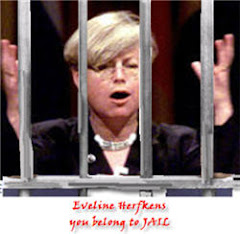
'Herfkens moet geld teruggeven'

di 01 apr 2008, 05:00
door Job Slok

DEN HAAG - Oud-PvdA-minister Herfkens (Ontwikkelingssamenwerking) lijkt haar huurvergoeding alsnog te moeten terugbetalen nu blijkt dat de Verenigde Naties haar officieel hebben laten weten dat ze geen aanvullende betalingen mocht aannemen.

Dat blijkt uit documenten die De Telegraaf in bezit heeft. Terugvordering van het kwart miljoen dollar aan huurvergoeding die Herfkens van Buitenlandse Zaken voor een appartement in New York ontving, zou hierdoor weer een reële optie zijn. In een intern stafbulletin van 1 november 2002, dat aan alle VN-beambten is gestuurd, staat dat extraatjes van andere overheden of andere bronnen verboden zijn.

Rechtszaak

Dit is opmerkelijk, omdat het kabinet tot nu toe heeft volgehouden dat het onduidelijk is of ze dat had moeten weten. Zolang daarover onduidelijkheid bestaat zou een rechtszaak om het geld terug te vorderen vrijwel kansloos zijn, zei minister Verhagen (Buitenlandse Zaken) vorige week nog.

VVD-Tweede Kamerlid Boekestijn zet na lezing van het stafbulletin grote vraagtekens bij dat advies. Hij vindt dat Verhagen alsnog naar de rechter moet om het geld terug te vorderen. Ook Sweder van Wijnbergen, oud-collega van Herfkens bij de Wereldbank, vindt het onzin dat Herfkens niet had hoeven weten van het verbod. "Wanneer is voor het laatst een bankrover vrijgesproken omdat hij het wetboek van strafrecht niet kende?" De topeconoom vervolgt. "Toen ze bij de Wereldbank werkte, had ze ook al een obsessie voor luxe appartementen. Ze is toen beziggeweest om een appartement in het prestigieuze Watergate-complex te krijgen en heeft zelfs de premier gevraagd om een aanbevelingsbrief voor de huurdersvereniging te schrijven".

Herfkens, die in de periode 2002-2007 zes- tot zevenduizend dollar huursteun per maand kreeg, zwijgt als het graf.

Herfkens: VN-document kan Herfkens geld kosten

dinsdag 1 april 2008 10:15

(Novum) - Een intern stafbulletin van de Verenigde Naties uit 2002 kan oud-minister voor Ontwikkelingssamenwerking Eveline Herfkens (PvdA) geld gaan kosten. In het document, dat aan VN-beambten is gestuurd, staat dat VN-personeel geen geld of vergoedingen mag ontvangen uit andere bronnen dan de VN. Het ministerie van Buitenlandse Zaken is in bezit van het bulletin, maar volgens een woordvoerder geeft het geen juridisch uitsluitsel of Herfkens wist dat ze ruim twee ton aan huursubsidie mocht aannemen.

Minister van Buitenlandse Zaken Maxime Verhagen (CDA) blijft het standpunt huldigen dat terugvordering pas mogelijk is als nadere informatie van de VN daar aanleiding toe geeft. 'De VN is bezig met een intern onderzoek. Als daaruit blijkt dat Herfkens van de regels wist, dan volgt terugvordering. Ik weet niet of het bulletin aan iedereen bij de VN is verstuurd', zegt de woordvoerder. De resultaten van het onderzoek worden deze maand verwacht.

Vorige week bleek tijdens een Kamerdebat dat het kabinet de ruim tweehonderdduizend euro die Herfkens onterecht ontving toen ze bij het VN-ontwikkelingsprogramma UNDP in New York werkte vooralsnog niet kan terugeisen, omdat dit op juridische problemen stuit. Verhagen zei dat niet meer is vast te stellen of Herfkens zelf om de huursubsidie heeft gevraagd of dat het ministerie die haar heeft aangeboden. Eerst moet worden bewezen dat Herfkens wist dat ze de subsidie niet mocht aannemen.

Herfkens heeft eerder gezegd dat zij de huursubsidie nodig had omdat ze in een appartement van minstens honderd vierkante meter op loopafstand van het VN-kantoor wilde wonen.

Free Press Stifled at United Nations, Reporters Say

Fred Lucas
Staff Writer

(CNSNews.com) - Reporters covering the United Nations complain that the organization, whose Universal Declaration of Human Rights calls for freedom of the press, has been trying to stifle reporters covering the U.N. itself.

This month, for example, U.N. officials reportedly seized videotapes from journalists who recorded the site of a U.N. helicopter crash in Nepal.

In addition, the group Reporters Without Borders says the U.N. yielded to pressure from certain member countries in refusing to recognize "Freedom of Expression Day."

Earlier this year, the U.N. threatened to pull the credentials of Inner City Press reporter Matthew Russell Lee after he reported embarrassing stories about the U.N. Development Program (UNDP). Inner City Press also was delisted from Google News for a time, fueling speculation that the U.N. had played a role in that incident.

Critics of the U.N.'s treatment of the press say these are just a few recent examples of U.N. hostility toward, and intimidation of, journalists who ask questions that U.N. officials don't want to answer.

In recent years, the United Nations has come under fire for corruption scandals, including allegations of bribery in the oil-for-food program, sexual abuse by U.N. relief workers, and, more recently, U.N. money allegedly ending up in North Korea's missile development program.

The press has a harder time holding the U.N. accountable than it does U.S. government agencies because the U.N. has no equivalent to the U.S. Freedom of Information Act, Lee told a forum at the conservative Heritage Foundation on Monday.

After media attention was focused on Lee's plight, Google put Inner City Press back on its list, and the U.N. did not pull his credentials. Still, Lee said he would like to see more coverage of the goings-on at the U.N.

"Many of the journalists there are great journalists, but they need access, whether it's to the U.N. high officials or the ambassadors on the Security Council," Lee said. "There is less investigative work. Oil-for-Food, there was some great work done. There are day-to-day misdeeds -- corruption and lack of accountability that doesn't get covered because the journalists there are mostly there to cover the Security Council or Iran sanctions, Gaza and Israel. How the U.N. functions is a wide open field."

Article 19 of the U.N.'s Universal Declaration of Human Rights calls on governments to promote freedom of the press, said William Davis, director of the United Nations Information Center.

"We live in an imperfect world," said Davis, who spoke at the Heritage gathering in defense of the U.N. "Every year when these principles are put to the test, there are going to be shortcomings from member states and ourselves."

Davis noted that the General Assembly commemorates May 3 of every year as World Press Freedom Day, and he said the U.N. has always been a strong advocate for freedom of the press. But he said accreditation is based on whether a reporter is "formally registered with a media organization in a country recognized by the U.N. General Assembly."

He stressed that the U.N. holds daily news briefings for reporters and puts an abundance of information on its Web site.

However, former Wall Street Journal reporter Claudia Rosett, a journalist-in-residence for the Foundation for Defense of Democracies, scoffed at the notion that the U.N. is transparent.

Rosett was one of the leading journalists who helped break the oil-for-food scandal.

"The United Nations Information Center spends well over $100 million per year--much of that your tax money--on what they call public information," Rosett said. "It's important not to confuse that with honesty and frankness and revelatory disclosures to the press. It's largely propaganda. You will find nothing about the real scandals, dirt, and corruption."

Rosett said that when scandals arise at the U.N., there is a propensity to call for an investigation and then turn aside reporters and "not answer questions on the grounds that it's an ongoing investigation."

Often these investigations are not trustworthy because the U.N. is investigating itself and making its own rules, said Beatrice Edwards, international program director for the Government Accountability Project, a watchdog group.

The U.N. has new whistleblower rules, but those often are handled internally, Edwards said.

"If they are subject to retaliation for disclosing fraud or corruption at the U.N., then they would go to a hearing to protest what has happened to them, (but the hearing) is presided over by the institution which they are disclosing perhaps embarrassing information about," Edwards said.

"So they face a forum where the institution itself is both the defendant and the judge. The record of whistleblowers being vindicated or prevailing in these kinds of forums or hearings is very, very poor."

Edwards noted that the U.N., World Bank and other international bodies have diplomatic immunity and are not subject to freedom of information laws.

"If they are able to shut down free press or free speech inside, to the extent that they often try to, then we are really talking about very powerful, very wealthy, lawless organizations," she said.

Make media inquiries or request an interview with Fred Lucas.

Subscribe to the free CNSNews.com daily E-brief.

United Nations: Management Reforms and Operational Issues

GAO-08-246T January 24, 2008
Highlights Page (PDF) Full Report (PDF, 18 Pages) Accessible Text (HTML)

-------------------------------------------------------

Longstanding problems in United Nations (UN) management underscore the pressing need to reform and modernize the United Nations in areas ranging from management, oversight, and accountability to operational activities in specific countries. The United States has strongly advocated the reform of UN management practices and has also been critical of the restrictions Burma's military regime has imposed on many international organizations in Burma over the past 3 years. This testimony, based on recent GAO reports, discusses (1) management reform efforts at the UN Secretariat since 2006; (2) oversight and accountability in selected UN organizations; and (3) UN and other international organizations' activities in Burma.

GAO's report on UN management reform efforts notes that (1) progress has varied in the five areas GAO examined--ethics, oversight, procurement, management operations of the Secretariat, and review of programs and activities (mandates)--and (2) various factors, such as disagreements among member states, have slowed the pace of progress. The UN ethics office has taken steps to improve organizational ethics, including implementing a whistleblower protection policy, but GAO identified issues that may limit the impact of the policy. The UN has taken steps to improve oversight, including establishing an Independent Audit Advisory Committee. However, UN funding arrangements continue to constrain the independence of the Secretariat's internal audit office and its ability to audit high-risk areas. The UN has taken steps to improve certain procurement practices, but has not implemented an independent bid protest system or approved a lead agency concept, which could improve procurement services. The UN has taken steps to improve certain management operations of the Secretariat, but has made little or no progress in others. Despite some limited initial actions, the UN's review of mandates has not advanced, due in part to a lack of support by many member states. Finally, the pace of UN management reforms has been slowed by member states' disagreements on reform efforts, lack of comprehensive implementation plans, administrative issues that complicate certain internal processes, and competing UN priorities. GAO's report on oversight and accountability of selected UN organizations notes that, although the six UN internal audit offices GAO reviewed have made progress in implementing international auditing standards, they have not fully implemented key components of the standards. None of these six organizations require their internal oversight staff to disclose their financial interests. However, GAO found that five of the six organizations have made efforts to increase accountability by establishing whistleblower protection policies and one was developing such a policy. GAO also reported that while the six UN evaluation offices GAO reviewed are working toward implementation of UN evaluation standards, they have not fully implemented them. Finally, GAO reported that the governing bodies responsible for oversight of the six organizations lack full access to internal audit reports. GAO's report on Burma notes that Burma's military regime has blocked or significantly impeded UN and other international organizations' efforts to address human rights concerns and to help people living in areas affected by ethnic conflict. The regime frustrated international organizations' efforts to monitor forced labor for years before signing an agreement in early 2007; restricted their efforts to assist populations living in conflict areas; and blocked their efforts to monitor prison conditions and conflict situations. The regime has, to a lesser degree, impeded UN food, development, and health programs. However, several UN and other international organization officials told GAO they are still able to achieve meaningful results in their efforts to mitigate some of Burma's humanitarian, health, and development problems.


Subject Terms
Program management
Program evaluation
Procurement practices
Policy evaluation
International relations
International organizations
International food programs
International cooperation
International agreements
Internal audits
Burma
Foreign aid programs
Auditing standards
Accountability
United Nations Oil for Food Program

Senators concerned with U.N. Secretary-General undermining U.N. ethics reform

U.S. Senators Tom Coburn (OK) and Jim DeMint (SC) sent a letter to U.N. Secretary-General Ban Ki-Moon expressing their concern regarding Ban’s plan to fracture the U.N. ethics and whistleblower process. Rather than order all U.N. programs to comply with U.N. ethics reforms, Ban has permitted the programs to create ad hoc ethics offices that report to the heads of the programs. The program managers may themselves be the subject of ethics investigations–hardly a recipe for an independent and credible operation.

Letters:

Senators concerned with U.N. undermining ethics (349.4 KBs)
Dec 14, 2007

U.N. had warning of terror attack

By Betsy Pisik
Washington Times

NEW YORK — U.N. and Algerian officials were warned in advance of a December terrorist attack in Algiers that killed 17 U.N. staffers but they failed to boost security measures at the U.N. compound, a preliminary report says.

"The hostile intent against the U.N. in Algeria was present and well-known before the attack," David Veness, U.N. undersecretary general for safety and security, wrote in a 20-page preliminary report, a copy of which was obtained by The Washington Times.

Six months before the attack, "the media branch for [al Qaeda in the Maghreb] issued a direct threat against the U.N.," Mr. Veness wrote.

Beginning in April, the U.N. security coordinator for the Algerian compound sent a series of urgent messages to headquarters in New York, warning that the likelihood of an attack on the compound housing seven U.N. agencies was "high" and that damage would be "severe."

In subsequent warnings, Babacar Ndiaye of Senegal, the U.N. security coordinator, sought barriers to protect the compound and other measures.

Despite the warnings, the compound remained at "Phase 1" of a five-level security system used by the United Nations — a level considered safe enough for U.N. staffers to bring their families to live overseas.

Mr. Ndiaye died in the Dec. 11 attack that killed 17 and injured at least 40.

Shortly afterward, al Qaeda claimed credit for the bombing, boasting that it used nearly a ton of explosives against "the den of international apostasy."

Local press reports shortly after the attack quote Algerian Interior Minister Noureddine Yazid Zerhouni as saying that the government had reason to expect an attack because in April, authorities had arrested a man with surveillance video of the site on his cell phone.

That man, an al Qaeda associate, was wanted in connection with an April 11 attack on the presidential palace in Algeria and a nearby police station.

It was the deadliest attack on the United Nations since the August 2003 Baghdad bombing that killed 22, and forced the organization to leave Iraq for more than a year.

Islamist turmoil has plagued Algeria for years. Up to 200,000 people were killed in a civil war that began in 1992 after the army canceled elections that a now-banned Islamist party was poised to win.

The war ended a decade later, but an Islamist insurgency continued.

By 1996, however, the situation was calmer and the Algerian government began complaining to U.N. Secretary-General Kofi Annan that security precautions stigmatized Algeria with "an undeserved bad image abroad to the extent that it kept out foreign investment," according to the Veness report.

The U.N. subsequently lowered the threat level in stages, ultimately to its lowest level.

Mr. Veness also wrote that the Algerian government was slow to respond to repeated requests for additional security.

He said "care has been taken not to apportion blame or responsibility."

The warnings were received at the U.N. headquarters in New York, but it is not clear from the Veness report how the U.N. responded.

The U.N. Staff Union, a New York-based organization that represents many but not all U.N. employees, has called for a full investigation to find out why better protections were not in place.

The group has publicly questioned why the formal risk assessment for that duty station was so relaxed, given the threats and attacks on foreigners and government buildings.

Just two weeks ago, the United Nations announced the formation of a seven-member panel to review U.N. security arrangements around the world.

Though the review is in response to the Dec. 11 attack, it will not focus on how so many red flags were missed in Algiers, said senior U.N. official Lakhdar Brahimi, who is in charge of the project.

Mr. Brahimi told a press conference last month that the blue and white U.N. flag was no longer a symbol of neutrality and protection, but in fact a target.

GAO reports on weaknesses at the United Nations

The U.S. Government Accountability Office (GAO) is known as "the investigative arm of Congress" and "the congressional watchdog." GAO supports the Congress in meeting its constitutional responsibilities and helps improve the performance and ensure the accountability of the federal government for the benefit of the American people. GAO's work includes oversight of federal programs; insight into ways to make government more efficient, effective, ethical and equitable; and foresight of long-term trends and challenges. GAO's reports, testimonies, legal decisions and opinions make a difference for Congress and the Nation.

The GAO recently released several reports on problems at the United Nations. One is a round up of Oil for Food, another identifies weak internal controls within UN procurement practices, and the third report discusses the lack of independence of UN auditors and ties it to funding arrangements of the audit shop.

GAO report: Lessons Learned from Oil For Food Program (1.7 MBs)
GAO report: Procurement Internal Controls Are Weak (1.5 MBs)
GAO report: Funding Arrangements Impede Independence of Internal Auditors (2.3 MBs)

UN report finds 43% of procurement is tainted by fraud

United Nations LogoAccording to a leaked report from internal United Nations auditors, 43% of UN procurement investigated is tainted by fraud. Out of $1.4 billion in UN contracts internally investigated, $610 million was tainted by ten “significant fraud and corruption schemes."

Since 43% of the procurement contracts are tainted and the U.S. taxpayer contributes up to 25% of all UN funding, it is safe to say the entire U.S. contribution in this case has been lost to corruption and waste.

Key Facts:

8 UN procurement officials have been suspended,

4 have been charged with management deficiencies or breach of U.N. rules, and

3 have been found guilty of bribery and related crimes by U.S. federal courts.

Further Readings:

UN Procurement Task Force Report (108.9 KBs)
Oct 5, 2007

Monday, March 31, 2008

Independence of U.N. Probes in Doubt

Turtle Bay
By BENNY AVNI | March 31, 2008

There are troubling signs that two ongoing U.N. investigations may be less thorough and independent than advertised.

The events the two U.N. teams are examining could hardly be more different. One was a vicious terrorist bombing in Algiers that targeted the United Nations as a symbol hated by jihadists and resulted in allegations of U.N. and Algerian security lapses. The other surrounds reports that the main development arm of the United Nations violated its own rules by cozying up to the North Korean regime and its leader, Kim Jong-Il.

The U.N. Development Program’s cooperation with the government of a country known at Turtle Bay as the Democratic People’s Republic of Korea seemed so cozy, in fact, that detractors begun calling the joint operation “UNDPRK.” As more and more articles appeared in the press on the UNDP-North Korea relationship, which the Wall Street Journal dubbed “Cash for Kim,” Secretary-General Ban, the UNDP administrator, Kemal Dervis, and the UNDP board of directors launched a full investigation.

In September, the “Independent Investigative Review of UNDP Operations in DPRK” was established, headed by a former Hungarian prime minister, Miklós Németh. The team was supposed to submit its report “if at all possible before the end of 2007.” It quickly dropped this ambitious deadline, however, and earlier this year promised to deliver its results by the end of March. But as the investigators pored over the documents and data, they realized they needed another postponement. The target date is now “before the end of May.”

Is procrastination or thoroughness to blame for the delays? Let’s hope it’s the latter. Privately, however, some are raising questions about at least two team members who may have UNDP ties. Agency officials have dismissed those ties as “tenuous,” saying they don’t violate the team’s mandate.

That mandate says team members should “not seek nor accept supervision or guidance” from anyone at the UNDP or the United Nations, and should “at all times avoid any conflict of interest or appearance of conflict with UNDP or its officials or personnel.” By definition, they should have no U.N. ties.

The team’s chief of staff, Ji Mi Choi, has never worked directly with UNDP or the United Nations, the agency’s spokeswoman, Christina LoNigro, said. But Ms. Choi did serve as chief of staff at Columbia University’s Earth Institute and was top assistant to the institute’s director, Jeffrey Sachs. A prolific writer on development issues, Mr. Sachs has advised a former U.N. secretary-general, Kofi Annan, and has worked with Mr. Annan’s deputy and former UNDP administrator, Mark Malloch Brown, on such cornerstone UNDP projects as the U.N. Millennium Project.

Another member of the independent team investigating the North Korea program, Mary Ann Wyrsch, is chairwoman of the UNDP’s Audit Advisory Committee, created in 2006. Did the body Ms. Wyrsch heads do a good job overseeing and advising the UNDP on its North Korea program? Ms. Wyrsch may face that question during the team’s investigation.

In the aftermath of the December 11, 2007, suicide attack on the U.N. headquarters in Algiers, Mr. Ban appointed a retired Algerian-born U.N. official, Lakhdar Brahimi, to lead an “independent panel on the safety and security of United Nations staff worldwide.” Skeptics wondered whether Mr. Brahimi, known to be loyal to his former bosses both at the United Nations and in the Algerian government, could ever find fault with either. But he may not need to: His mandate, carefully arranged between Turtle Bay and Algiers, might be too broad to investigate the specifics of the December attack.

“Without accountability, there is impunity,” the president of the U.N. Staff Union, Stephen Kisambira, told Mr. Ban in a letter expressing U.N. staffers’ dissatisfaction with the makeup of the Algiers investigative team. “We ask that you not be complicit in a cover-up,” he added. “The staff is sick and tired of the impunity extended by the office of the Secretary-General to senior managers for their failings.”

To allay such concerns, the two investigative teams will have to show that their efforts have not added up to a cover-up, as usual. Despite the worrisome signs, let’s wait for the outcome of both.

bavni@nysun.com